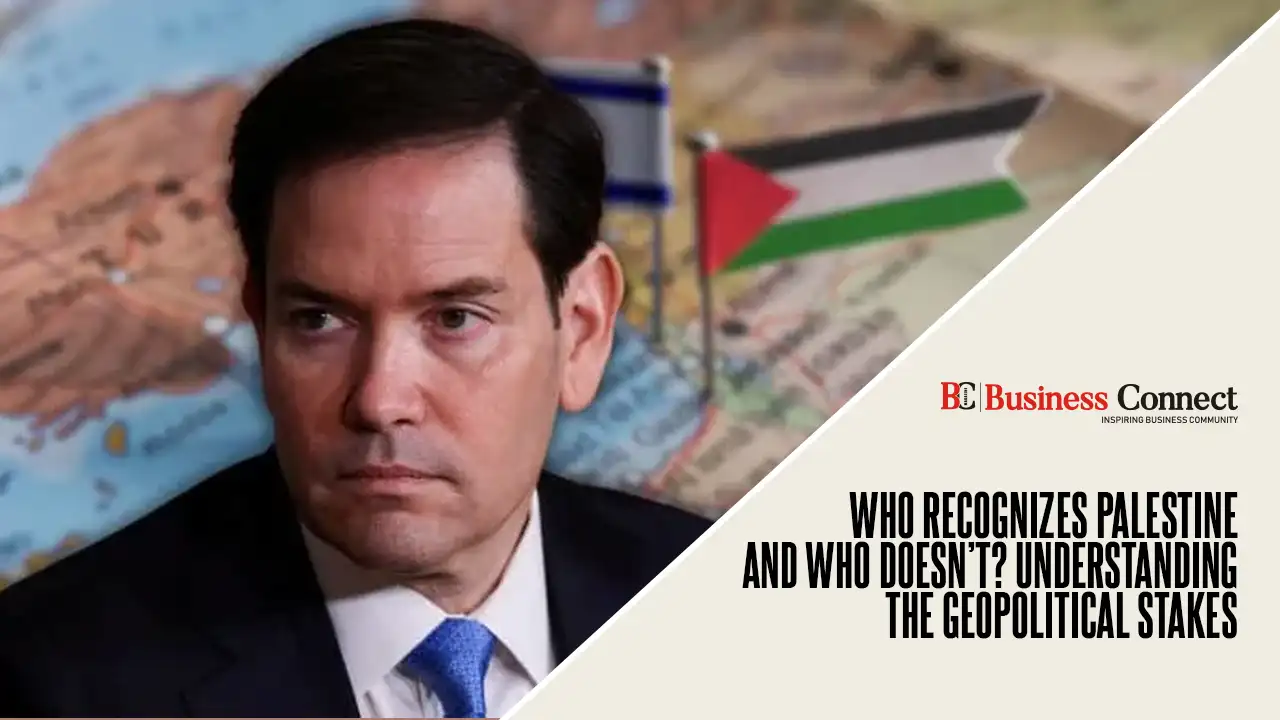
The administration of Israeli Prime Minister Benjamin Netanyahu vehemently opposes the creation of a Palestinian state.
Palestinian Statehood Recognition, Opposition, and International Impact
France: Following almost two years of conflict in Gaza, Britain, Australia, Canada, and Portugal recognized a Palestinian state on Sunday. France, Belgium, and more nations are expected to follow suit in the UN General Assembly.
This is a summary of the state’s diplomatic recognition, which was unilaterally declared in 1988 by the exiled Palestinian leadership.
Israel presently controls the West Bank and the Gaza Strip, which are both mostly in ruins, out of the state’s declared territory.
Which countries recognize—or are likely to recognize—the State of Palestine?
three-quarters of UN members.
At least 145 of the 193 UN members officially recognize the State of Palestine, according to an AFP count.
Three African nations have not yet provided AFP with recent confirmation.
Portugal, Australia, and Canada—the first G7 nations to do so—are included in the count.
At a summit on the future of the two-state solution, which is being led by France and Saudi Arabia on Monday at the United Nations headquarters in New York, a number of additional nations, including France, Belgium, Luxembourg, and Malta, are anticipated to follow suit.
“Russia, together with all Arab nations, nearly all African and Latin American countries, and most Asian countries—including India and China—already recognize Palestine.
Algeria was the first country to officially recognize a Palestinian state on November 15, 1988, just minutes after the late PLO leader Yasser Arafat declared an independent Palestinian state.
Dozens of other countries followed in the subsequent weeks and months, with another wave of recognitions occurring in late 2010 and early 2011.
More recently, the Israeli offensive in Gaza triggered by Hamas’s attack on Israel on October 7, 2023, prompted 13 additional countries to recognize Palestine.
Explained: Who Recognises Palestine, Who Doesn’t, and Why It Matters
At least 145 out of 193 UN member countries now recognize the State of Palestine. Recent developments following the Gaza conflict have prompted countries like Britain, Australia, Canada, and Portugal to extend recognition, with France, Belgium, Luxembourg, and Malta expected to follow during a UN summit on the two-state solution.
Historical Recognition
Algeria was the first country to officially recognize Palestine on November 15, 1988, minutes after PLO leader Yasser Arafat unilaterally declared an independent Palestinian state. Dozens of countries followed in the subsequent weeks, with another wave of recognitions in 2010–2011. After Hamas’s attack on Israel on October 7, 2023, at least 13 more countries recognized Palestine.
Who Does Not Recognize Palestine?
At least 45 countries, including Israel, the United States, and their allies, have not recognized Palestine. In Asia, countries like Japan, South Korea, and Singapore remain non-recognizing. In Africa, Cameroon, in Latin America Panama, and most of Oceania also do not recognize it. Europe remains split roughly 50-50, with some former Eastern Bloc countries like Hungary and the Czech Republic not recognizing Palestine, while countries such as Sweden, Norway, Spain, Ireland, and Slovenia have recognized it in recent years. Italy and Germany do not plan to recognize Palestinian statehood.
What Recognition Means
Recognition is both political and symbolic. According to international law experts, recognition does not create a state nor does non-recognition prevent a state from existing. However, recognition places Palestine on a more equal footing with Israel under international law and can influence diplomatic relations and international legitimacy.
Expert Perspective
Romain Le Boeuf, a professor of international law, describes recognition as a complex midpoint between politics and law. While there is no formal registry for recognitions, the Palestinian Authority maintains its own list. Franco-British law professor Philippe Sands notes that recognition is largely symbolic but can be a “game changer” in international politics, giving Palestine and Israel comparable legal standing.
FAQ: Recognition of the State of Palestine
Q1. Which countries recognize the State of Palestine?
At least 145 out of 193 UN member countries officially recognize Palestine. This includes Russia, all Arab nations, nearly all African and Latin American countries, and most Asian countries, including India and China. Recent additions include Britain, Australia, Canada, and Portugal, with France, Belgium, Luxembourg, and Malta expected to follow.
Q2. When did countries start recognizing Palestine?
-
Algeria was the first, on November 15, 1988, immediately after PLO leader Yasser Arafat declared Palestinian independence.
-
Dozens of countries recognized Palestine in the following weeks.
-
Another wave occurred in 2010–2011.
-
Following Hamas’s attack on Israel on October 7, 2023, at least 13 more countries recognized Palestine.
Q3. Which countries do not recognize Palestine?
At least 45 countries have not recognized Palestine, including:
-
Israel and the United States
-
Some Asian countries like Japan, South Korea, and Singapore
-
African country Cameroon
-
Latin American country Panama
-
Most countries in Oceania
Europe remains divided: countries like Hungary and the Czech Republic do not recognize Palestine, while Sweden, Norway, Spain, Ireland, and Slovenia have recognized it. Italy and Germany do not plan to recognize it.
Q4. What does recognition of Palestine mean?
Recognition is largely political and symbolic. It does not create a state nor does non-recognition prevent a state from existing. However, it gives Palestine comparable legal and diplomatic standing with Israel under international law.
Q5. Why is recognition important?
According to experts, recognition:
-
Influences international legitimacy
-
Strengthens diplomatic relations
-
Symbolically places Palestine and Israel on an equal footing in international law
Q6. How is recognition tracked?
There is no formal registry. The Palestinian Authority maintains its own list, and countries announce recognition at their discretion.
Q7. What do legal experts say about recognition?
-
Romain Le Boeuf, international law professor, calls it a complex midpoint between law and politics.
-
Philippe Sands, Franco-British law professor, describes recognition as a “game changer”, symbolically elevating Palestine’s status in international politics.
Q8. How does the Gaza conflict influence recognition?
The recent Israeli offensive in Gaza has accelerated recognition, with several countries extending official recognition in response to the humanitarian and political crisis.
Q9. What was the international reaction when Palestine was first declared in 1988?
Following the PLO’s unilateral declaration of independence, Algeria immediately recognized Palestine. Within weeks, dozens of countries—primarily in Africa, Latin America, and Asia—also extended recognition. Recognition was largely symbolic but established a precedent for diplomatic engagement with the Palestinian Authority.
Q10. How has recognition evolved over the years?
-
1988–1990s: Early recognition by newly independent and non-aligned nations.
-
Late 2010–2011: Another wave of recognition coinciding with intensified peace negotiations and UN discussions.
-
2023–2025: Recent recognitions accelerated following Hamas-Israel conflict, reflecting shifts in global public opinion and humanitarian concerns.
Q11. How does recognition affect Palestine’s UN status?
Recognition does not grant full UN membership, but it allows Palestine to:
-
Participate as a non-member observer state
-
Enter into bilateral treaties
-
Engage in diplomatic relations with recognizing countries
Q12. What role does Europe play in recognition?
Europe is divided:
-
Supportive countries: Sweden, Norway, Spain, Ireland, Slovenia, UK, Portugal
-
Non-recognizing countries: Italy, Germany, Hungary, Czech Republic
Europe’s split reflects a combination of historical alliances, EU policy, and domestic political considerations.
Q13. How do non-recognizing countries justify their stance?
Countries such as Israel, the US, Japan, South Korea, and Singapore cite:
-
Ongoing peace negotiations
-
Security concerns
-
The need for a two-state solution framework before formal recognition
Q14. What is the impact of recognition on Israel-Palestine relations?
While symbolic, recognition:
-
Signals international support for Palestinian sovereignty
-
Can influence diplomatic leverage in peace negotiations
-
Shapes public opinion and foreign aid policies
Q15. Can recognition be reversed?
Yes. Recognition is a sovereign political decision. Countries may modify or withdraw recognition based on diplomatic, political, or security considerations.
Q16. Are there differences in types of recognition?
Yes. Recognition can be:
-
Explicit: Formal diplomatic acknowledgment with treaties and agreements
-
Implicit: Political support without official legal declarations
Q17. How does international law view recognition?
-
Recognition is not required for statehood under international law.
-
The Montevideo Convention defines a state based on territory, population, government, and capacity to enter relations with other states, regardless of recognition.
-
Recognition mainly affects diplomatic engagement and political legitimacy.
Q18. What are the practical benefits for Palestine?
Recognition helps Palestine:
-
Join international organizations
-
Sign trade and bilateral agreements
-
Increase global visibility and diplomatic influence
Q19. What is the significance of the 2023–2025 Gaza conflict?
The conflict led to heightened global awareness of the Palestinian cause, prompting countries to formally recognize statehood as a statement of solidarity and humanitarian concern.
Q20. How does recognition influence public opinion globally?
Recognition signals international support for Palestinian rights and can shape public and media narratives, influencing both regional and global politics.