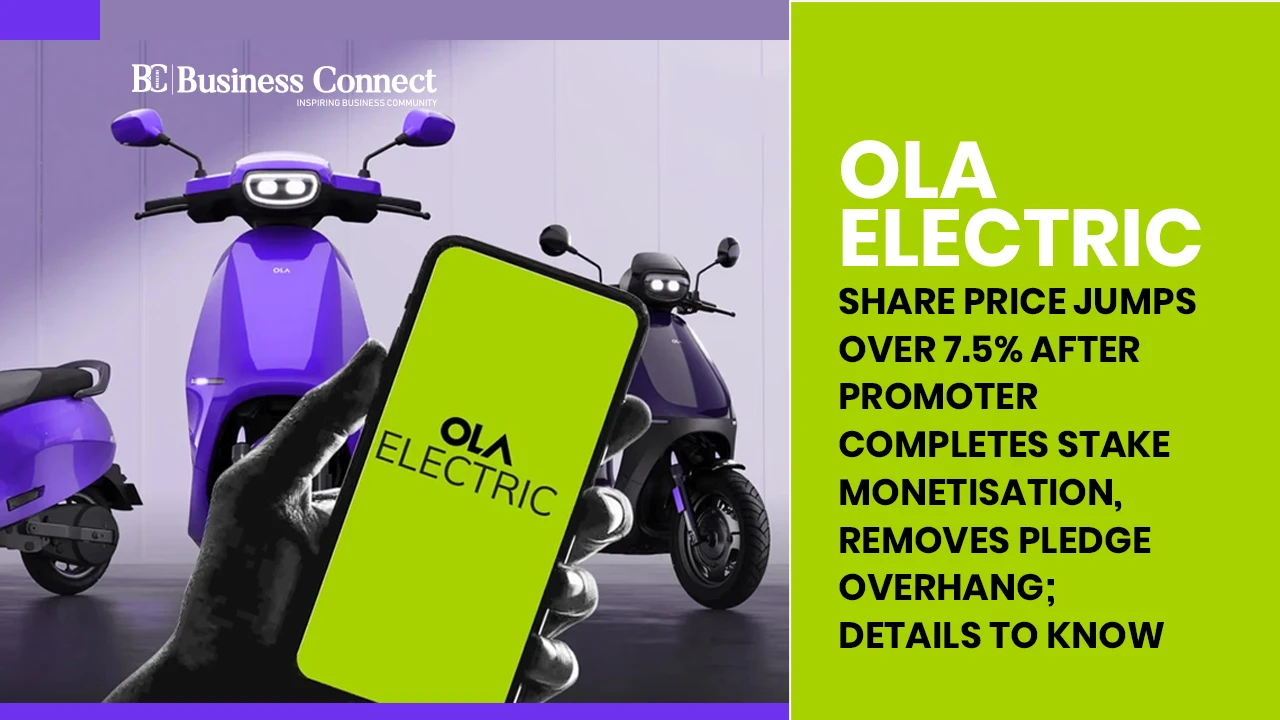
Ola Electric share price: On Thursday, Bhavish Aggarwal, the company’s founder and promoter, sold 2.83 lakh equity shares valued at ₹90.3 crore at an average price of ₹31.9 per share, further reducing his ownership position in the business.
Ola Electric share price: Following the company’s confirmation on Thursday of the completion of a one-time, limited monetization of a portion of the founder’s personal shareholding, which was undertaken to fully repay a promoter-level loan of approximately ₹260 crore, shares of Ola Electric Mobility, the battered EV maker, traded in the green in the opening deals on Friday, December 19.
On the NSE, the stock increased by 7.64% to ₹33.65.
According to a statement from the Bengaluru-based company, the deal has resulted in the release of all 3.93% of the previously pledged shares, making the promoter’s pledge in the company zero.
According to the firm, the monetization was a planned, time-bound process that was carried out in phases and completely at the promoter’s personal level.
A Closer Look at Pledged Share Monetization
According to a report by The Hindu, Ola Electric Mobility Ltd. founder and promoter Bhavish Aggarwal sold 2.83 lakh equity shares for ₹90.3 crore at an average price of ₹31.9 per share on Thursday, further reducing his ownership position in the business.
With Ola Electric’s shares ending at an all-time low of ₹31.26, down nearly 5%, and higher-than-average trading volumes, this was the third straight session of promoter selling.
Aggarwal sold shares for ₹91.87 crore on Tuesday and ₹142.3 crore on Wednesday. The promoter group owned 36.78% of Ola Electric as of September 2025.
Why Bhavish Aggarwal Sold His Ola Electric Shares
The recent stake sale by Bhavish Aggarwal, co-founder of Ola Electric, is primarily driven by financial and strategic considerations—not any intent to exit the company.
Repayment of Promoter-Level Loan
Aggarwal had pledged part of his Ola Electric shares to secure a ₹260-crore loan. The sale of shares allowed him to fully repay the loan and release all pledged shares.
Pledged shares are often viewed as a risk by the market, particularly during falling stock prices, as lenders could enforce the pledge and trigger forced sales. By clearing pledged shares, a significant overhang that weighed on investor sentiment has been removed.
One-Time, Limited Monetisation
Both Ola Electric and Aggarwal described the sale as a one-time, limited monetisation of the promoter’s personal holding, not a sign of reduced confidence in the company.
Post-sale, the promoter group still holds over 34.5% of Ola Electric, maintaining one of the highest promoter ownership levels among India’s new-age listed firms.
Market Reaction
Despite the clarification, Ola Electric’s stock has declined to fresh 52-week and record lows, as consecutive sessions of promoter selling fueled selling pressure.
Investor sentiment was already fragile after earlier exits by institutional investors like SoftBank and some automotive partners. As a result, the market continues to price in elevated risk and uncertainty regarding Ola Electric’s near-term growth outlook.
Why This Matters
Positive/Neutral Factors:
-
Removal of pledged shares reduces governance and balance-sheet risks.
-
Promoter control remains intact with substantial shareholding.
-
Lower promoter pledging generally helps reduce stock volatility.
Investor Concerns:
-
Large promoter stake sales amid weak stock performance can shake investor confidence.
-
Challenges like sluggish EV demand, rising competition, and operational headwinds may amplify negative market reactions.
Ola Electric’s Statement Post-Sale
The company emphasised:
-
No dilution of promoter control.
-
Founder’s long-term conviction in Ola Electric remains unchanged.
-
The stake sale was purely to eliminate promoter-level leverage and pledge-related risks.
-
Operations, governance, and strategic direction remain unaffected.
-
With the pledge fully unwound, Ola Electric will continue focusing on building a globally competitive, India-first electric mobility and clean energy company.
-
The removal of the pledge overhang is expected to enhance transparency and provide greater clarity for shareholders and the market.
(With PTI inputs)