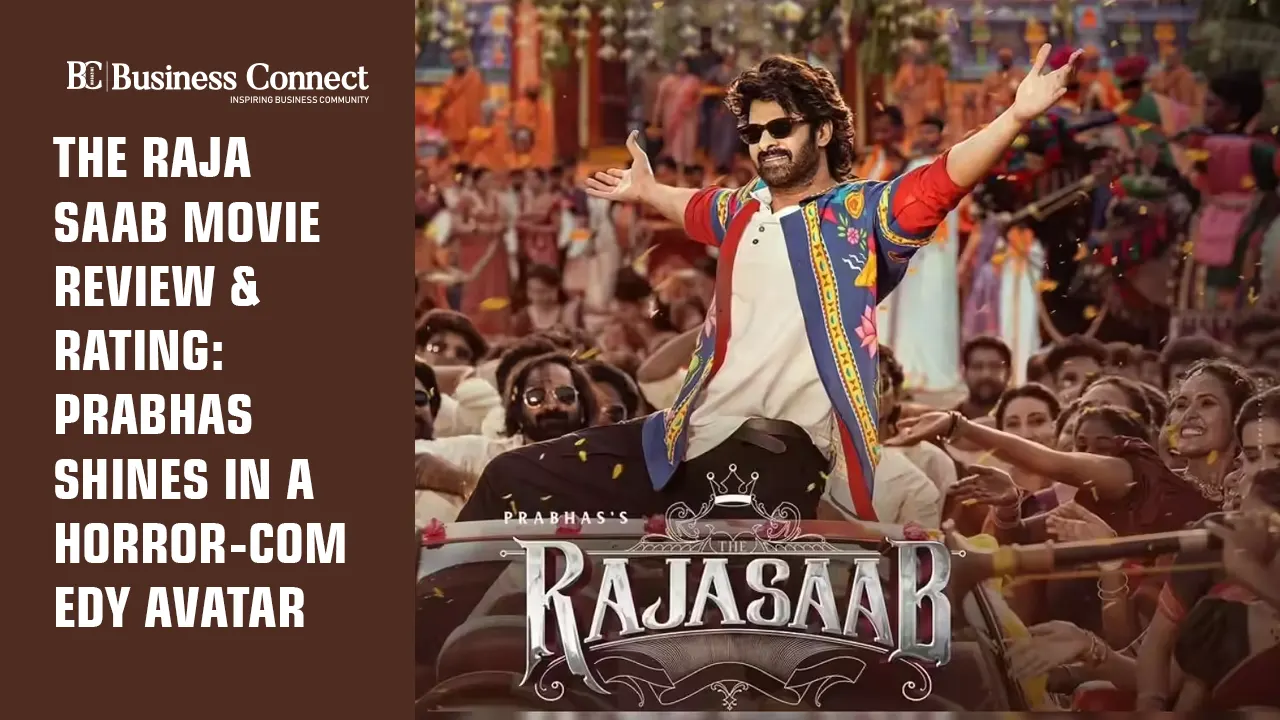
Movie Name: The Raja Saab
Release Date: January 09, 2026
Rating (123telugu.com): ⭐ 2.75/5
Cast: Prabhas, Sanjay Dutt, Boman Irani, Malavika Mohanan, Nidhhi Agerwal, Riddhi Kumar, Zarina Wahab
Director: Maruthi
Producers: TG Vishwa Prasad, Krithi Prasad
Music: Thaman S
Cinematography: Karthik Palani
Editing: Kotagiri Venkateswara Rao
For the first time in his career, Prabhas steps into the horror-fantasy genre with The Raja Saab. Directed by Maruthi, the film stars Malavika Mohanan, Nidhhi Agerwal, and Riddhi Kumar as the female leads. Released today amid high expectations and strong pre-release buzz, here’s our take on The Raja Saab.
Story:
Gangamma (Zarina Wahab), who suffers from Alzheimer’s, lives under the care of her grandson Raju (Prabhas). Though her memory often fails her, she remains emotionally attached to thoughts of her husband, Pekamedala Kanakaraju (Sanjay Dutt), a former exorcist rumored to be living in exile.
Raju’s quest to reunite his grandmother with her husband takes him to Hyderabad, where he stumbles upon a chilling revelation—Kanakaraju is long dead and has returned as a vengeful spirit. As Raju digs deeper, he uncovers the sinister past of his grandfather and the greed-driven choices that led to his downfall. The clash between grandson and grandfather forms the emotional and narrative core of the film.
Plus Points:
One of the film’s few refreshing aspects is seeing Prabhas in a full-fledged comic role after a long hiatus. He makes a sincere attempt to break away from his usual image and explore lighter territory. While the execution is inconsistent, a few sequences do land effectively and manage to evoke genuine laughter. Satya supports him well, elevating the humor wherever the screenplay permits.
Zarina Wahab is given a role with emotional weight and delivers a restrained yet dignified performance. The emotional arc involving her character resonates in select moments and adds some depth to the otherwise uneven narrative.
Sanjay Dutt is given a well-etched role and brings the necessary intensity to the proceedings. His psychological mind games with Prabhas and other characters add a layer of intrigue and manage to hold attention whenever they take centre stage.
The second half offers a handful of isolated sequences that stand out. Moments such as Prabhas’ eerie encounter with the shadows, Sanjay Dutt’s psychological manipulation involving Boman Irani, and the hospital sequence that highlights Prabhas’ emotional depth are among the better-executed portions. While these scenes briefly lift the narrative, they are not strong enough to transform the film as a whole.
Minus Points:
Director Maruthi’s ambition to mount the story on a grand scale is evident from the promotional material and initially raises expectations. Unfortunately, the execution falls short. What seems engaging on paper fails to translate effectively on screen due to weak writing and uneven direction.
Prabhas makes a genuine attempt to explore comedy, but several sequences fail to land as the humour lacks sharpness and the staging feels ineffective. This tonal inconsistency may prove jarring, especially for his core fan base. Malavika Mohanan’s Tollywood debut is hampered by a role that offers little scope to perform, while Nidhhi Agerwal and Riddhi Kumar remain largely ornamental. Their songs feel forced and interrupt the suspense-driven narrative. The placement of “Nache Nache” in particular feels unnecessary and disrupts the film’s momentum.
Supporting actors such as Samuthirakani, Rangasthalam Mahesh, and Sapthagiri are underutilised in underwritten roles. The comedy track remains largely routine. The first half lacks cohesion and feels disjointed, and the sluggish pacing continues well into the second half. A near three-hour runtime only amplifies these issues.
Technical Aspects:
Maruthi misses a crucial opportunity to deliver a solid entertainer despite having Prabhas at the centre. His confidence in the concept is not supported by strong writing or disciplined execution, resulting in a film that struggles to establish a clear tonal identity.
Thaman S’s background score emerges as one of the film’s major drawbacks, with excessive loudness often mistaken for impact. The overpowering score diminishes the effectiveness of several scenes. Karthik Palani’s cinematography is serviceable and offers occasional visual appeal. Kotagiri Venkateswara Rao’s editing required sharper trimming, particularly in the first half, to eliminate filler and improve narrative flow. The CG work is inconsistent and remains average, while the production values are maintained at a reasonable level.
Verdict:
Overall, The Raja Saab is a horror fantasy that works only in fragments and never fully comes together as a cohesive experience. Prabhas’ attempt at comedy is sincere but inconsistent, while the female characters remain underwritten. Weak storytelling, tonal imbalance, and pacing issues weigh the film down. Although the second half provides a few engaging moments, they are too few to significantly elevate the film. With comedy working only sporadically, The Raja Saab is best suited for die-hard Prabhas fans or genre enthusiasts—provided expectations are kept firmly in check.