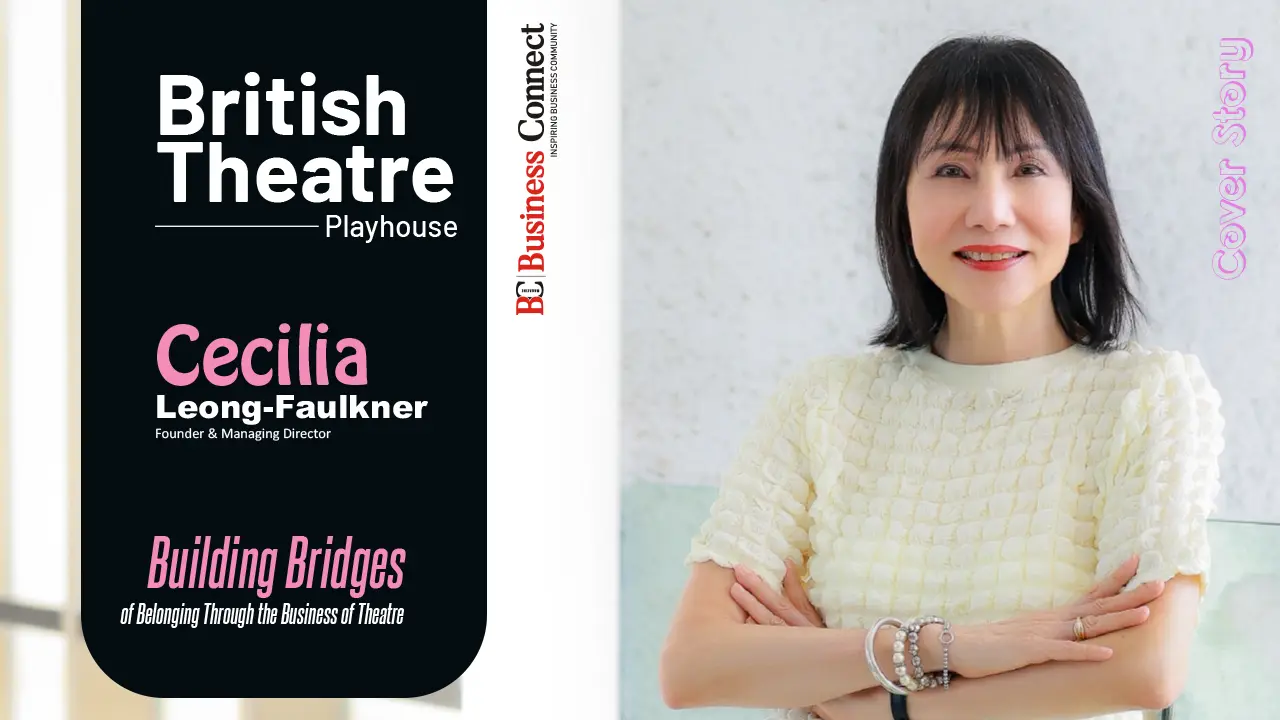
This time, we have brought to you a feature focusing on a platform where West End excellence meets Asian representation, and storytelling becomes a global enterprise. For over twenty years, British Theatre Playhouse has occupied a rare and respected space in the global performing arts ecosystem. It is neither a conventional theatre company nor merely a touring production house. Instead, it has evolved into a cultural bridge that carries the sophistication of London’s West End across continents, languages, and communities, while remaining commercially resilient in an industry known for its volatility. Now, as the company prepares for the world premiere of London’s West End Rising Stars: East Meets West in Musical Theatre in 2026, a fascinating leader stands at the forefront of a new chapter who celebrates diversity, nurtures emerging talent, and redefines what global musical theatre can be.
We are talking about Cecilia Leong- Faulkner, the founder and managing director, whose leadership reflects a rare synthesis of artistic sensitivity and strategic discipline. Soft-spoken yet resolute, Cecilia does not frame her work in grand proclamations. Instead, she allows outcomes, longevity, and integrity to speak for themselves. She is a leading force in the global performing arts ecosystem, known for her unwavering commitment to British theatre and music. With extensive international experience across the USA, the UK, Malaysia, and Singapore, she brings a rare cross-cultural fluency to cultural leadership.
When asked to define the evolution of British Theatre Playhouse, she stated clearly, “Continuous adaptation is the only way to survive the competition while staying relevant to the audience out there.” This cover story explores the vision, discipline, and purpose behind a leader who believes that when art travels with intention, it doesn’t just entertain but belongs.
An Organisation Born of Conviction, Not Comfort
Established in 2004 and headquartered in Singapore, with branch offices in London and Kuala Lumpur, British Theatre Playhouse was founded at a time when presenting British theatre in Asia was still considered a niche pursuit. The early years were marked by experimentation rather than certainty.
One of the company’s earliest innovations was its dinner theatre concept, transforming five-star hotel ballrooms into immersive theatrical spaces where audiences experienced live performances alongside fine dining. The debut production, How the Other Half Loves, staged at the Grand Ballroom in Shang-ri La Hotel, sold out across three nights.
“That gave us confidence,” Cecilia recalls. “Not just in the concept, but in the audience.” The success revealed something critical: there was a discerning, underserved audience in Asia eager for high-quality British theatre, presented thoughtfully and accessibly.
Yet growth was never pursued at the cost of identity. When British Theatre Playhouse transitioned into purposebuilt venues such as the historic Jubilee Hall Theatre at Raffles Hotel, the company made a defining decision, one that would permanently shape its values.
Each production would dedicate one performance to charity. “We called it Art for Charity,” Cecilia explains. “Because we are a theatre company, but we are also part of a larger social ecosystem.” From that moment onward, philanthropy was no longer an add-on, it became a structural commitment.
The Discipline of Choosing the Right Story
Operating without institutional funding or long-term investors, British Theatre Playhouse has always been acutely aware of its commercial realities. Every production carries financial risk, particularly for a touring company navigating logistics, travel, accommodation, and international production costs.
“The right play matters enormously,” Cecilia says. “If you don’t choose wisely, you are not managing outcomes, you are gambling.” The company’s strategy is both disciplined and audience-centric: select productions with proven West End box-office success, adapt them for intimate venues, and deliver uncompromising quality.
This approach has resulted in a formidable repertoire of critically acclaimed productions, including Agatha Christie’s The Mousetrap, Yes, Prime Minister, No Sex Please, We’re British, and musical performances such as Stars of the West End, Beatlemania! A Musical Journey, Big Girls Don’t Cry, The Definitive Rat Pack, Salute to Sinatra, and Leo Sayer in Concert. These productions have travelled across Singapore, Malaysia, Thailand, Sri Lanka, Indonesia, the United Arab Emirates, and the UK, often selling out and extending runs due to demand. “Consistency builds trust. And trust brings audiences back,”Cecilia notes.
A Landmark Production for a New Era If the past two decades were about establishing credibility, the next chapter is about reshaping representation. Set to world premiere in London and Asia in May 2026, London’s West End Rising Stars: East Meets West in Musical Theatre represents one of the most ambitious undertakings in British Theatre Playhouse’s history. Produced by British Theatre Playhouse in collaboration with Worldwide Entertainment, the musical concert builds on the success of Stars of the West End, while pushing the narrative forward in a meaningful way.
“This was not a trend-driven idea,” Cecilia clarifies. “It came from conversations, about responsibility, about opportunity, and about the future of global theatre.”
Inspired by discussions with the British Council and shaped by the global momentum around Diversity, Equity, and Inclusion, the production places Asian representation at the heart of the West End experience, without compromising artistic rigour.
The show will feature a diverse and highly accomplished ensemble of rising stars from Asia and the UK, performing iconic numbers from award-winning West End productions such as MJ The Musical, Thriller, Miss Saigon, Aladdin, The King and I, and The Sound of Music.
Premiering first in London before touring Southeast Asia, the production is designed to foster a deep sense of connection, allowing audiences to see performers who reflect both global excellence and regional identity.
“Keep an eye out,” Cecilia adds with a smile. “You might see a rising star from your own country on stage.”
Casting and preparations are already underway, with official cast announcements expected in the first quarter of 2025. A cinematic promo video, following the success of Stars of the West End, is also in production, further amplifying anticipation.
Authenticity as a Non-Negotiable
For Cecilia, representation has meaning only when it is rooted in excellence. Her benchmark for casting is uncompromising: Does the performer embody the spirit of the West End? Talent is essential, but it is not sufficient. She looks for performers who demonstrate chemistry, humility, adaptability, and cultural sensitivity.
“People are the culture. If you respect people, you respect the place,” Cecilia asserts. She adds that dynamics matter deeply. In theatre, one individual’s lapse can disrupt an entire production. Professionalism, collaboration, and mutual respect are therefore foundational expectations, not optional virtues.
Behind the glamour of international tours lies a demanding operational reality: financial planning, sponsorship alignment, marketing, logistics, and risk mitigation. “There is a lot of unseen work,” Cecilia admits. “We have to go through fire/ some sleepless nights. But passion sustains you.”
Purpose Embedded in Leadership
Cecilia’s leadership philosophy has been shaped by her corporate journey with organisations such as American Express, Wembley Stadium, and Banyan Tree Hotels & Resorts, institutions where values-driven leadership and corporate social responsibility are deeply ingrained. “Social impact has been in our DNA from the very first day,” she says. Beyond Art for Charity galas, British Theatre Playhouse actively engages with schools and educational institutions, offering workshops led by West End artists and directors. These sessions provide students with exposure to insights and global creative careers, often opening doors of possibility that traditional classroom settings cannot.
“When students hear directly from West End performers,” Cecilia reflects, “it changes their perspective. It becomes real.” The impact of these initiatives is echoed by partners and patrons alike:
“What a fantastic night,best of all, for not one but two great causes,” Marina Mathews, Marina Mathews Communications
“Kudos to you and all involved for making this happen and raising money for two wonderful charities.”— David Haigh, Partner & Head of Business Development, Ernst & Young
The Strength of Strategic Partnerships
British Theatre Playhouse’s long-standing collaborations with the British Council, British High Commission, British Chamber of Commerce, and British Club reinforce its role as a cultural ambassador. “Without purpose, partnerships are meaningless,” Cecilia says. “Alignment is everything.”
Together, these alliances amplify reach, credibility, and cultural impact, ensuring that British Theatre Playhouse remains not just a producer of performances, but a steward of British artistic heritage in Asia and beyond.
“At the heart of what we do,” Cecilia affirms, “is promoting British culture. globally.”
Looking Beyond the Traditional Stage
As the company looks toward 2026 and beyond, its ambitions extend far beyond conventional theatre. British Theatre Playhouse is exploring digital transformation, storydriven video games, e commerce, and the launch of the British Theatre Playhouse Home Entertainment reimagining entertainment as an interconnected global experience.
“We don’t limit ourselves to one format,” Cecilia says. “Storytelling evolves. So must we.” It is this willingness to adapt, without losing identity, that continues to define both Cecilia’s leadership and the organisation she allows to thrive and steers with a visionary outlook.
A Philosophy That Endures
As the conversation draws to a close, Cecilia returns to a metaphor that quietly captures her worldview. “When we draw water from the well. We must give water back. Otherwise, the well runs dry.” It is a philosophy that explains not just the success of British Theatre Playhouse, but its staying power.
In an industry often driven by spectacle and speed, Cecilia LeongFaulkner has chosen a different path that is built on integrity, inclusion, and intentional growth. And in doing so, she has ensured that the magic of the West End does not merely travel, but truly belongs, wherever it lands.
FAQs: British Theatre Playhouse & Cecilia Leong-Faulkner
1. What is British Theatre Playhouse?
British Theatre Playhouse is a Singapore-headquartered performing arts company that brings West End theatre productions to Asia. Established in 2004, it operates as a cultural bridge, combining artistic excellence with commercial resilience.
2. Who is Cecilia Leong-Faulkner?
Cecilia Leong-Faulkner is the founder and managing director of British Theatre Playhouse. She is known for her leadership that blends artistic sensitivity with strategic discipline, championing diversity and nurturing emerging talent.
3. What makes British Theatre Playhouse unique?
The company is neither a conventional theatre company nor a touring production house. It focuses on high-quality British theatre adapted for intimate venues, integrates philanthropy through “Art for Charity” performances, and emphasizes cultural representation and inclusivity.
4. What notable productions has British Theatre Playhouse staged?
Over the years, the company has produced acclaimed shows such as:
-
Agatha Christie’s The Mousetrap
-
Yes, Prime Minister
-
No Sex Please, We’re British
-
Stars of the West End
-
Beatlemania! A Musical Journey
-
Big Girls Don’t Cry
-
The Definitive Rat Pack
-
Salute to Sinatra
-
Leo Sayer in Concert
These shows have toured across Singapore, Malaysia, Thailand, Sri Lanka, Indonesia, UAE, and the UK, often selling out due to high demand.
5. What is “London’s West End Rising Stars: East Meets West in Musical Theatre”?
This is a world premiere musical concert set for 2026, produced by British Theatre Playhouse in collaboration with Worldwide Entertainment. It highlights Asian representation in West End productions, featuring rising stars from Asia and the UK performing iconic numbers from award-winning shows.
6. How does British Theatre Playhouse incorporate philanthropy?
Each production dedicates at least one performance to charity, making philanthropy a structural part of the company. Additionally, the organisation engages with schools and educational institutions through workshops led by West End artists, providing students exposure to global performing arts careers.
7. What is the leadership philosophy of Cecilia Leong-Faulkner?
Cecilia believes in integrity, inclusion, and purposeful growth. She emphasizes:
-
Choosing the right story to ensure quality and audience engagement
-
Respecting and nurturing talent
-
Aligning partnerships with purpose
-
Continuous adaptation to remain relevant globally
8. Where does British Theatre Playhouse operate?
The company is headquartered in Singapore, with branch offices in London and Kuala Lumpur, and tours productions across Asia and the UK.
9. What upcoming initiatives are planned beyond theatre?
British Theatre Playhouse is exploring digital storytelling, video games, e-commerce, and home entertainment, aiming to reimagine theatre as part of a global entertainment ecosystem.
10. How has British Theatre Playhouse influenced global musical theatre?
By combining West End excellence with cultural representation, promoting diversity, and maintaining high standards, the company has redefined how British theatre travels and resonates across continents, fostering long-term audience trust and engagement.