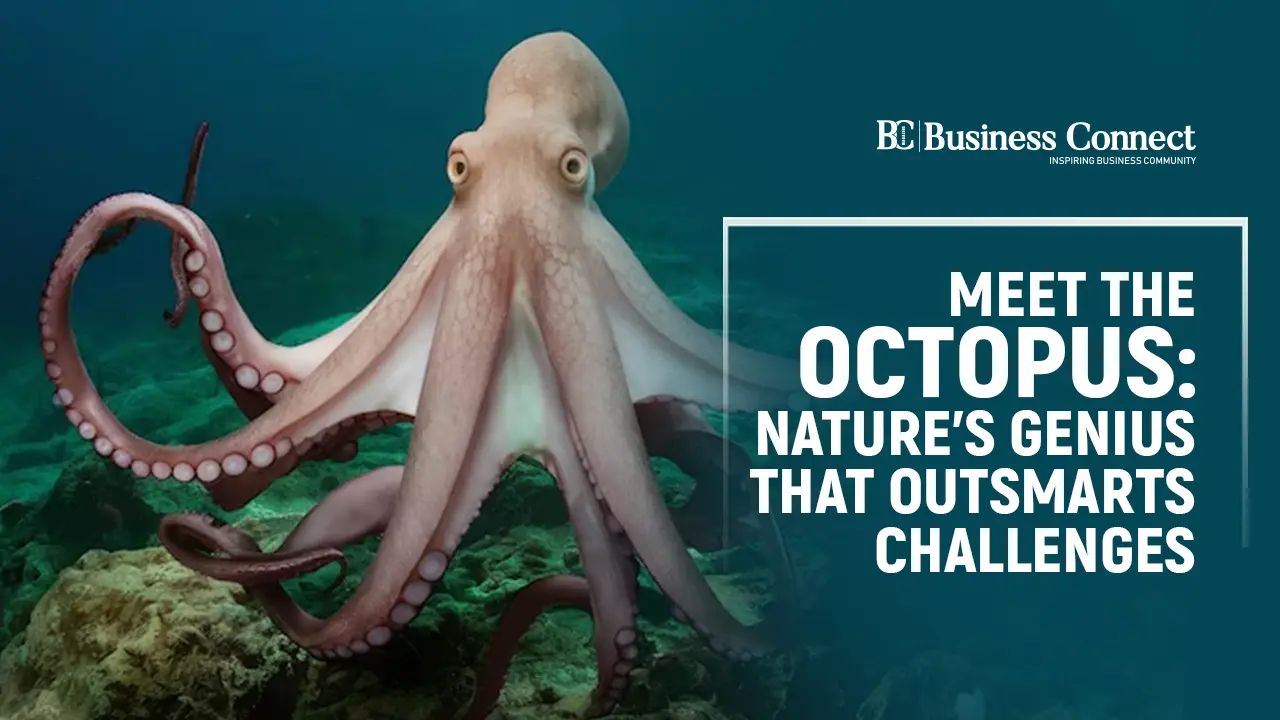
Dolphins, elephants, and chimpanzees are the first species that come to mind when people think of intelligent animals. However, the octopus—one of the smartest problem solvers—lives well below the surface. Despite lacking a backbone, this critter is as intelligent as many land creatures.
A research titled “The Case for Octopus Consciousness: Valence” that was published on PubMed Central claims that octopuses have cognitive capacities that are strikingly similar to our own, as well as perceptual richness and consciousness that influence their behavior. They are able to utilize tools, solve problems, get out of enclosures, and plan ahead.
Octopuses are among the most fascinating creatures in the ocean because of their capacity for learning, memory, and adaptation. Scientists can discover new information about how intelligence might arise from radically different bodies through observational investigations of these organisms.
How Octopuses Demonstrate Intelligence and Problem-Solving Skills
Octopuses display intelligence in ways that continue to surprise scientists and challenge traditional ideas of what animal intelligence looks like. Rather than relying only on instinct, these marine creatures show learning ability, memory, planning, and even problem-solving skills that rival those of much larger animals.
How Do Octopuses Solve Complex Puzzles?
In research settings, octopuses are often given puzzles that many animals struggle to complete. They have been observed opening screw-top jars, sliding lids, and navigating mazes to reach food. What truly stands out is their ability to remember solutions and perform better when faced with the same challenge again. This capacity to learn from experience and improve over time is a strong indicator of advanced intelligence.
How Do Octopuses Plan to Get Food?
Octopuses don’t just react to what’s happening around them—they plan ahead. Studies show that they can select objects or tools they may need later to access food. This kind of forward thinking suggests an understanding of future outcomes, a trait once believed to be limited to humans and a few higher mammals.
How Do Octopuses Use Tools in the Wild?
Tool use is one of the most remarkable signs of octopus intelligence. In the wild, some species collect coconut shells or stones and carry them across the ocean floor. These objects are later used as portable shelters to hide from predators. Such behaviour shows clear planning and an understanding of cause and effect, making octopuses stand out among invertebrates.
How Do Octopuses Use Tools in the Wild?
Tool use is one of the clearest signs of intelligence, and octopuses demonstrate this ability remarkably well. Certain species have been observed collecting coconut shells or stones and carrying them across the ocean floor. These objects are later used as temporary shelters or hiding spots from predators. Such behaviour shows forward planning and an understanding of cause and effect—abilities once thought to be exclusive to humans and a small group of mammals. This makes octopus tool use especially fascinating among invertebrates.
Why Are Octopuses Expert Escape Artists?
Octopuses are famous for their incredible escape skills. They have been known to slip out of tanks, containers, and even sealed rooms by squeezing through openings no larger than their beak. After exploring their surroundings, octopuses can remember escape routes and choose the right moment to make their move. These escapes are not random acts but carefully observed and timed responses, highlighting their advanced problem-solving abilities.
How Strong Are an Octopus’s Memory and Learning Abilities?
Octopuses possess impressive memory and learning capabilities. They can remember solutions to puzzles, recognise individual humans, and adjust their behaviour based on past experiences. This ability to learn and adapt quickly is crucial for survival in the wild, where changing conditions and threats demand rapid decision-making. Their cognitive flexibility further reinforces their reputation as one of the most intelligent creatures in the animal kingdom.
Why is octopus intellect so special?
Unlike other animals, octopuses have a decentralized nervous system. Their arms contain nearly two-thirds of their neurons, which enables them to multitask and operate almost independently in each arm.
An octopus is capable of simultaneously handling, exploring, and manipulating items. For this reason, scientists research octopuses to learn more about their intelligence and ability to solve problems.