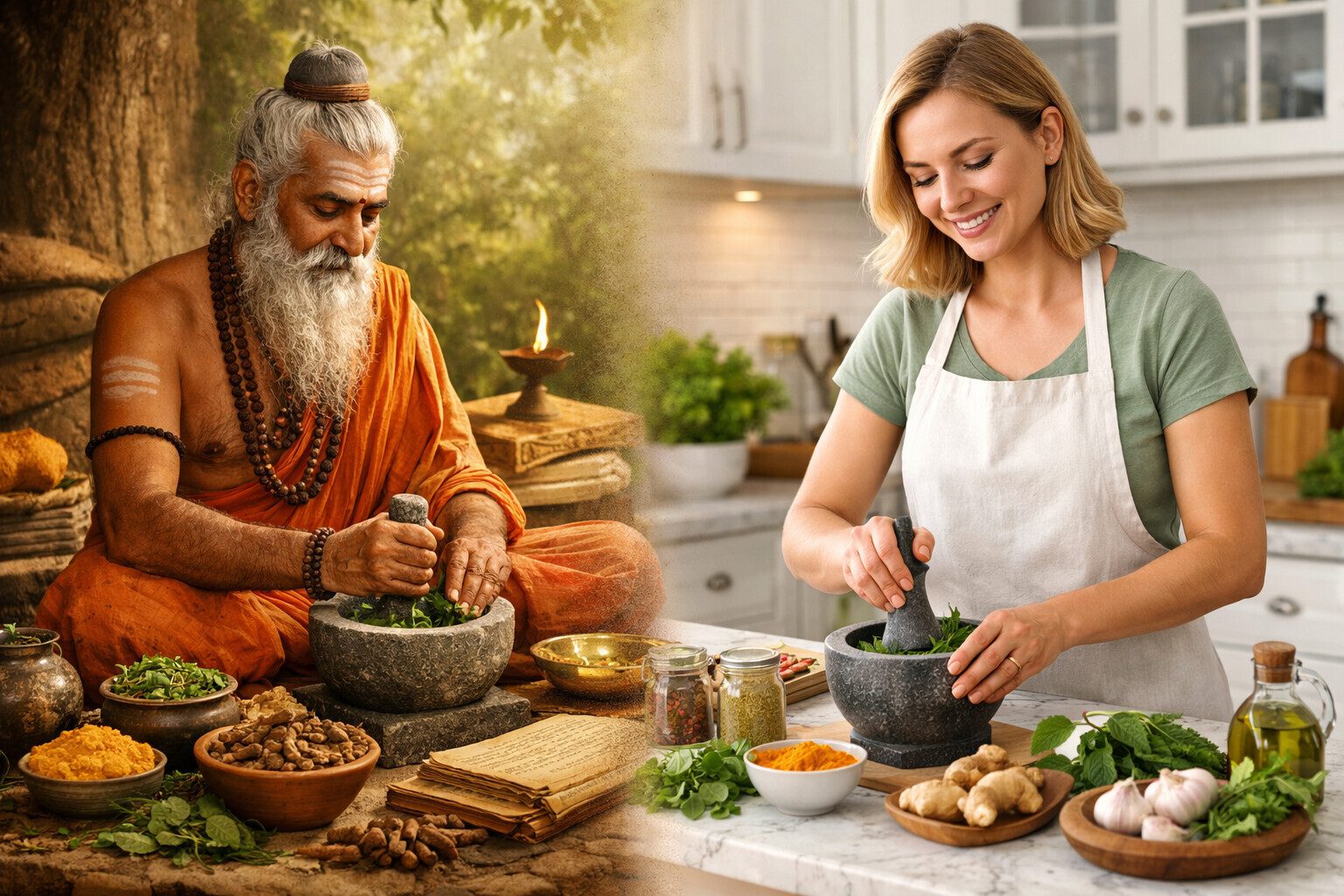
Rethinking Ayurveda to Deliver Natural Health to the Western World
Ayurveda is one of the world’s oldest systems of natural health, yet in the Western world it often sits on the sidelines—misunderstood, underused, or dismissed as overly complex. The irony is that Ayurveda was never meant to be complicated. It was designed for daily living.
The challenge is not the science.
The challenge is the messaging.
The Messaging Problem Holding Ayurveda Back
Much of Ayurveda’s Western presentation is rooted in academic or practitioner-focused frameworks. While intellectually sound, this approach unintentionally creates friction for adoption.
Common barriers include:
- Heavy reliance on Sanskrit terminology without translation
- Overemphasis on diagnostic complexity
- Education designed for future practitioners, not everyday people
- A disconnect between theory and real-world application
Most people are not trying to study Ayurveda. They are trying to fix digestion, sleep better, manage stress, and feel mentally clear—without earning another degree along the way.
Ayurveda Was Meant for Daily Life, Not Just Clinics
Ayurveda works best when it is embedded into routine decisions, not reserved for consultations or textbooks. Its true strength lies in helping people answer simple but powerful questions:
- What foods actually work for my body?
- Why do I feel energized one day and drained the next?
- Why isn’t yoga or meditation delivering mental clarity anymore?
- How do timing, digestion, and routine affect my mood and focus?
These questions resonate strongly with groups already leaning toward holistic health:
- Stay-at-home parents managing stress and irregular routines
- Yoga practitioners who feel physically fit but mentally stagnant
- Health-conscious professionals eating “clean” yet struggling with gut issues
- Wellness seekers overwhelmed by conflicting diet advice
In many cases, the issue isn’t lack of discipline—it’s lack of alignment.
From “Learning Ayurveda” to Using Ayurveda
If Ayurveda is to scale in the West, education must shift from certification-driven learning to practical empowerment.
That means:
- Teaching principles in plain language
- Prioritizing outcomes over terminology
- Focusing on food, routine, digestion, and timing
- Making Ayurveda usable without prior background
This is where modern digital platforms are changing the game.
Making Ayurveda Accessible Through Modern Platforms
CureNatural Ayurveda courses are reframing how Ayurveda is taught and applied. Instead of producing more practitioners, the focus is on enabling everyday people to integrate Ayurvedic principles into real life.
Through structured Ayurveda courses, users learn:
- How to eat according to their body type
- How daily routines affect energy and mental clarity
- Why digestion is the foundation of physical and emotional health
Complementing education, the Ayurveda app model removes guesswork by delivering personalized guidance, daily recommendations, and food intelligence aligned with individual needs.
The result is adoption, not intimidation.
The Future of Ayurveda in the Western World
As Western healthcare systems struggle with lifestyle-driven chronic conditions, Ayurveda offers a preventative, personalized alternative. But its success depends on accessibility, clarity, and relevance.
Ayurveda will not scale by remaining academic.
It will scale by becoming practical.
For platforms like Business Connect India, this evolution represents a powerful opportunity: showcasing how ancient intelligence, when communicated correctly, can meet modern health challenges—one informed daily choice at a time.