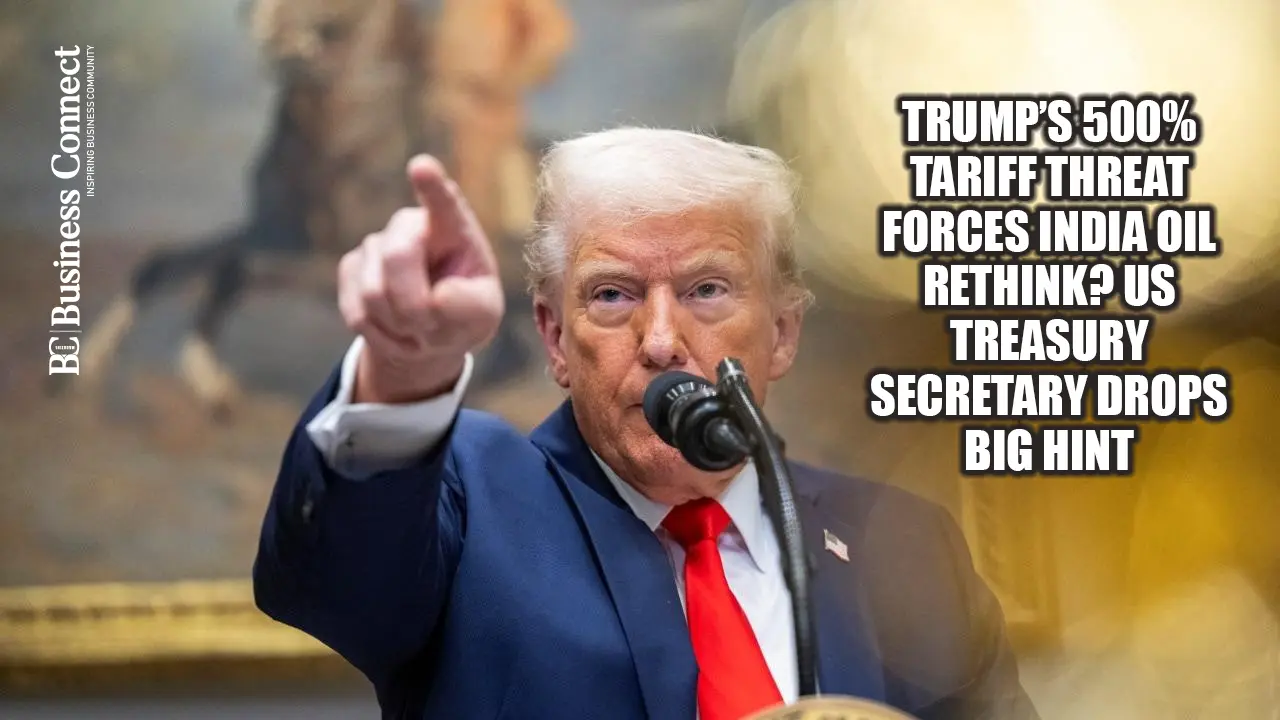
Following President Trump’s imposition of tariffs on Russian oil sales and higher visa fees, tensions between the US and India have escalated. Additionally, US President Donald Trump has approved the bipartisan Russia Sanctions Bill, which would provide pressure on China, Brazil, and India to refrain from buying Russian oil and penalize the nations “fueling Putin’s war machine.”
Is Washington tightening its grip on China while relieving pressure on New Delhi?
According to the US Congress’s official website, Graham’s “Sanctioning of Russia Act 2025” bill aims to impose a number of penalties on people and organizations, including raising the duty rate on all goods and services imported into the US from Russia to at least 500% of their value.
President Donald Trump does not need congressional approval to impose a 500% tariff on nations that import Russian oil, according to US Treasury Secretary Scott Bessent on Tuesday. However, the stated tariff threat seems to be directed at China rather than India this time.
The US Treasury Secretary said that India had stopped buying Russian oil as a result of the Trump administration’s 25% tax. The Senator added that the President earlier this month authorized a new US law known as the Russia Sanctions Act, which permits the US to impose tariffs of at least 500% on nations purchasing oil from Russian suppliers.
Can Trump levy a 500% tariff without the Senate’s consent?
“On the 500% tariff on the buyers of Russian oil, that is a proposal that Senator Graham has in front of the Senate and we will see whether that passes,” Bessent said during the interview. The Senate wants to grant President Trump that authority, but we don’t think he needs it and can accomplish it under IEPA.”
A White House spokeswoman claimed that India has ceased buying oil from Russia and that Europe is buying oil from Russia. He also criticized China, one of the biggest buyers of Russian oil, because the US intends to put taxes on China that might reach 500% for purchasing Russian oil.
“Even after four years of purchasing Russian oil, Europe is still funding the conflict against itself. After the dispute started, India began purchasing Russian oil, but President Trump imposed a 25% tariff on them. As a result, India has slowed down and stopped purchasing Russian oil, he was further stated by Hindustan Times.
“After a very productive meeting today on a variety of issues, he greenlit the bipartisan Russia sanctions bill that I have been working on for months with Senator Blumenthal and many others,” wrote American Senator Lindsey Graham in a post on X. This will come at a perfect moment as Putin continues to kill innocent people while Ukraine is making peace-related concessions. President Trump will be able to penalize nations who purchase cheap Russian oil to sustain Putin’s military apparatus thanks to this bill.”
Why does Trump’s most recent tariff threat mostly target China?
With this law, President Trump would have a great deal of power to persuade nations like China, India, and Brazil to cease purchasing the cheap Russian oil that finances Putin’s massacre against Ukraine. I want to see a robust bipartisan vote as early as next week,” he continued.
Randhir Jaiswal, a spokesman for the Ministry of External Affairs (MEA), responded to the draft legislation by stating that New Delhi is aware of it and is keeping a careful eye on its progress.”We know about the planned legislation. At a weekly press conference, Jaiswal stated, “We are keeping a close eye on the developments.” Jaiswal reiterated India’s long-standing stance on energy sourcing and emphasized that market realities and energy security requirements govern New Delhi’s decisions.
“Our stance on the more general issue of energy sourcing is widely recognized. The statement stated, “We are guided in this endeavor by the changing dynamics of the global market and the necessity of securing affordable energy for our 1.4 billion people through diverse sources to meet the energy security needs.”
In October of last year, Bessent said that at least 85 U.S. senators were prepared to provide President Trump the power to slap a tariff of up to 500% on China’s purchases of Russian oil.
FAQs on Trump’s 500% Tariff Threat & India-Russia Oil Trade
What has escalated tensions between the US and India recently?
Tensions have risen after President Donald Trump imposed tariffs linked to Russian oil purchases and increased visa fees. The approval of a bipartisan Russia Sanctions Bill has further added pressure on countries like India, China, and Brazil to curb Russian oil imports.
What is the Russia Sanctions Act 2025?
The Sanctioning of Russia Act 2025, introduced by Senator Lindsey Graham, proposes strict penalties on individuals and entities dealing with Russia, including imposing tariffs of at least 500% on goods and services imported from Russia into the US.
Can President Trump impose a 500% tariff without Senate approval?
According to US Treasury Secretary Scott Bessent, President Trump does not require congressional approval to impose such tariffs and can act under the International Emergency Economic Powers Act (IEPA), even though the Senate is considering granting him explicit authority.
Is the 500% tariff threat aimed at India?
While India is mentioned in the legislation, US officials have indicated that the primary focus is China, one of the largest buyers of Russian oil. Treasury Secretary Bessent stated that India has already reduced or stopped Russian oil purchases following earlier tariffs.
Has India stopped buying Russian oil?
US officials, including the Treasury Secretary and White House representatives, have claimed that India has slowed down or stopped buying Russian oil after the Trump administration imposed a 25% tariff. However, this has not been officially confirmed by New Delhi.
Why is China the main target of Trump’s tariff threat?
China remains one of the largest importers of Russian oil, which the US believes is helping finance Russia’s military operations. Washington has indicated that tariffs on China could go as high as 500% for continuing such purchases.
What is India’s official response to the proposed sanctions?
MEA spokesperson Randhir Jaiswal said India is aware of the draft legislation and is closely monitoring developments. He reiterated that India’s energy decisions are guided by market dynamics and energy security needs, not political pressure.
How does India justify its oil sourcing policy?
India has consistently stated that it sources energy from diverse suppliers to ensure affordable fuel for its 1.4 billion population, prioritizing economic stability and energy security amid global market fluctuations.
Has Europe continued buying Russian oil?
US officials have pointed out that European countries are still purchasing Russian oil, despite the ongoing conflict, arguing that this continues to indirectly fund the war.
What happens next with the Russia sanctions bill?
Senator Lindsey Graham has said he expects a strong bipartisan vote, potentially as early as next week. If passed, the bill would significantly expand President Trump’s authority to penalize countries buying Russian oil.
What is the International Emergency Economic Powers Act (IEPA)?
IEPA is a US law that allows the President to regulate commerce after declaring a national emergency in response to foreign threats. According to the US Treasury Secretary, President Trump can use this law to impose tariffs without needing prior Senate approval.
Why is the 500% tariff considered extreme?
A 500% tariff would make imported goods economically unviable, effectively acting as a trade embargo. The proposal is designed to strongly discourage countries from continuing to buy Russian oil.
How would the sanctions impact global oil markets?
If implemented broadly, the sanctions could disrupt supply chains, increase price volatility, and force major importers to seek alternative suppliers, potentially driving up global crude oil prices.
What impact could this have on India’s energy security?
India relies heavily on imported crude oil. Sudden restrictions could affect fuel pricing, inflation, and economic growth, which is why India emphasizes diversified sourcing and affordability.
Is India officially aligned with Russia on energy trade?
India maintains that its energy trade decisions are commercial, not political, and driven by price competitiveness and supply security rather than geopolitical alignment.
How does Brazil factor into the US sanctions strategy?
Brazil is among the countries named in the legislation due to its purchases of Russian commodities. The US aims to discourage all major buyers outside Europe from sustaining Russia’s export revenues.
What role does Congress play if Trump already has tariff authority?
While Trump may act independently under IEPA, congressional backing through legislation would provide stronger legal and political support for long-term enforcement.
How could US–India relations be affected long-term?
Prolonged tariff pressure could strain trade and diplomatic relations, though both sides continue to engage on strategic cooperation, defense, and technology partnerships.
Are visa fee hikes linked to the Russia sanctions issue?
While not directly tied to oil sanctions, increased visa fees have added to broader bilateral tensions during the same period.
Could US companies also be affected by these tariffs?
Yes. Higher tariffs could raise costs for US importers, disrupt supply chains, and increase prices for consumers, particularly if applied to major trading partners.
Is there a timeline for when the 500% tariffs could take effect?
No official timeline has been announced. Implementation depends on legislative progress, executive decisions, and geopolitical developments.
How have global markets reacted so far?
Markets remain cautious, with investors closely watching policy signals from Washington due to potential impacts on oil prices, trade flows, and inflation.
What is India’s diplomatic strategy moving forward?
India is engaging through diplomatic channels while reiterating its commitment to energy security, strategic autonomy, and compliance with international law.