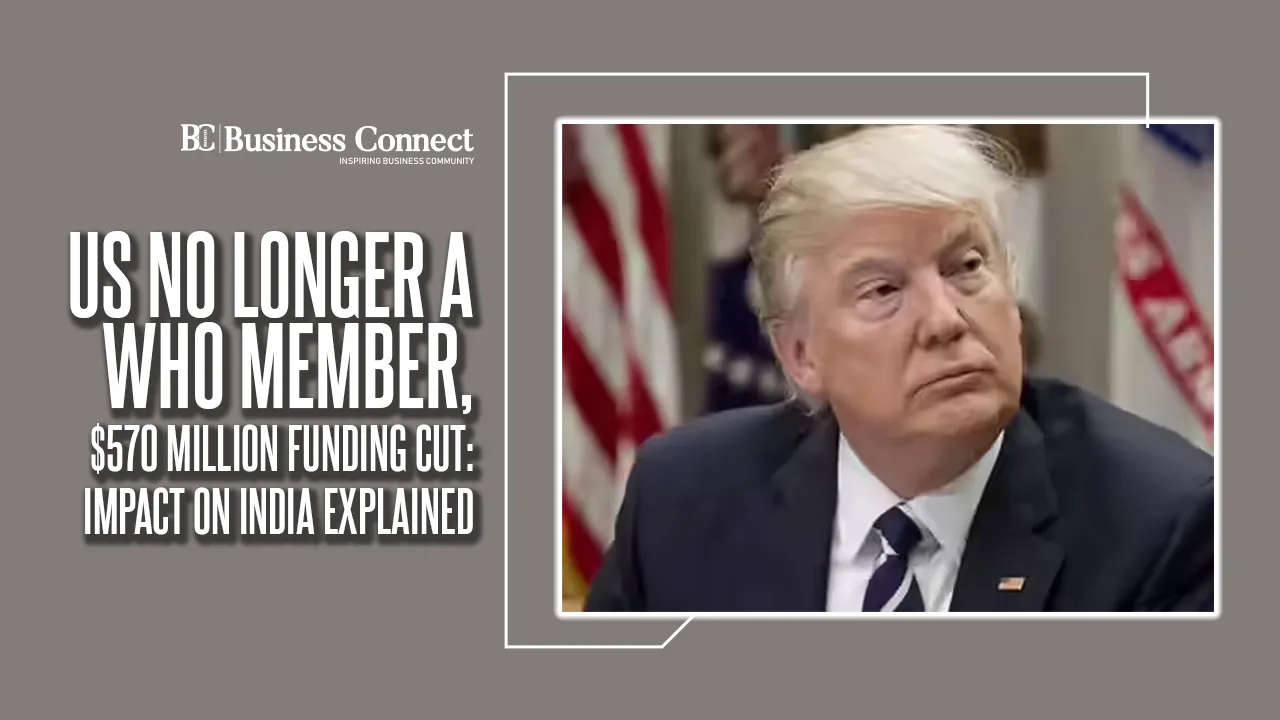
The World Health Organization (WHO) has formally terminated US membership. Nearly a year ago, former President Donald Trump threatened to leave the international health organization; the procedure has now been finished.
With about 18% of WHO’s total funding, the United States was the organization’s biggest donor. Trump expressed his displeasure with the way WHO operates in a formal notification written to the agency on the first day of his second administration.
The Trump administration specifically criticized WHO’s reaction to the COVID-19 epidemic, claiming that it was inadequate and delayed. Global health initiatives may be significantly impacted by the US withdrawal, according to health experts, since a number of international healthcare programs may be impacted by the financing shortfall.
The United States still owes the World Health Organization (WHO) almost $260 million, according to news agency Reuters. America has already made more than enough contributions to the international health organization, according to a US official.
According to a research published in The Hindu, the United States donated an extra $570 million in voluntary financing and paid $111 million in membership costs on average each year. Before formally leaving the organization, the Trump administration had already stopped supporting WHO.
The WHO was criticized by former President Donald Trump of failing to contain the COVID-19 pandemic in a timely and efficient manner. He also bemoaned the fact that, despite the WHO’s heavy reliance on US financing, no American has ever held the position of chief executive.
The Trump administration has insisted that it wants to provide healthcare help to individuals directly, independent of outside organizations. Additionally, according to witnesses, the US flag was taken down from outside the WHO offices in Geneva, indicating the nation’s formal withdrawal.
Who Will Be Impacted?
According to reports, the United States has long been the World Health Organization’s biggest donor, accounting for around 18% of all financing. The WHO is anticipated to have a significant financing gap as a result of the US’s withdrawal.
As a result, the organization could have to reduce its workforce, and a number of its global health initiatives might be put on indefinite hold. Experts predict that this choice will have far-reaching effects, not only for the WHO but also for the US and public health worldwide.
Health experts predict that poorer nations will be most affected. The WHO conducts vital health programs in many African countries, like as awareness and prevention campaigns for fatal illnesses like polio, mpox, and Ebola. Additionally, the group promotes immunization programs, HIV treatment, maternity health, child care, and malaria prevention—many of which were supported or funded by the United States.
American scientists and pharmaceutical corporations may potentially have trouble collaborating on international research projects after the US withdrawal. There may be fewer collaborative efforts to identify and monitor novel and emerging viruses. Access to global health data and monitoring networks is a major concern for scientists.
International and geopolitical ties are anticipated to be impacted by the ruling. It may become more difficult to establish global health standards and publish coordinated guidelines if differences arise among the remaining WHO members, including India. The US exit is unlikely to have any immediate or direct effects on India, according to experts.
FAQs
1. Has the United States officially left the World Health Organization?
Yes, the United States has formally terminated its membership in the World Health Organization (WHO), completing the withdrawal process that was initiated earlier.
2. Who announced the US exit from WHO?
The decision was formalized under former US President Donald Trump, who issued a notification to the WHO on the first day of his second administration.
3. Why did the US withdraw from the WHO?
The Trump administration cited dissatisfaction with the WHO’s functioning, particularly its handling of the COVID-19 pandemic, which it described as delayed and ineffective.
4. How much did the US contribute to WHO funding?
The United States was the WHO’s largest donor, contributing nearly 18% of its total funding annually.
5. How much money does the US still owe the WHO?
According to Reuters, the US owes the WHO approximately $260 million in outstanding payments.
6. What was the US’s annual contribution to WHO?
On average, the US paid $111 million in membership fees and contributed an additional $570 million in voluntary funding each year, as reported by The Hindu.
7. When did the US stop funding the WHO?
The Trump administration had already suspended WHO funding before the formal withdrawal was completed.
8. What were Trump’s main criticisms of the WHO?
Trump accused the WHO of failing to control the COVID-19 pandemic effectively and criticized its alleged dependence on US funding despite no American ever leading the organization.
9. Has any American ever headed the WHO?
No, according to Trump, no American has ever served as the WHO’s chief executive, despite the US being its biggest financial contributor.
10. What does the US government plan to do instead?
The Trump administration stated that it wants to provide health assistance directly to people without relying on international organizations like the WHO.
11. What symbolic changes followed the US withdrawal?
Witnesses reported that the US flag was removed from outside the WHO headquarters in Geneva, marking the formal end of US membership.
12. How will the WHO be affected financially?
The WHO is expected to face a significant funding shortfall, which could force it to cut staff and delay or suspend several global health programs.
13. Which countries will be most affected by this decision?
Health experts believe low-income and developing countries, particularly in Africa, will be most affected.
14. Which health programs are at risk?
Programs related to polio, Ebola, mpox, HIV treatment, malaria prevention, maternal health, child care, and vaccination campaigns could face disruptions.
15. Were these programs funded by the US?
Yes, many of these global health initiatives were fully or partially funded by the United States.
16. How will the US exit impact global disease surveillance?
Experts warn that international collaboration on tracking new and emerging viruses may decline, raising concerns over data sharing and early warning systems.
17. Will US scientists be affected by leaving the WHO?
Yes, American researchers and pharmaceutical companies may find it harder to participate in global health research collaborations.
18. How will this decision affect global health governance?
The absence of the US may make it harder to set global health standards and issue coordinated health guidelines.
19. Will this decision affect international relations?
Yes, experts expect geopolitical tensions and disagreements among remaining WHO members over leadership and funding priorities.
20. Will India be directly affected by the US exit from WHO?
According to experts, India is unlikely to face any immediate or direct impact, though global coordination challenges could indirectly influence international health policies.