Introduction
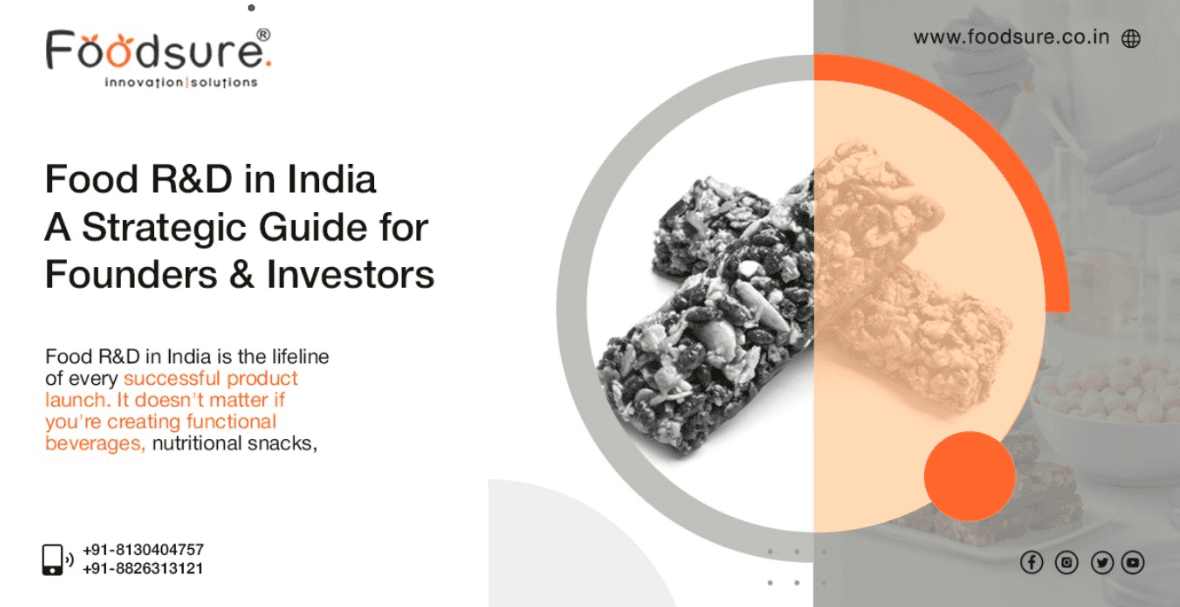
Food R&D in India is the lifeline of every successful product launch. It doesn’t matter if you’re creating functional beverages, nutritional snacks, or clean, label protein bars, you just can’t evade solid research, sensory evaluations, regulatory compliance, and cost control. If you get these right, you can be in with a chance of winning the market in the long run. An intelligent R&D strategy not only results in improved products but also nurtures customer loyalty and attracts investors.
This blog illustrates the main stages of Food R&D in India that yield results, along with a live case study of Stroom Protein Bars, an emerging clean, label protein snack brand in India which is using formulation tricks to disrupt the market. I also did the SEO for the post and made it industry relevant.
Why structured of Food R&D in India is a necessity for founders
If you manage to do the following things right, your products will be:
- safe, compliant, and ready for scale, up, tested for sensory appeal
- making customers come back,
- cost, efficient for real profitability,
- compliant with local and international standards like FSSAI compliance and export
Those brands that just decide that food formulation is everything on such brands crash and disappear within 6, 12 months, think uneven batch quality, poor shelf life, or getting a regulatory notice.
Key Stages in Food & Beverage R&D
| Stage | Objective | Outcome |
| Concept Validation | Define target segment, positioning, and claim | Clear product brief |
| Formulation Design | Ingredient selection + functional profiling | Stable prototype |
| Sensory Evaluation | Taste & texture profiling with panelists | Consumer-validated profile |
| Regulatory Compliance | FSSAI compliance /Export alignment | Label + ingredient approval |
| Shelf-Life Testing | Stability & safety checks | Verified product life |
| Cost & Economics | COGS, margin, packaging impact | Sustainable pricing |
| Pilot Production | Scale transition | Manufacturable process |
| Documentation | SOPs, Dossier, Batch records | Audit & certification ready |
Fundamentals Of Food R&D in India for Food & Beverage & Nutrition Startups
| Focus Area | What to Do | Why It Matters |
| Ingredient Functionality | Test nutrient interaction & stability | Avoid reformulation post-launch |
| Sensory Profiles | Use 5+ panelists, blind tests | Ensures repeat purchase |
| Regulatory Mapping | Ingredient limits + claims | Avoids compliance risk |
| Packaging Compatibility | Barrier, oxygen, UV stability | Longer shelf life |
| Pilot Run Scaling | 1× to 1000× batch validation | Predictable output |
| Cost Optimization | Evaluate raw material alternatives | Higher margin |
| Documentation | SOPs + batch logs | Quality audit readiness |
| Risk Assessment | Microbial + physico-chemical | Safety & reliability |
| Claims Substantiation | Backed by testing | Consumer trust |
| Export Alignment | GCC, US, EU norms | Global market access |
Case Study: Stroom Protein Bars (India’s Clean Label Example)
Stroom is an Indian brand focused on centre-filled protein bars made with natural ingredients and a clean label philosophy. Multiple flavours and formats illustrate how R&D informs product differentiation in a crowded market.
Product Overview
| Variant | Protein (g) | Key Ingredients | Clean Label Claims | Shelf Life |
| Choco Almond Bliss (20g) | ~20 g | Milk protein blend, almond butter, natural fibre (FOS) | No added sugar, preservatives, artificial flavours | ~9 months |
| Choco Orange Dream (20g) | ~20 g | Protein blend, peanut butter, honey | Clean, natural ingredients | ~9 months |
| Exotic Mango Coconut (20g) | ~20 g | Protein + shredded coconut + prebiotic | Free from artificial sweeteners | ~9 months |
| 10g Assorted Bars | ~10 g | Protein blend + nuts + prebiotic | Clean, digestible snack | ~9 months |
What Makes Stroom a Good R&D Reference
Natural Ingredients & Clean Label of new food product development for stroom bars combine milk protein concentrate and soy protein isolate, natural nut butters, prebiotic fibre, and honey no added sugar, preservatives, or artificial flavours.
- Balanced Nutrition: Each bar provides balanced macro profiles with >1020 g protein and dietary fibre, ideal for lifestyle, pre/post, workout, or hunger control.
- Sensory Acceptance: Centre, filled design and indulgent flavours elevate mouthfeel, thus increasing consumer compliance.
- Label Transparency: Transparent nutrient panels and ingredient listings help consumers of clean food to gain confidence.
- Shelf Stability: 9 months at ambient indicates storage performance predictability and the R&D, validated formulation.
Learning from the Market & Consumer Perceptions
Despite a clean-label push, a significant number of Indian customers express mixed satisfaction with the protein bars they have tried, going by what they mention in online discussions regarding taste or macro expectations vs reality.
This only confirms that we cannot just rely on making nutritional claims but also need to do formulation and sensory work driven by R&D.
Putting It All Together: R&D Roadmap
| Phase | Deliverable | Example Tools |
| Concept | Product brief | Market survey + trend data |
| Formulation | Lab prototypes | Ingredient matrices |
| Sensory | Panel scorecard | Hedonic tests |
| Compliance | Label + dossier | FSSAI + export checklist |
| Stability | Shelf reporting | Accelerated tests |
| Costing | COGS model | BOM + waste analysis |
| cale | Pilot validation | Small scale production |
| Quality | Documentation | SOP + logs |
Conclusion
For both founders and investors, food and beverage R&D should not be regarded as a cost centre, rather, it is a crucial strategic investment. The way in which brands such as Stroom have succeeded provides evidence of how ingredient transparency, sensory validation, regulatory compliance, and cost control culminate in the creation of products that not only strike a chord with consumers but can also endure inspection.
A methodical R&D process enhances the level of trust, lowers the chances of failure, helps to forecast the product’s shelf-life more accurately, and eventually leads to a better market position and greater attractiveness for investors.
Get Expert Support:
Phone No: +91 8130404757
Gmail Id: wecare@foodsure.in
Website – Foodsure.co.in
FAQ
- Why is having a well planned R&D phase essential when launching protein bars or functional beverages?
A thorough R&D phase helps to achieve product safety, regulatory compliance, sensory acceptance, shelf, life stability, and cost control. It is an effective way to eliminate most post, launch failures originating from taste inconsistency, microbial risks, or non, compliant claims.
- What can make a protein bar really clean label in India?
A clean, label protein bar does not contain artificial sweeteners, synthetic flavours, chemical preservatives, or misleading claims, it features transparent ingredient lists and nutrition declarations that comply with FSSAI.
3: What is the typical duration of product R&D and validation?
A complete R&D cycle that includes formulation, sensory trials, shelf, life testing, and documentation, generally takes 4590 days, the duration depending on the complexity of the product and the extent of the validation needed.
- Is it possible for a lab, developed recipe to perform/input behave differently when commercialized?
Yes. Texture, flavour release, and stability may be affected by scale, up. Pilot production and controlled scale trials are a must in order to verify the consistent output at 10, 000+ units per day.
5: Who is entitled to the formulation and IP after the completion of R&D?
Once payment has been made in full and a contract is in place, the client will receive the full rights to the formulation, SOPs, and technical dossier, thus gaining full IP protection.