
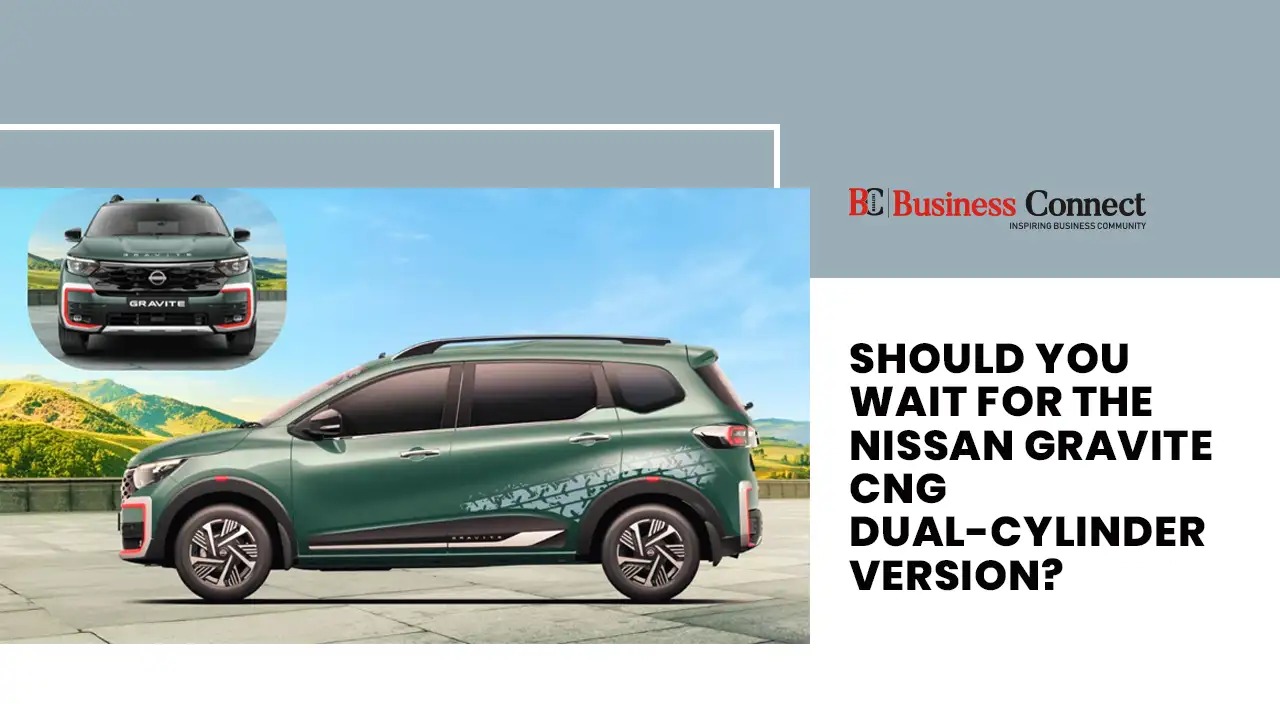
Nissan Gravite CNG Dual-Cylinder Coming Soon: Should You Wait?
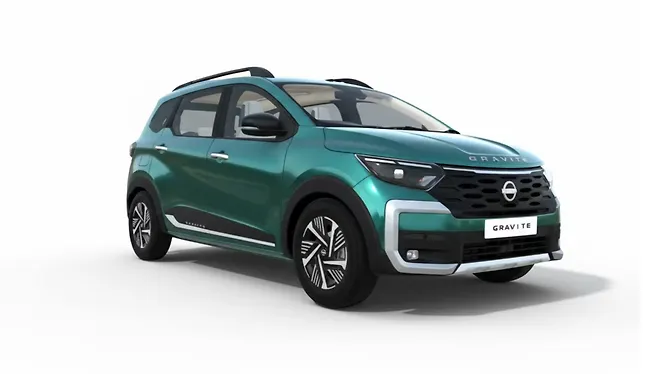
The Nissan Gravite is set to receive a factory-fitted CNG variant featuring a dual-cylinder setup. This update aims to solve one of the biggest drawbacks of CNG MPVs in India — reduced boot space.
For three-row family car buyers, luggage capacity is a major concern. Traditional CNG models often compromise practicality, making buyers hesitant. Nissan’s new approach could change that.
What the Dual-Cylinder Setup Means in Real Life
In most CNG MPVs, a single large cylinder occupies a significant portion of the boot, limiting space for luggage and sometimes affecting third-row usability.
The upcoming Gravite CNG will use two smaller cylinders positioned lower in the boot floor. This design:
-
Frees up more usable luggage space
-
Retains third-row functionality
-
Improves overall practicality for families
For Indian households that travel with groceries, school bags, or weekend luggage — even with all seats occupied — this layout makes a noticeable difference.
Another advantage is factory integration. Unlike aftermarket CNG kits, a factory-fitted system ensures:
-
Proper engine calibration
-
Better safety validation
-
Warranty coverage
-
Seamless performance tuning
This reduces the typical compromises associated with CNG conversions.
Running Cost vs Petrol: Why Many Buyers May Wait
CNG vehicles significantly reduce per-kilometre fuel costs compared to petrol. For budget MPV buyers, fuel efficiency often outweighs performance considerations.
The current petrol Gravite caters to cost-conscious families. Introducing a factory CNG option aligns directly with what this segment demands — lower running expenses.
However, buyers should also consider:
-
Slightly lower power output in CNG mode
-
Reduced acceleration compared to petrol
-
Dependence on CNG station availability
If most driving happens within city limits where CNG infrastructure is reliable, waiting for the CNG variant could lead to long-term savings.
Nissan Gravite Petrol Specifications
The existing Nissan Gravite petrol version is priced from ₹5.65 lakh (ex-showroom).
It is powered by:
-
1.0-litre naturally aspirated petrol engine
-
71 bhp power output
-
96 Nm torque
Mileage figures:
-
Manual: 19.3 kmpl
-
AMT: 19.6 kmpl
The petrol version remains one of the most affordable MPVs in its category.
Should You Buy Now or Wait?
The answer depends on your usage and urgency.
Buy the Petrol Version Now If:
-
You need immediate delivery
-
You frequently travel on highways
-
CNG stations are limited in your area
Consider Waiting for the CNG If:
-
Most of your driving is city-based
-
Fuel savings are your top priority
-
You want better practicality than traditional CNG MPVs
With the launch expected soon, buyers without urgent purchase needs may benefit from waiting and evaluating the dual-cylinder CNG variant before making a final decision.
If Nissan prices it competitively, the Gravite CNG could become a strong option for budget-focused family buyers looking for seating flexibility without sacrificing boot space.
1. What is the Nissan Gravite CNG dual-cylinder variant?
The upcoming Nissan Gravite CNG version will feature a factory-fitted dual-cylinder setup designed to improve boot space and practicality.
2. How is the dual-cylinder setup different from a regular CNG system?
Instead of one large cylinder occupying most of the boot, the system uses two smaller cylinders placed lower in the floor to preserve luggage space.
3. Why is boot space important in CNG MPVs?
Three-row family buyers often need luggage space even when all seats are occupied. Traditional CNG models reduce usable boot capacity.
4. Will the third-row seating be affected in the Gravite CNG?
The dual-cylinder layout is expected to retain third-row usability without major compromise.
5. Is this a factory-fitted CNG kit?
Yes, the CNG system will be factory-installed, not an aftermarket conversion.
6. What are the benefits of a factory-fitted CNG system?
Factory integration ensures proper engine calibration, better safety standards, warranty coverage, and optimized performance.
7. How will running costs compare to petrol?
CNG typically offers significantly lower per-kilometre fuel costs compared to petrol, making it attractive for high-usage families.
8. Will performance be lower in the CNG variant?
Yes, CNG variants generally produce slightly lower power and may feel less responsive than petrol versions.
9. Is the CNG variant suitable for highway driving?
It can handle highways, but buyers who frequently travel long distances may prefer petrol for better power and easier refueling.
10. What engine does the current petrol Nissan Gravite use?
The petrol model is powered by a 1.0-litre naturally aspirated engine.
11. What is the power output of the petrol version?
The petrol engine produces 71 bhp and 96 Nm of torque.
12. What is the mileage of the petrol Nissan Gravite?
The manual variant delivers 19.3 kmpl, while the AMT version claims 19.6 kmpl.
13. What is the starting price of the petrol Gravite?
The petrol variant starts at ₹5.65 lakh (ex-showroom).
14. Why are buyers considering waiting for the CNG version?
Lower fuel costs and improved practicality with the dual-cylinder design make the upcoming CNG variant appealing.
15. Will the CNG version cost more than petrol?
CNG variants are usually priced slightly higher than petrol models due to additional hardware.
16. Is CNG infrastructure important before choosing this variant?
Yes, availability of CNG stations in your city or region is crucial before opting for a CNG vehicle.
17. Who should buy the petrol version now?
Buyers needing immediate delivery or those with limited CNG access should consider the petrol model.
18. Who should wait for the CNG variant?
City users with high daily mileage and access to CNG stations may benefit from waiting.
19. How does the dual-cylinder system improve practicality?
By positioning two smaller tanks under the boot floor, it preserves more usable luggage space compared to single-cylinder systems.
20. Should you wait for the Nissan Gravite CNG dual-cylinder?
If fuel savings and improved boot space matter more than immediate delivery, waiting for the CNG variant could be a practical decision.