
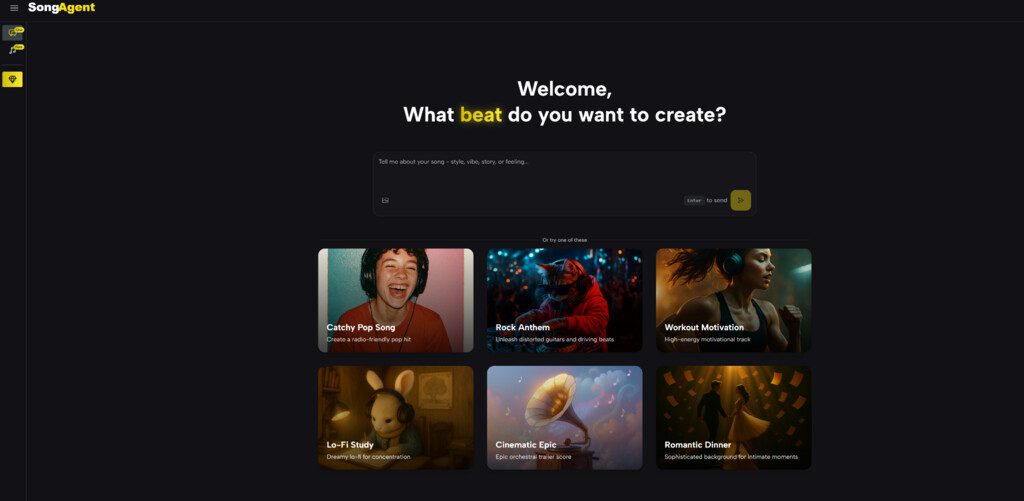
The global demand for high-fidelity audio content has reached an unprecedented scale, yet the traditional supply chain for professional music remains remarkably rigid. Businesses and creative agencies often struggle with the prohibitive costs of custom scoring or the legal complexities of music licensing for large-scale marketing campaigns. This bottleneck is particularly acute for digital-first enterprises that require a constant stream of original, high-quality audio to maintain brand authority across multiple platforms.
The emergence of a specialized Music Agent offers a strategic solution to these challenges by integrating advanced music theory with a streamlined production pipeline. By shifting the focus from manual track arrangement to intelligent composition planning, these systems allow organizations to generate unique, commercially-cleared audio assets at the speed of digital commerce.
In my observation of professional creative workflows, the primary obstacle is often the disconnect between a project manager’s vision and the technical output of a studio. Standard stock libraries provide a functional but generic solution that often fails to capture the unique emotional resonance of a specific brand story. However, an agentic approach to music creation addresses this by deconstructing a user’s conceptual requirements into a coherent musical blueprint before any audio rendering occurs.
This planning-first methodology ensures that the final compositions are not just random arrangements of notes, but structured works that adhere to established harmonic and rhythmic principles. For professionals, this means a significant reduction in the time spent on revisions and a more predictable path toward a final, broadcast-ready master.
The Strategic Shift Toward Scalable Original Audio for Global Brands
The current media landscape is moving away from the use of overplayed, royalty-free loops in favor of bespoke audio identities. Research into consumer behavior suggests that original soundtracks significantly increase brand recall and engagement across video-based advertising channels.
As a result, the ability to produce original scores in-house has become a competitive necessity for agencies that previously relied on external vendors. An intelligent audio system allows these teams to maintain full creative control while drastically reducing the overhead associated with traditional production cycles. In my testing, the most successful implementations of this technology occur when users treat the agent as a specialized production assistant capable of handling the heavy lifting of arrangement and mixing.
Furthermore, the democratization of high-quality sound through agent-based systems has opened new opportunities for localized content production. Brands operating in multiple global markets can now adapt their audio assets to suit local cultural preferences without incurring the costs of multiple studio sessions. This scalability is a fundamental shift in how commercial music is conceived and distributed. While the technology is highly advanced, it is essential to recognize that its effectiveness is grounded in its adherence to musical theory, ensuring that the output remains professional and emotionally resonant regardless of the genre or scale of production.
Optimizing Professional Output Using the Intelligent Music Agent Blueprint System
A critical differentiator for professional-grade audio systems is the inclusion of a comprehensive planning phase. Unlike recreational tools that generate audio instantaneously, a professional music agent performs a deep analysis of the creative prompt to establish a structural foundation. This process includes determining the optimal key signature, tempo, and instrumentation based on the described mood and genre. By providing a transparent blueprint of the track before the rendering stage, the system allows for a collaborative review process that mirrors the interaction between a creative director and a composer.
Streamlining Multi Track Production Cycles via Batch Composition Engine Technology
One of the most powerful capabilities of modern audio agents is the batch composition engine. This feature is specifically designed for complex projects that require more than a single piece of music. For instance, a game developer may need a suite of tracks for different environments, or a brand may require a library of social media background themes that share a common melodic motif. The batch engine handles these requests by applying a consistent stylistic framework across multiple generations, ensuring that the resulting audio package feels unified and professional.
In my experience, the ability to generate a series of cohesive tracks in a single session is a significant productivity multiplier. It eliminates the need to manually match keys or tempos between disparate files, as the agent maintains thematic consistency throughout the entire project. This efficiency is particularly valuable for long-form content, such as podcasts or documentary series, where a consistent audio identity is crucial for audience retention. However, it is important to note that the system’s success in batch mode relies on the clarity of the initial thematic parameters provided by the user.
Achieving Melodic Consistency Across Diverse Marketing and Social Media Channels
Maintaining a consistent sonic brand is a challenge for companies that produce content across a variety of platforms. A music agent solves this by allowing creators to define a “brand sound” that can be applied to diverse musical styles. Whether creating an upbeat pop track for a product launch or a subtle ambient background for a technical tutorial, the underlying musical logic remains consistent. This ensures that every piece of audio content associated with a brand contributes to a unified and recognizable audio identity, which is essential for building long-term consumer trust.
Navigating Legal Security with Royalty Free Commercial Usage License Protections
Legal risk management is a top priority for any organization integrating generative technology into its production stack. The professional agent model addresses this by offering 100% royalty-free commercial usage rights for all generated tracks. This means that once a piece of music is created and downloaded, the user holds the rights to use it in any commercial context—from YouTube monetization to national television advertisements—without the threat of copyright claims or the need for recurring licensing payments. This level of legal security is a mandatory requirement for professional use, as it provides the peace of mind necessary to deploy assets in high-stakes marketing environments.
Analytical Comparison of Automated Composition Versus Manual Studio Production
To help decision-makers evaluate the benefits of integrating an intelligent music agent into their workflow, the following table provides a direct comparison between traditional production methods and the modern automated pipeline.
| Production Metric | Traditional Studio Session | Stock Music Libraries | Song Agent |
| Initial Turnaround | 7 to 14 Business Days | Instant (Generic) | 5 to 10 Minutes |
| Customization Depth | High (Manual) | None (Static) | High (Prompt-Driven) |
| Scalability of Assets | Low (Manual Effort) | Moderate (Limited) | High (Batch Mode) |
| Total Cost of Ownership | High (Hourly Rates) | Moderate (Per Use) | Low (Subscription) |
| Structural Consistency | Variable | Inconsistent | High (Systematic) |
| Legal Risk Profile | Complex Licensing | Per-Track Rights | Unified Commercial License |
| Iterative Flexibility | Slow and Costly | Non-Existent | Rapid and Conversational |
Operational Procedures for Deploying Professional Grade AI Audio Assets
The workflow for generating professional music is designed to be efficient while maintaining high standards of quality. Based on the official procedures found on songagent.com, the production cycle follows four distinct, logical steps.
Step 1: Describe Your Musical Vision
The process begins with the user providing a detailed text-based description of the desired song. This input should include details such as the primary genre, specific instruments (e.g., piano, distorted guitars), and the emotional tone. Detailed descriptions at this stage are vital for guiding the agent’s analytical engine toward the correct musical structures.
Step 2: Review the Musical Blueprint
Once the description is submitted, the agent generates a musical plan that outlines the structure, tempo, and key signature of the track. This stage is crucial for professional users, as it allows them to verify that the system’s interpretation aligns with their creative vision before any final audio files are rendered.
Step 3: Generate and Refine
After the blueprint is approved, the agent begins the composition process. The system produces the audio in real-time, and users have the opportunity to request refinements. For example, a user might ask the agent to increase the energy of the chorus or adjust the volume of a specific instrument, ensuring the final product meets their exact specifications.
Step 4: Download and Produce
The final stage is the delivery of a professionally mixed and mastered audio track. The user can download the file in high-fidelity formats ready for immediate commercial integration. The agent also remains available to generate variations, such as different track lengths or instrumental versions, to suit various media requirements.
Addressing Technical Limitations and the Future of Intelligent Audio Design
While the progress in agentic music production is significant, it is important to understand the current limitations of the technology. In my testing, I have observed that the realism of specific acoustic instruments—such as solo violins or complex woodwind textures—can sometimes lack the nuance of a live performance.
Furthermore, the system’s success is highly dependent on the precision of the user’s instructions. A lack of detail in the initial prompt can lead to results that require multiple rounds of refinement. These challenges underscore the fact that the technology is a tool to be wielded by a creative director, rather than a completely autonomous substitute for artistic intent.
Looking forward, the evolution of the music agent will likely involve even greater integration between different stages of production. We can expect to see specialized sub-agents that focus exclusively on mastering or vocal arrangement, all coordinated through a central conversational interface.
This will further enhance the ability of small teams to produce world-class audio content without the need for a massive infrastructure. By embracing these tools today, businesses can position themselves at the forefront of the next wave of creative innovation, turning musical inspiration into a scalable and strategic commercial asset.