
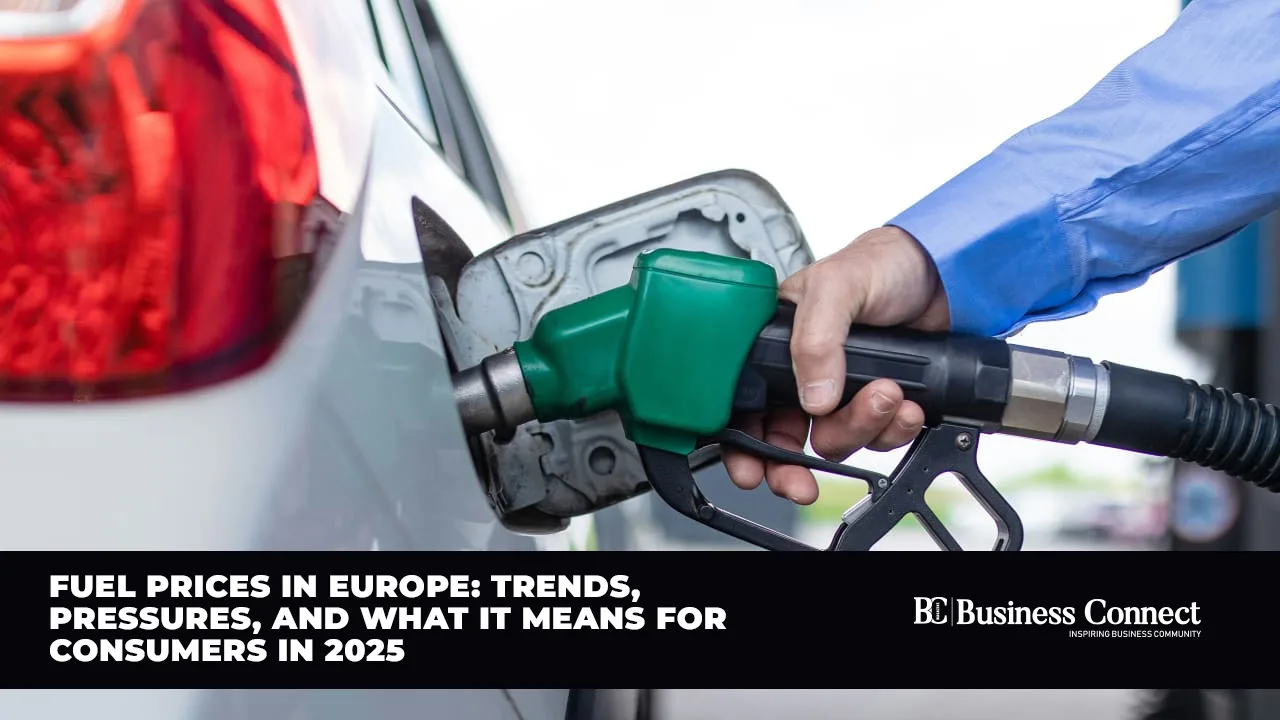
Europe’s fuel market has entered a period of relative stabilization in 2025 after several years of extreme volatility. The dramatic price spikes of 2022, triggered by geopolitical tensions and post-pandemic demand recovery, reshaped the continent’s energy landscape. While prices have moderated compared to those historic highs, they remain significantly above pre-pandemic levels in many countries.
For businesses, transport operators, and households alike, fuel pricing remains a critical economic indicator, influencing inflation, logistics costs, and consumer spending patterns.
The Current Landscape of Fuel Prices in Europe
In 2025, average gasoline prices across the European Union continue to fluctuate between €1.60 and €2.10 per liter depending on the country. Converted to U.S. gallons, this often translates to the equivalent of $7 to $9 per gallon, substantially higher than U.S. averages.
Countries such as Germany, the Netherlands, Italy, and France typically report higher pump prices due to a combination of taxation policies, environmental regulations, and supply chain dynamics. Meanwhile, Eastern European nations often record slightly lower prices, though still elevated by global standards.
The gap between European and American fuel prices remains one of the most striking transatlantic economic differences.
Why Are Fuel Prices Higher in Europe?
The primary reason European fuel prices remain elevated is taxation. In many EU countries, fuel taxes account for 50 percent or more of the final retail price. These taxes include excise duties, environmental levies, and value-added tax.
Unlike the United States, where the federal gasoline tax has remained unchanged for decades, European governments frequently adjust fuel taxation as part of broader fiscal or climate strategies. This means that even when crude oil prices fall, pump prices do not always decrease proportionally.
Additionally, Europe’s regulatory framework prioritizes environmental objectives. Stricter fuel blend standards, carbon pricing mechanisms, and emissions targets contribute to structural cost differences.
The Role of Crude Oil and Global Markets
Despite domestic taxation being a major component, global crude oil prices still play a decisive role. Brent crude, the primary benchmark for Europe, remains sensitive to geopolitical developments, OPEC+ production decisions, and global demand patterns.
The energy crisis that followed Russia’s invasion of Ukraine significantly disrupted European supply chains. Although alternative sourcing and diversified imports have improved resilience in 2024 and 2025, the continent continues to face structural vulnerabilities in energy security.
Refining capacity also influences regional pricing. Limited refinery upgrades in certain areas have occasionally tightened supply, particularly during seasonal demand peaks.
Country-Level Variations
Fuel prices vary considerably within Europe. France, for example, maintains a tax-heavy structure but has occasionally introduced temporary rebates during periods of extreme volatility.
Motorists seeking updated insights into fuel price in Europe and french can monitor real-time comparisons through specialized platforms that provide station-level data and regional averages. Tools like these have become increasingly important as consumers look for ways to optimize spending.
For even more granular analysis, including pricing by municipality and district, dedicated geographic tools now allow users to explore fuel prices in all French localities by zip code. This level of localization reflects a growing demand for hyper-targeted data, especially in competitive retail fuel markets where minor price differences can translate into significant savings over time.
Germany and the Netherlands often rank among the highest-priced markets due to environmental taxation and strong regulatory frameworks. Southern European countries may see seasonal fluctuations linked to tourism demand, while Eastern Europe remains comparatively less expensive but still influenced by EU-wide policies.
Business implications across Europe
For European businesses, fuel prices directly affect transportation, manufacturing, and logistics costs. Higher diesel prices particularly impact freight operators and supply chains.
Small and medium-sized enterprises often face margin pressure during periods of price volatility. Industries such as agriculture, construction, and delivery services are especially sensitive to fuel fluctuations.
Inflationary pressures across the eurozone have also been partially driven by energy costs. As fuel prices rise, transportation costs increase, which then affect the pricing of goods and services throughout the economy.
The transition to alternative energy
Europe’s long-term strategy involves reducing dependence on fossil fuels. Electric vehicle adoption continues to accelerate, supported by government incentives and expanding charging infrastructure.
However, despite strong EV growth, internal combustion engine vehicles still dominate the European fleet in 2025. This means fuel prices remain a critical economic variable.
Hybrid vehicles have gained significant traction, offering consumers a balance between fuel efficiency and range flexibility. Businesses are also gradually electrifying fleets, though infrastructure gaps remain in some regions.
Can prices return to pre-2020 levels ?
A full return to pre-pandemic price levels appears unlikely in the near term. Structural changes, including higher environmental taxation and energy diversification costs, suggest that baseline prices may remain elevated compared to the 2010s.
That said, absent a major geopolitical disruption, analysts expect moderate stability in 2025 and 2026. Crude oil markets currently appear more balanced than during the 2022 crisis, though global economic slowdowns or production shifts could alter this equilibrium.
Consumer strategies in a high-price environment
European motorists have increasingly adopted cost-saving behaviors. These include route optimization, fuel price comparison tools, eco-driving practices, and reduced discretionary travel.
Digital platforms offering real-time station comparisons are playing a growing role in consumer decision-making. In competitive markets such as France, even small price differences per liter can translate into meaningful monthly savings.