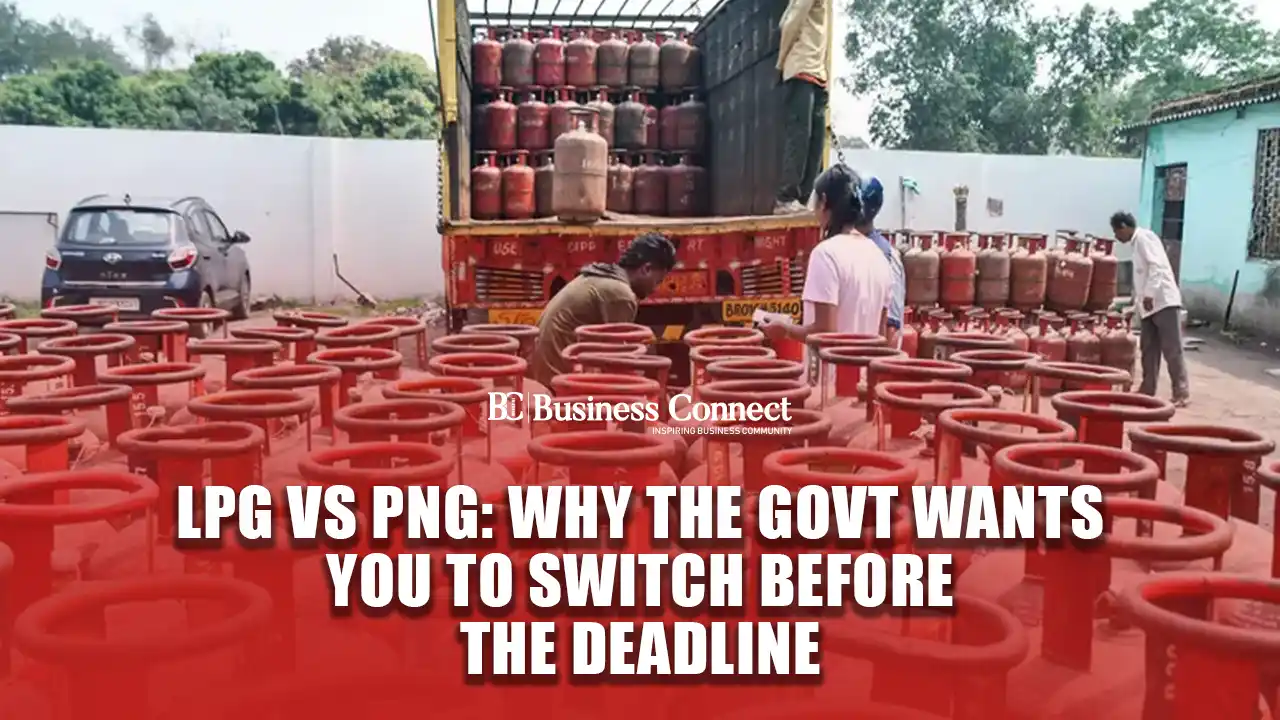
According to reports, the Center sent out a notice on Tuesday warning households that if they do not convert to piped natural gas, the supply of cooking gas LPG will be cut off.
The directive, which was adopted on March 24, also established a deadline for consumers to obtain a PNG connection in regions where it is practical to do so.
The Ministry of Petroleum and Natural Gas announced the Natural Gas and Petroleum Products Distribution (Through Laying, Building, Operation and Expansion of Pipelines and Other Facilities) Order, 2026, according to news agency PTI.
Reports of an LPG shortage amid the conflict between the US, Israel, and Iran coincided with the ministry’s directive.
LPG delivery “shall cease after three months” if a family chooses not to use PNG despite its availability, according to the Ministry of Petroleum and Natural Gas’s decree.
“Consequences of households not applying for and obtaining PNG connection when notified by authorised entity” that has installed a pipeline to supply such fuel are listed in the order.
It stated, “The LPG supply to such an address shall cease after three months from the date of the communication.”
However, in cases where providing a piped connection is “technically infeasible,” the provision permits continuing. The individual will need to obtain a no-objection certificate from the authorities in this situation.
“The supply of LPG to a household shall not cease, if the authorised entity issues a no-objection certificate [NOC] on the ground that it is technically infeasible to provide a piped natural gas connection or gas supply to such household,” the directive said.
When the authorized company is able to supply and operationalize piped gas connectivity to such houses, it will withdraw the NOC and keep documentation of the reasons for such technical infeasibility.
“Constraints are being faced and are expected to be faced for a long time in relation to the supply and distribution of both LPG and natural gas on account of extensive damage to and suspension of operations of the liquefaction facilities in the Gulf region that supply liquefied natural gas to India and the continued blockage of the Strait of Hormuz,” according to the ministry’s March 24 order.
The action is intended to free up LPG supply from pipeline-connected areas and reroute them to others without such infrastructure in the middle of the Middle East crisis. Such occurrences necessitate “fuel diversification as a mitigation for long term energy security,” according to the ministry.
Oil Secretary Neeraj Mittal commented on the directive in a post on X, stating that the ease of doing business reforms had “turned a crisis [into an opportunity.”
In accordance with the Essential Commodities Act of 1955, the government announced the Natural Gas and Petroleum Products Distribution (Through Laying, Building, Operation and Expansion of Pipelines and Other Facilities) Order, 2026 through the Ministry of Petroleum and Natural Gas.
By streamlining permits, standardizing fees, and guaranteeing time-bound authorization, the directive aims to expedite pipeline infrastructure. According to the PIB announcement, “the order provides a streamlined and time-bound framework for laying and expanding pipelines across the country, addressing delays in approvals and access to land, and enabling faster development of natural gas infrastructure, including in residential areas.”
1. To facilitate rapid rollout, public authorities must grant right of way or permissions within prescribed timelines, failing which approvals will be deemed granted.
2. The order also bars authorities from imposing charges beyond those specified. “The public entity shall not levy any tax, fee, charge, surcharge, rent, wayleave, development charge, annuity, compensation, entry fee or any other types of charge or financial levy, other than those specified in this order for access or seek any other charges or compensation in any form,” the order stated.
3. In housing areas, entities controlling access must grant permissions within three working days, and last-mile PNG connectivity is to be provided within 48 hours. Applications for pipeline connectivity in such areas cannot be rejected.
4. The order further provides for intervention by designated officers with powers akin to a civil court to resolve disputes over land access and grant right of way where necessary.
5. Authorised entities must begin laying pipelines within four months of approval or face penalties, including possible loss of exclusivity.
6. The Petroleum and Natural Gas Regulatory Board (PNGRB) has been designated as the nodal agency to monitor implementation, including tracking approvals, rejections and compliance.
7. In case the right of way or right of use permission to lay pipeline to residences for supply of PNG is not granted by the entities that control access to the housing complex, a notice will be issued and three months thereafter oil marketing companies will stop supply of LPG. (With inputs from PTI)