
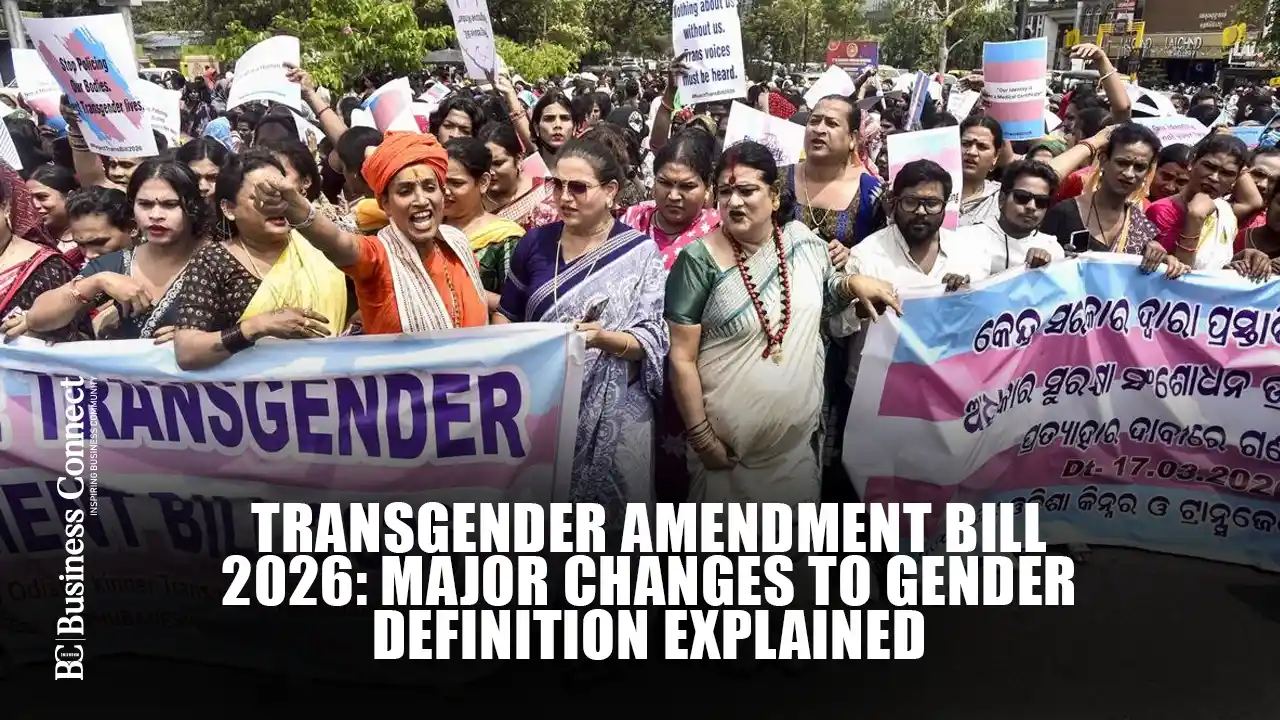
On March 25, 2026, a new bill passed in Parliament has reignited a major debate around transgender identity. The bill, titled Transgender Persons (Protection of Rights) Amendment Bill, 2026, has sparked controversy, especially over the issue of self-identification.
On one side, the government argues that these changes are necessary to ensure the safety and protection of the transgender community. According to the government, the bill aims to prevent misuse—such as forcibly labeling or misrepresenting someone as transgender.
On the other side, members of the transgender community have strongly opposed the bill. They argue that the amendments go against the landmark 2014 Supreme Court judgment in National Legal Services Authority v. Union of India (NALSA case).
In that historic ruling, the Court recognized transgender individuals as a “third gender” and affirmed that they are entitled to the same fundamental rights as all other citizens under the Constitution. Importantly, the judgment upheld the right to self-identify one’s gender.
So, the core issue today is a clash of perspectives.
This debate is not just about a law—it’s about identity, rights, and dignity.
In this discussion, we will explore:
- The government’s arguments in favor of the bill
- The concerns raised by the opposition and the transgender community
Hi, I’m Anurag Tiwari, and you’re reading Business Connect Magazine News—explained in simple terms.
The last census in India was conducted in 2011, nearly 15 years ago. For the first time, gender was categorized into three codes:
- Code 1: Male
- Code 2: Female
- Code 3: “Other” or third gender
The “Other” category included individuals who do not identify strictly as male or female, including transgender persons. According to the 2011 Census, around 4.88 lakh people identified under this category—though experts believe the actual number could be much higher.
India’s Constitution guarantees equality under Article 14, and Article 15 prohibits discrimination on the basis of gender. This raises an important question: Is it fair to deny any community the right to its identity?
This is exactly what critics are arguing in opposition to the new bill.
Legal Journey of Transgender Rights in India
To understand the controversy, it’s important to look at the legal progress made over the past decade:
- 2014: In the landmark National Legal Services Authority v. Union of India (NALSA case), the Supreme Court recognized transgender persons as the third gender and upheld the right to self-identification.
- 2017: In K.S. Puttaswamy v. Union of India, the Court declared privacy a fundamental right, linking it to gender identity.
- 2018: In Navtej Singh Johar v. Union of India, same-sex relationships were decriminalized, benefiting the LGBTQ+ community, including transgender individuals.
- 2019: The Transgender Persons (Protection of Rights) Act created a legal framework to prevent discrimination and introduced identity certification and welfare provisions.
- 2020: Rules were framed to streamline the process of obtaining identity certificates.
- 2023: In Supriyo v. Union of India, the Supreme Court clarified that transgender individuals identifying as male or female could marry under existing laws.
Over the years, a strong legal framework was built—rooted in the principle of self-identification established by the NALSA judgment.
What Changed in the 2026 Amendment Bill?
The Transgender Persons (Protection of Rights) Amendment Bill, 2026 introduces several controversial changes:
1. Removal of Self-Identification
Earlier, individuals could declare their gender identity themselves and obtain a certificate through the District Magistrate.
Now:
- A medical board evaluation is required
- Government approval becomes mandatory
This shifts identity from a personal right to a bureaucratic process.
2. Narrowed Definition of Transgender
The 2019 law defined transgender identity broadly, focusing on self-perception.
The 2026 bill restricts it to:
- Socio-cultural identities (like kinnar, aravani, eunuch communities)
- Biological variations (chromosomal, hormonal, or physical differences)
- Cases of forced gender identity
This effectively excludes self-perceived identities, which were central to earlier legal protections.
3. Mandatory Medical Certification
To be recognized:
- Individuals must undergo medical examination
- Certification is issued only after official approval
This has raised concerns about privacy, dignity, and autonomy.
4.Criminalization Concerns
Critics argue that certain provisions—like those related to “forced identity”—could unintentionally target:
- Chosen families
- Community support systems
Many transgender individuals rely on such networks after being rejected by their biological families. The law, instead of protecting them, may risk criminalizing these support structures.
Criticism from Experts
Legal experts, including advocates like Arundhati Katju, argue that:
- The bill may violate constitutional principles
- It undermines self-identification
- It introduces discriminatory provisions in areas like harassment and legal recognition
Even former Delhi High Court judge Asha Menon has reportedly raised concerns, calling the bill a setback for transgender rights.
The Core Debate
At its heart, this is not just a legal issue—it’s about:
- Identity
- Dignity
- Fundamental rights
The past decade saw progress toward inclusion. The 2026 amendment, however, has reopened the debate—raising a crucial question:
Should gender identity be determined by the individual—or by the state?
If a transgender person was forced into bonded labour, denied access to public places such as cinemas, theatres, malls, or restaurants, compelled to leave their home or village, or subjected to any form of violence, the earlier law prescribed a punishment of 6 months to 2 years in prison along with a fine. In other words, while such acts were recognized as crimes, the penalties were relatively lenient.
However, the tone has significantly changed in the 2026 amendment bill. Four new provisions have been introduced, and punishments have been made much stricter, including rigorous imprisonment.
Consider the most serious cases: if a person is kidnapped, severely injured, and forced to adopt a transgender identity, the punishment is a minimum of 10 years of rigorous imprisonment, which may extend to life imprisonment, along with a fine of ₹2 lakh. If the victim is a child, the punishment becomes even harsher—direct life imprisonment and a minimum fine of ₹5 lakh.
In another scenario, if someone is forcibly made transgender and then compelled into begging or forced labour, the punishment ranges from 5 to 10 years of rigorous imprisonment along with a minimum fine of ₹1 lakh. If the victim is a child, the sentence increases to 10–14 years of rigorous imprisonment along with a higher fine.
Clearly, where earlier punishments were relatively mild, the new bill imposes significantly stricter penalties, especially in cases involving coercion, violence, and exploitation.
However, experts warn that these provisions could be misused to harass individuals who voluntarily identify as transgender. Dr. Akshar Sheikh, a doctor and activist from Hamdard Medical Institute in Delhi, argues that the 2026 bill fails to ensure equality for transgender individuals. For instance, sexual abuse against women can attract punishments ranging from 10 years to life imprisonment, whereas similar crimes against transgender individuals may still carry a maximum sentence of only two years.
Dr. Afsha Sheikh further points out that a single law cannot address the complexities of different communities. Intersex and transgender individuals have distinct identities and challenges, and therefore require separate legal frameworks. Intersex individuals should receive rights based on their biological conditions, while transgender individuals should be given protection considering the discrimination they have historically faced. Additionally, those who are more marginalized within these communities should receive greater support, such as reservations or scholarships. However, such policies should be formulated only after consulting all stakeholders.
According to Dr. Sheikh, the real issue lies in taking away rights that have already been granted by the Supreme Court and the Constitution.
Now, looking at the government’s perspective, Union Minister Dr. Virendra Kumar stated that the bill aims to protect individuals who are born into conditions that expose them to social discrimination. He argued that the 2019 law had a vague definition of transgender persons, and the new bill seeks to clarify it. A medical board will now verify eligibility to ensure that government benefits reach the rightful beneficiaries.
The government also emphasizes the bill’s focus on safety, stating that it introduces stricter penalties for crimes such as forced gender change, kidnapping, begging rackets, and bonded labour. According to the government, these measures will empower the transgender community.
While both sides present strong arguments, the bill has raised a fundamental question: should the right to determine one’s identity lie with the individual, or should it be subject to government procedures and medical verification?
As the bill has been passed by Parliament, it now awaits the President’s approval to become law. Once enacted, it will be implemented across the country.
This also raises broader concerns—will a community that constitutes just 0.04% of the population have to fight a prolonged battle for identity rights? And will this issue eventually reach the Supreme Court?
Frequently Asked Questions (FAQs)
1. What is the Transgender Persons (Protection of Rights) Amendment Bill, 2026?
The Transgender Persons (Protection of Rights) Amendment Bill, 2026 is a new law passed by Parliament that introduces changes to how transgender identity is defined, recognized, and regulated in India, sparking debate over rights and protections.
2. Why is the 2026 Transgender Bill controversial?
The bill is controversial mainly because it removes the right to self-identification and introduces mandatory medical and government verification, which many believe violates fundamental rights and dignity.
3. What did the 2014 NALSA judgment say about transgender rights?
In the National Legal Services Authority v. Union of India case, the Supreme Court recognized transgender individuals as a “third gender” and upheld their right to self-identify their gender.
4. What major change has been made regarding gender identity?
The 2026 bill replaces self-identification with a system that requires medical board evaluation and official approval, making identity recognition a bureaucratic process.
5. How has the definition of ‘transgender’ changed in the new bill?
The bill narrows the definition to include only socio-cultural identities, biological variations, and forced identity cases, excluding broader self-perceived gender identities.
6. What are the new punishment provisions under the 2026 bill?
The bill introduces stricter penalties, including:
- 10 years to life imprisonment for forced gender identity or serious harm
- 5–10 years imprisonment for forced begging or labour
- Higher penalties if the victim is a child
7. How does the bill impact the transgender community?
Critics argue it reduces autonomy, restricts identity rights, and may lead to harassment, while the government claims it enhances safety and ensures benefits reach genuine beneficiaries.
8. What concerns have experts raised about the bill?
Experts believe the bill may violate constitutional rights, undermine self-identification, and potentially criminalize support systems within transgender communities.
9. What is the government’s justification for the amendment?
The government states that the bill aims to prevent misuse, protect vulnerable individuals, and ensure proper identification through medical verification.
10. How many transgender individuals are there in India?
According to the 2011 Census, around 4.88 lakh people identified as “third gender,” though experts believe the actual number may be higher.
11. Does the bill align with constitutional rights?
This is debated. Critics say it conflicts with Articles 14 and 15 of the Constitution, which guarantee equality and prohibit discrimination based on gender.
12. Will the 2026 bill become law immediately?
No, after being passed by Parliament, it requires the President’s approval to officially become law.
13. Could the bill be challenged in court?
Yes, given the concerns around fundamental rights, it is likely that the bill could be challenged in the Supreme Court.