
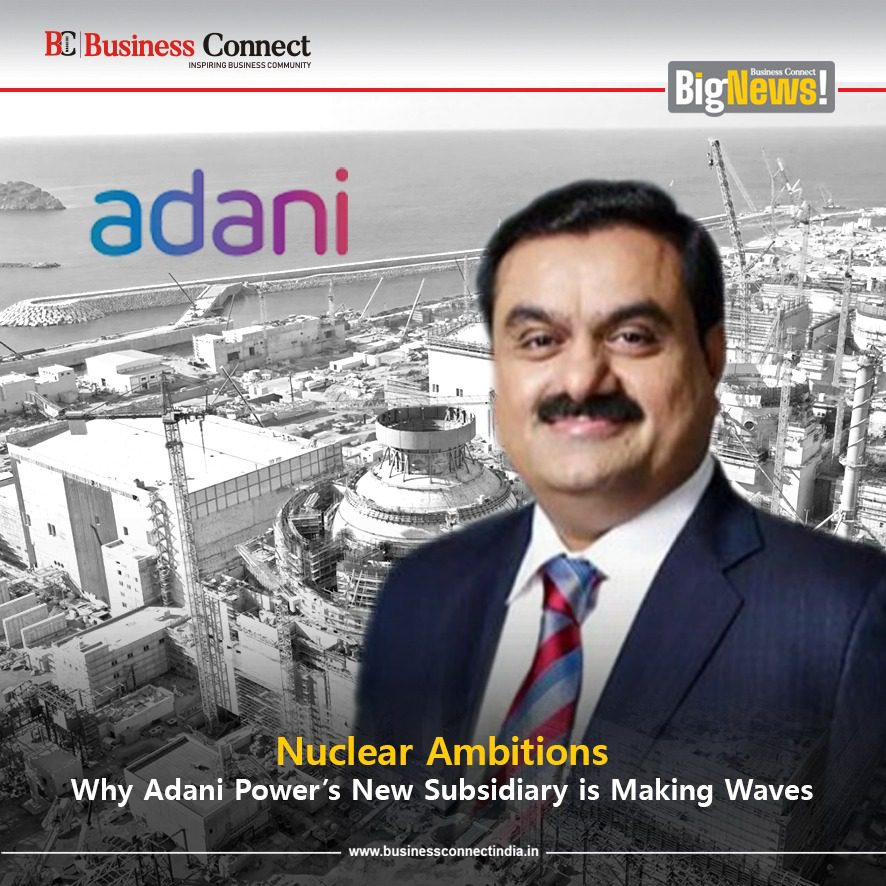
It’s official—the energy landscape in India is shifting, and the latest move from the Adani Group proves it’s not just talk. Adani Power has officially stepped further into the nuclear arena with the incorporation of a new subsidiary, Coastal-Maha Atomic Energy Limited (CMAEL), following the earlier setup of another unit, Rawatbhata-Raj Atomic Energy Limited (RRAEL).
For those watching the energy sector, this isn’t just another corporate filing. It’s a clear signal that the private sector is ready to play in the big leagues of atomic energy.
A Layered Move into Atomic Power
Following the passage of the Sustainable Harnessing and Advancement of Nuclear Energy for Transforming India (SHANTI) Act, the floodgates for private participation in nuclear power have effectively opened. While the government retains a firm grip on fuel management and safety oversight, companies like Adani are now positioning themselves to lead the charge in generation, transmission, and distribution.
By creating step-down subsidiaries like CMAEL and RRAEL under the umbrella of Adani Atomic Energy Limited, the group is building a modular, flexible structure. It’s the classic “ready-to-scale” move. They aren’t just testing the water; they’re building the pipeline.
Why Now?
The timing couldn’t be more strategic. With India eyeing an ambitious 100 GW of nuclear capacity by 2047, the country is facing a massive power demand surge. We’ve seen unseasonable heatwaves and fluctuating power grids become the new normal.
Nuclear energy offers something that wind and solar struggle to provide on their own: base-load, low-carbon power. It’s the reliable backbone needed to keep the grid steady while we transition to a cleaner energy mix.
What This Means for the Future
Adani Power isn’t alone in this. With Tata Power and other major players also eyeing the space, the competition is heating up. For the average consumer and the industry at large, this means:
- Diversification: Moving away from a reliance solely on thermal or variable renewables.
- Energy Security: A more robust, multi-source power grid.
- Strategic Growth: We are likely looking at the early stages of a decade-long infrastructure build-out.
While these subsidiaries are currently in the early “setup” phase with modest capital, don’t let the initial numbers fool you. This is a long-game play in one of the most complex, high-stakes industries on the planet.
The era of private-sector nuclear energy in India has truly begun. It’s going to be a fascinating, albeit regulatory-heavy, ride to watch.