
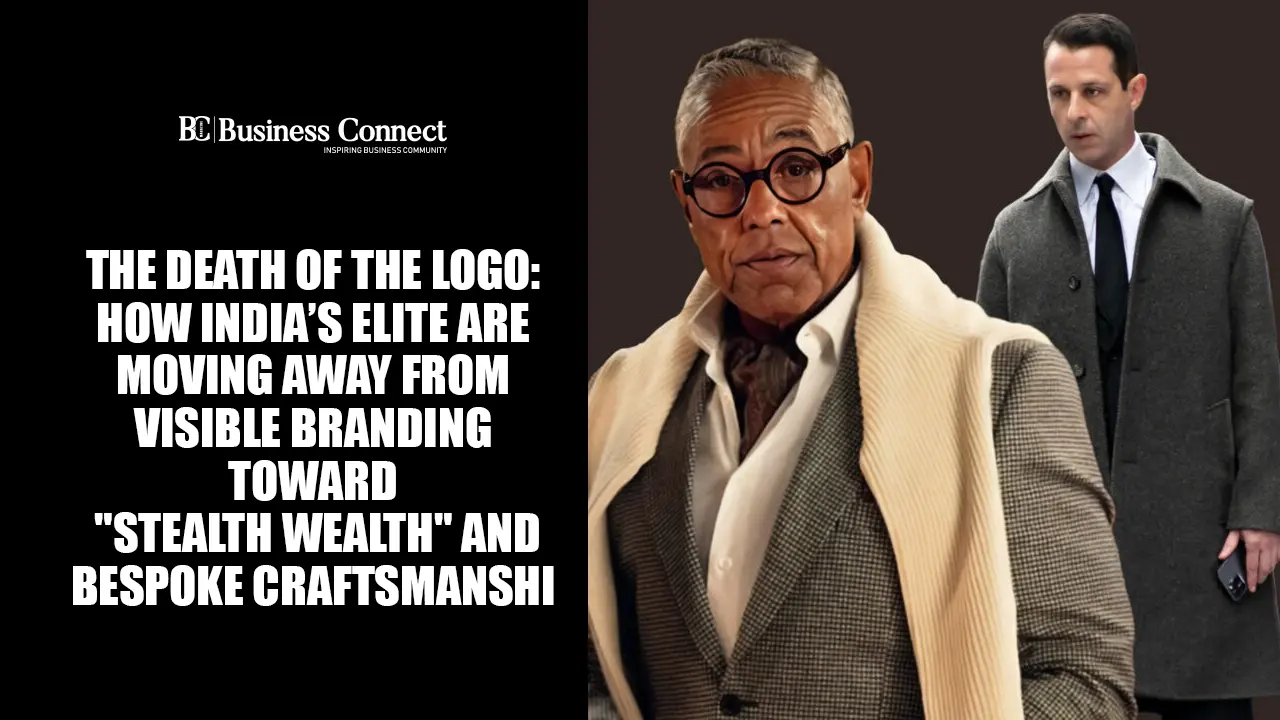
It was not long ago, when luxury in India was meant to be seen before it was felt. Logos were not just design elements, but declarations. A handbag didn’t just carry essentials, it carried identity. A belt buckle, a watch dial, even a pair of sunglasses, everything had to say something, and say it clearly about one’s financial status. But somewhere along the way, that language started to change.
Gradual transition in luxury world
What’s interesting is that the shift hasn’t been dramatic or loud. It’s been gradual, almost quiet in itself. Among India’s elite, especially those who have long been familiar with wealth rather than newly introduced to it, there’s a noticeable move away from visible branding. The logo, once the centerpiece, is slowly losing its place. Not because luxury has lost its appeal, but because the meaning of luxury is being redefined with the new age perspective.
The concept of stealth wealth
Today, there’s a growing preference for what many are calling ‘stealth wealth. The term might sound like a trend, but in practice, it feels more like a mindset. It’s about owning things that don’t need external validation. Pieces that don’t announce their price tag or pedigree, but reveal their value in quieter, more personal ways.
Detailing is the priority
You see it in the details of a product now. Fabrics that don’t just look good but feel unmistakably different. Tailoring that sits just right without trying too hard. Accessories that don’t carry obvious signatures, yet somehow stand out to those who understand what they’re looking at. It’s less about being recognized by everyone, and more about being understood by a few. This is something becoming quite popular among the elite class now.
Ultra-affluent class is rejecting predictability
There’s also a certain maturity behind this shift. For many within India’s ultra-affluent circles, overt branding has started to feel predictable. Almost like a phase that has already been lived through. When you’ve had access to global luxury for years, sometimes decades, the desire to display it openly tends to fade. What replaces it is a deeper appreciation for craftsmanship, for things that take time, skill, and intention to create. And that’s where bespoke product formation is finding its space again.
From tailored garments to made-to-order jewelry and even custom-designed living spaces, there’s a growing inclination towards pieces that feel personal. Not just exclusive in the sense that they’re expensive, but unique in the sense that they belong to a specific person. There’s a story attached, not just of the brand, but of the wearer, the buyer, the one who chose it. The product reflects the consumers personality traits, value, principles, etc.
Preference for legacy over the logo
All of the above stating doesn’t mean global luxury brands are disappearing from the wardrobes of affluent classes. They’re very much present. But they’re being chosen differently. Less for their logos, more for their legacy. Less for their visibility, more for their values such as craftsmanship, heritage, material excellence. In some cases, even these brands are adapting, dialing down their overt branding to align with this more understated aesthetic.
Cultural roots as the new ‘class’
It has been observed by this industry enthusiasts that there is a change in culture on a more global scale. A lot of people are starting to believe that you don’t have to show off your wealth all the time. India is very much a part of this conversation. But what makes the Indian context unique is how this global idea is mixing with local values, where heritage, art, and tradition are already very important. Now, the wealthy class is putting these things ahead of what is popular or trending on social media.
Luxury as a means to connect
In a way, it’s almost like a return. A return to appreciating the hand behind the product. The process behind the piece. The idea that luxury isn’t just about ownership, but about connection to craft, to culture, to meaning. Of course, this shift isn’t universal. Visible branding still holds its place, especially among newer consumers of luxury who are exploring and expressing their identities. And that’s valid too. But within the more established, ultra-high-net-worth segment, the movement towards subtlety is hard to ignore. Because at its core, stealth wealth isn’t about hiding wealth. It’s about not needing to prove that you are wealthy!
And maybe that’s where the real change lies. Not in what is being worn or bought, but in why it’s being chosen in the first place.