
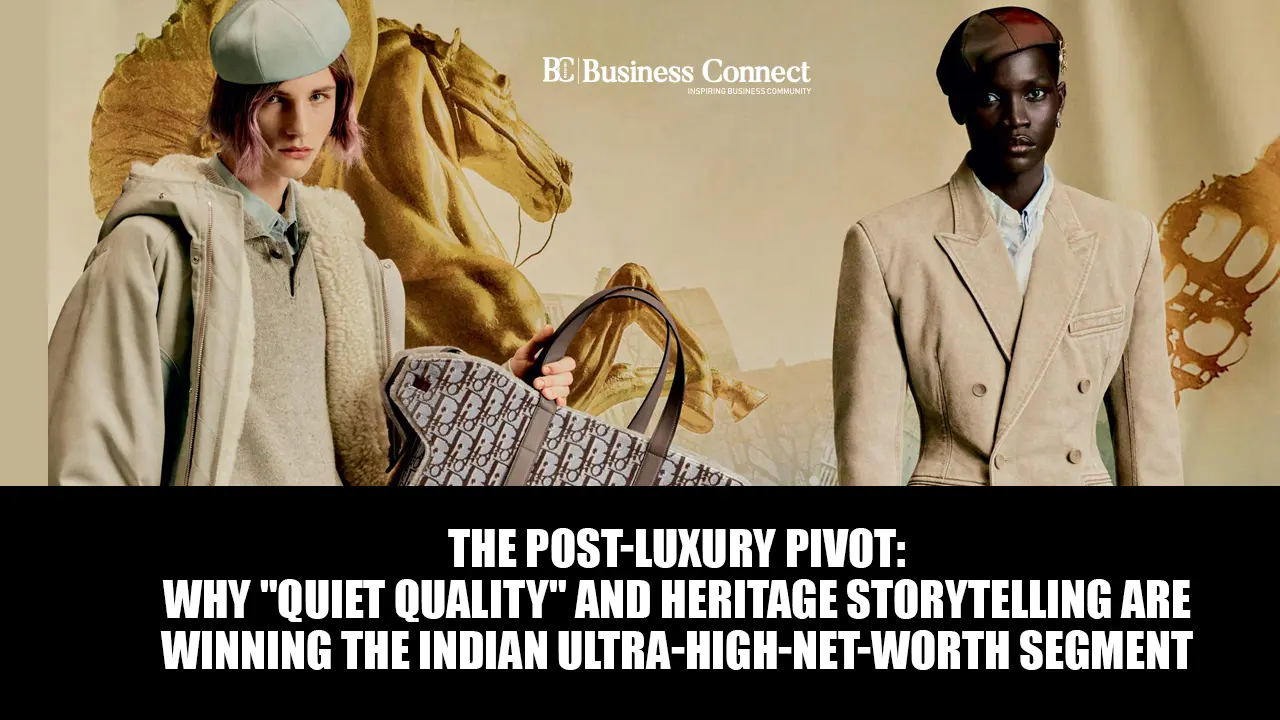
India’s ultra-wealthy are choosing to present themselves in a very distinct way which is not loud, but subtle. For years, luxury in India followed a fairly predictable script like displaying expensive logos that spoke before the wearer did, labels that signaled arrival, and a certain comfort in being seen. But somewhere along the way, that equation started to feel a bit dated. Today, among the ultra-high-net-worth segment, there’s a growing preference for something quieter which is more considered as an aware choice of wealthy individuals. Something that doesn’t need to announce itself to be understood.
Post luxury mindset shift
For better understanding, we can call it ‘quiet quality,’ or even a kind of post-luxury mindset. Either way, it’s becoming increasingly clear that the markers of status are evolving . What’s interesting is that this shift isn’t about spending less. If anything, the spending remains as strong as ever. The difference lies in where that money is going as well as the reason and purpose of it. Instead of chasing instantly recognizable brands, many affluent consumers are leaning towards craftsmanship, legacy, and pieces that carry a sense of permanence. A handwoven textile that took months to create. A bespoke watch with a story behind its making. A piece of furniture that feels like it belongs somewhere, not just anywhere. This sense of distinction is what is now defining luxury. Now, big expensive labels are no longer the signs of owning luxurious goods, but the story behind every product is what is becoming the new norm of showcasing affluence.
Nothing is exclusive anymore
There’s also a certain fatigue at play. At present, everything is visible owing to social media, global access, and constant exposure, the idea of exclusivity has changed. When everyone can see everything, the real luxury becomes what isn’t easily visible or understood. It’s in the details, the materials, the history. Not the logo. And that’s where heritage storytelling quietly steps in to change how wealthy consumers are choosing to make their financial decisions on owning any good.
Where, who and why…
Indian consumers, especially those who have inherited wealth or built it over time, are showing a deeper interest in origins. They now ask questions before spending a hefty amount like where is this from? Who made this, and why does it matter? This curiosity is reshaping the way brands position themselves. It’s no longer enough to be premium; there needs to be a narrative that feels authentic, rooted, and, importantly, not manufactured for effect.
Cultural depths are making a difference
What is even more interesting is that Indian heritage itself is finding renewed appreciation within this segment. Crafts, techniques, and regional artistry that may have once been overlooked in favor of international labels are now being revisited, sometimes even reinterpreted. There’s a quiet pride in owning something that reflects cultural depth, without necessarily turning it into a statement piece.
Global luxury brands are adapting as per these new norms
Observing this scenario at the deeper levels, several global luxury brands are adapting now. Some are toning down their visual identities, focusing more on material excellence and design integrity rather than overt branding. Others are investing heavily in storytelling to highlight their archives, their artisans, their decades (or centuries) of evolution. It’s less about persuasion and more about resonance.
Valuing nuance over novelty
But this shift also brings a certain challenge. ‘Quiet quality’ isn’t always immediately recognizable, and that’s precisely what makes it powerful, but also difficult to market. It requires a more informed consumer, one who values nuance over novelty. And thankfully for brands, that consumer seems to be emerging more strongly in India than ever before.
Alignment over validation
There’s also an emotional layer to all of this. Earlier, luxury was used as a means to seek social validation. For many in the ultra-high-net-worth bracket, especially the younger generation, luxury is becoming less about validation and more about alignment. Does this brand reflect my values? Does it respect craftsmanship? Is it something I’ll still appreciate years from now? These are not questions that can be answered with a logo.
In many ways, this post-luxury pivot feels less like a trend and more like a recalibration. A move away from the obvious towards making more intentional choices. Now, people are gravitating from display to discernment. And perhaps that’s the real takeaway here. The future of luxury in India may not be about being seen at all, but about being understood, by those who know where to look.