Written By Puja Bhardwaj
As natural resources are rapidly being depleted and the pressure on the environment is continuously increasing, the concept of the circular economy has emerged as a suitable solution. It helps in minimising the environmental impact, builds a resilient economy, and presents multiple economic benefits.
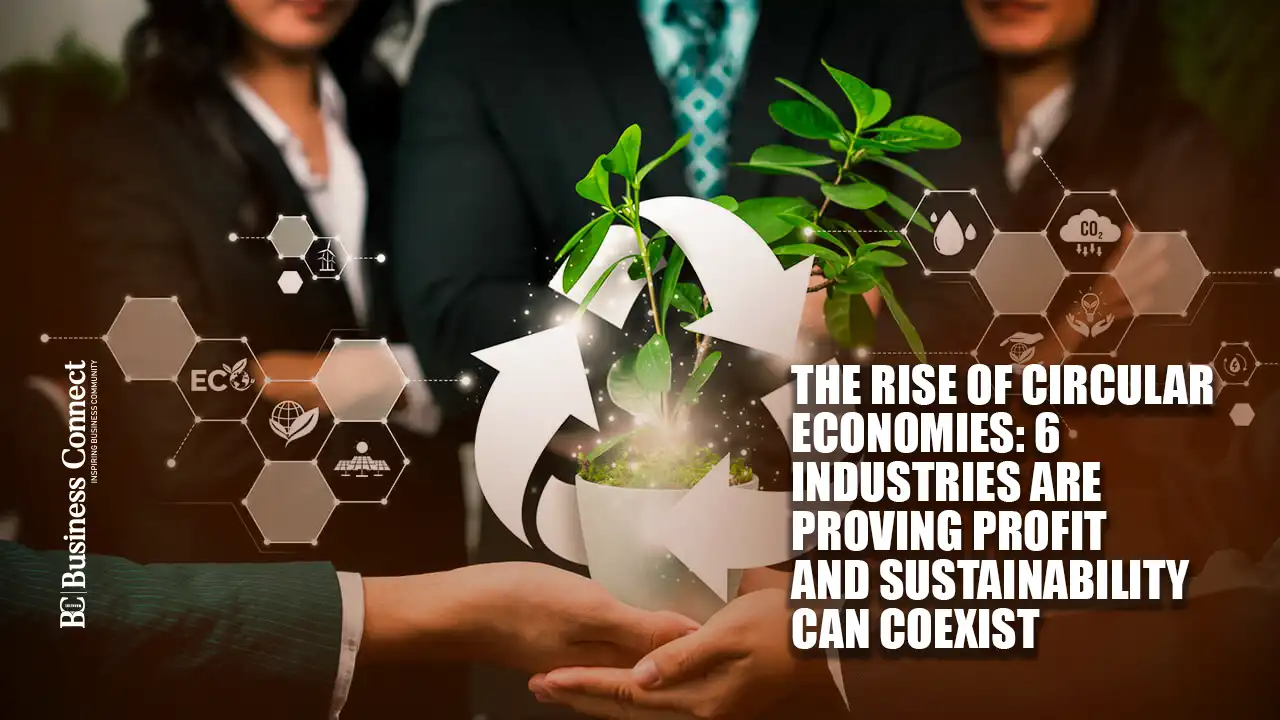
The rise of the circular economy represents a transformative shift towards a more sustainable and regenerative economic system with a distinctive opportunity for innovation, growth and sustainability. In this article, we will explore the concept of the circular economy, its increasing impact and how companies are redesigning products to reduce waste and maximise efficiency:
Defining Circular Economy
As the word describes, the circular economy keeps products in circulation for as long as possible, replacing the take-make-dispose linear approach with a unique process focused on restoration, regeneration and elimination of waste. It is a system where materials never become waste, and nature is regenerated. The circular economy majorly focuses on keeping materials, products and components in use at their optimum value. The United Nations’ International Resource Panel stated that half of greenhouse gas emissions worldwide happen due to natural resource extraction and processing.
Redesigning Products to Reduce Waste
As the world is experiencing a continuous reduction in natural resources and over 93% of materials are waste or unavailable for recycling, industries are continuously striving to prove that circular practices can drive both environmental sustainability and business profitability.
- Manufacturing: Manufacturing companies are increasing the lifespans of assets by changing the specific modules instead of replacing the entire systems. This approach helps in reducing waste and also enhances competitiveness by boosting the value extracted from the available assets. Besides, implementing lightweight engineering allows manufacturers to conceive and create lighter parts that help in cutting down the use of raw materials and also energy costs.
- Healthcare: The programmes, like equipment refurbishment, help in remanufacturing medical equipment at almost half the price and also reduce waste. Healthcare organisations are exploring ways to reuse the single-use devices by safely cleaning or disinfecting them.
- Automotive and Transportation: With circular vehicle design, the automotive industry is emphasising recyclability and battery reuse, reducing dependency on raw materials. The latest MaaS models, like car-sharing and ride-hailing platforms, are further reducing carbon emissions and waste.
- Architecture: Architectural firms are shifting their architectural model with a unique approach of “Design from Supply”. It means firms design from existing stock and available materials. Under this approach, the designer connects to the circular marketplace and creates a relationship between the materials available and the possibility for design.
- Construction: In this sector, the companies are optimising construction projects with virtual twins. Under this approach, cutting and drilling operations are done in factories instead of on-site. The Bougues construction helps in saving materials by 15% through factory-based precision cutting.
- Electronics and Technology: To encourage the circular economy, the companies in this sector are actively implementing e-waste recycling programmes and designing modular products to encourage easy repairs and upgrades. The technology industry is implementing take-back schemes, where end-of-life devices are refurbished or recycled to extend the lifespan of electronic products and minimise waste.
The Future Ahead
While the awareness of the circular economy is increasing, people are still far from being fully knowledgeable. To make the circular economy approach common, there is a need for an integrated approach where policy, technology, and finance need to come together to build a supportive environment. Governments must focus on creating regulatory frameworks, businesses need to actively invest in circular solutions, and financial institutions need to offer the necessary capital to scale impactful projects. The shift to a circular economy is not just about sustainability; it is a major driving force behind economic resilience, resource efficiency, and long-term business vision.
Ultimately, the circular economy closes the product’s lifecycle and also creates a regenerative system under which economic growth skyrockets with limited consumption of resources. The rise of the circular economy is offering a unique opportunity for companies to make their business model more sustainable and profitable. Companies adopting this approach gets multiple benefits, plus they contribute to healthier and more resilient global economic growth.