I work at a five hotel in Jaisalmer. We’ve hosted weddings for over a decade. I’ve seen the bride’s mother cry at the mandap and the groom’s father cry at the bill. I’ve watched a sangeet get shut down by a sandstorm and a phera ceremony so beautiful that the photographer forgot to shoot for forty seconds.
Desert weddings are spectacular. They’re also logistically complicated in ways that nobody warns you about until you’re knee-deep in planning. The Instagram version — flowing lehenga against golden dunes, fairy lights strung across a sandstone courtyard — is real. But getting there involves decisions that most wedding blogs skip over because they’re not glamorous.
So here’s the unglamorous truth, from someone who watches it happen up close.
The Weather Will Test Your Relationships
Not your marriage. Your relationship with your wedding planner.
Desert weather between November and February is gorgeous during the day — clear skies, golden light, the kind of warmth that makes everyone look sun-kissed in photos. But the moment the sun drops, temperatures can fall to 6–8°C. Sometimes lower. I’ve seen bridesmaids in sleeveless outfits physically shaking by the third phera.
Plan for this. And I don’t mean “maybe keep some shawls around.” I mean industrial-grade patio heaters at every outdoor function. Warm drink stations with masala chai, hot chocolate, and mulled wine. Pashmina baskets placed at entrance points so guests grab one without thinking. And a contingency indoor space that’s fully set up — not as a backup plan, but as a parallel plan.
Also — wind. Nobody talks about the wind. January evenings in the Thar can get gusty. Candles blow out. Lightweight décor elements fly off tables. Napkins end up in the pool. Your florist needs to know this. Your decorator needs to know this. Tall centrepieces and delicate fabric draping do not survive desert wind. Low, heavy arrangements do.
Your Guests Need Hand-Holding (More Than You Think)
A wedding in Mumbai or Delhi is easy for guests. They drive there, attend, drive home. A desert wedding requires a flight, a transfer, a check-in, figuring out what to wear for outdoor functions in a climate they’ve never dressed for, and navigating a property they’ve never been to.
Assign someone — not your planner, not the venue staff, a dedicated person from your side — whose only job is guest experience. They send out a pre-wedding email with packing tips (warm layers for evening, comfortable shoes for sandstone floors, sunscreen for daytime). They coordinate airport pickups so nobody’s stranded. They know which uncle needs a ground-floor room and which friend is vegetarian.
Small touches that make the difference: welcome hampers in each room with local snacks and a printed itinerary. WhatsApp group with real-time updates. A “convenience station” near the event areas with safety pins, band-aids, phone chargers, and mints. These things cost almost nothing but they’re what guests remember.
Choose a Venue That Does Most of the Work for You
This is the advice that will save you the most money and the most stress, and it’s the one couples resist the most.
Some couples pick a venue for the photos and then spend lakhs transforming it to match their “vision.” Fabric draping over carved sandstone. Imported tulips in a town where marigolds grow wild. A fabricated mandap that blocks the fort view. Stop. If you chose a palace-style wedding venue, let it be what it is.
The best desert weddings I’ve worked on are the ones where the couple said: “The building is the décor.” Add lighting. Place flowers where they enhance, not where they compete. Use the courtyard fountains, the jharokha windows, the carved pillars as your design elements. They’re already there. They’re already beautiful. And they cost you nothing.
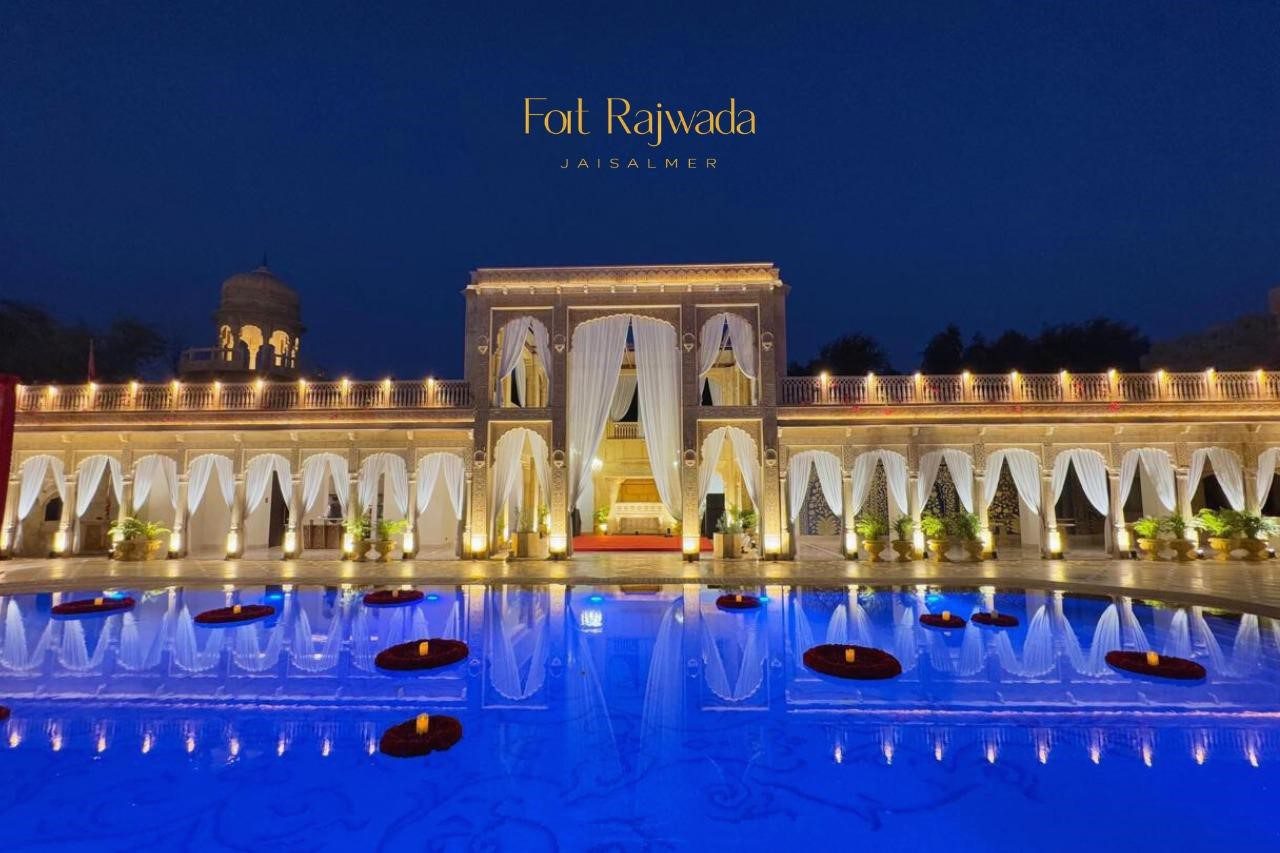
Properties like Fort Rajwada — a well-known destination wedding venue in Jaisalmer — were built in the architectural language of Rajputana palaces — hand-carved sandstone, expansive courtyards, terraces with desert views, and 100+ rooms for guest accommodation. The property also offers multiple function spaces including courtyards, terraces, and indoor venues, making it easier to host different events without logistical chaos.
When you explore venues in this category, you’re essentially booking a backdrop that’s been 200 years in the making. Your decorator’s job becomes enhancement, not construction. That saves money and looks ten times better in the album.
The Food Can Make or Break You
I have a theory: guests forgive bad décor. They do not forgive bad food.
Desert weddings have a secret advantage here that most couples underuse. Rajasthani cuisine — the real stuff, not the watered-down hotel version — is extraordinarily good. Dal baati churma made in a traditional clay oven. Laal maas slow-cooked for hours. Ker sangri that you literally cannot get outside the Thar region. Bajre ki roti with lahsun chutney that your guests from Mumbai will dream about for months.
Use local food as a feature, not a novelty. The mehendi lunch can be a Rajasthani thali served on traditional plates. The sangeet dinner can be a live grill station under the stars. The wedding lunch can combine Rajasthani and your family’s home cuisine. This works better than an imported pan-Asian spread because it feels like the place. It tells a story.
One practical note: if you’re bringing an outside caterer into a remote desert location, the logistics get complicated fast. Ingredients need cold chain transport. Kitchen setup needs space and power. It’s almost always better to work with the venue’s in-house kitchen and supplement with your caterer for specific items rather than shipping an entire operation across state lines.
The Timeline Nobody Shows You
10–12 months out: Book the venue. Not “shortlist.” Book. Desert wedding venues during November–February fill up a year in advance for auspicious dates. If you’re just browsing at this stage, you’ve already lost the best weekends.
8–9 months out: Lock in your photographer and videographer. Good ones get booked across India. Then hire your planner — after the venue, not before. The planner works within the venue’s framework, not the other way around.
6 months out: Fly to the venue for a proper recce. Walk every space at the time of day your events will happen. Check where the sun sits at 4 PM (that’s your phera lighting). Check where the wind hits at 8 PM (that’s your dinner situation). No video call replaces this.
4 months out: Menu tasting. Décor mock-ups at the actual venue, not in the decorator’s office. Finalize room allocations for the guest block. Send out invites with full travel details.
2 months out: Confirm everything in writing. Final guest count. Vendor arrival schedules. Power requirements for sound and lighting. Setup and breakdown windows for each event space.
1 week out: Ship décor materials to the venue. Confirm all transfers. Do a final walkthrough with the venue’s coordination team. Then stop. Trust your people. Eat well. Sleep. The planning is done.
The Thing Nobody Tells You About Desert Weddings
They’re quieter than you expect.
City weddings have a background hum — traffic, construction, the neighbour’s party, airplanes overhead. In the desert, when the music stops between songs, all you hear is wind and crickets. During the pheras, when the pandit’s voice carries across the courtyard and there’s nothing competing with it, the moment lands differently. People cry more at desert weddings. I don’t know why. Maybe it’s the silence making everything feel more real.
Your photographer will tell you the same thing. The light in the desert is kinder than anywhere else in India. Golden hour lasts longer because the horizon is flat. The absence of visual clutter — no billboards, no buildings, no overhead wires — means every frame is clean.
That’s the real reason to do a desert wedding. Not because it’s trendy or because the reel will perform well. Because the place itself makes the moment bigger. And honestly, your wedding day deserves that.
Choosing the right venue reduces complexity significantly.