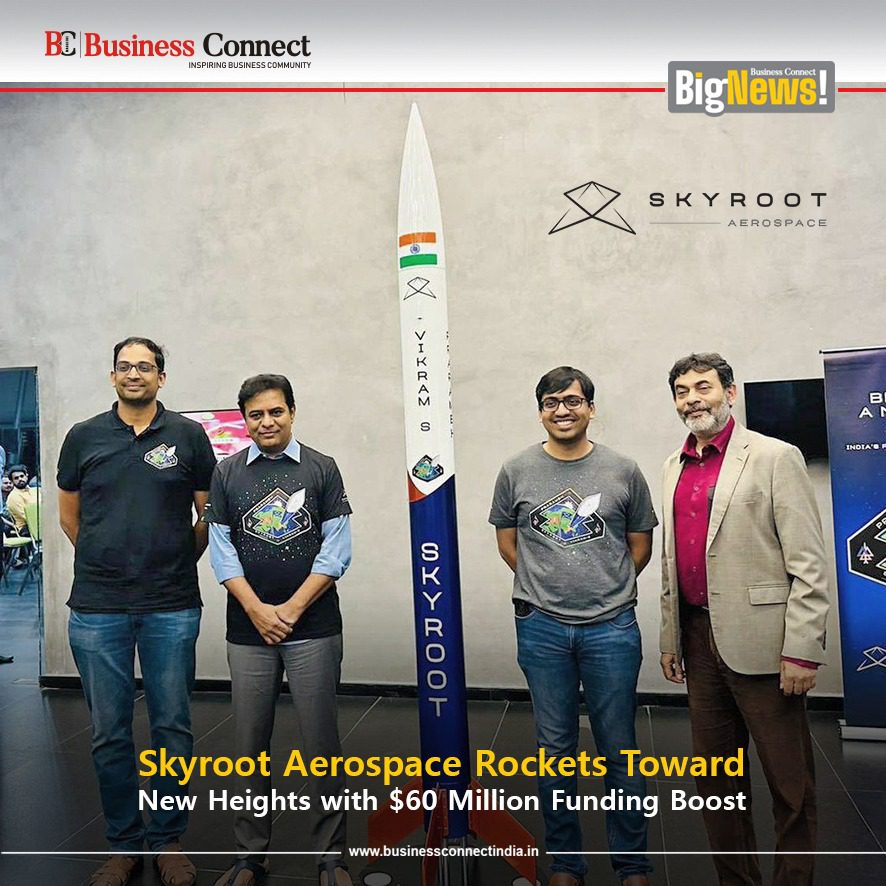
The Indian private space sector just got a massive vote of confidence from some of the biggest names in global finance. Skyroot Aerospace, the Hyderabad-based startup that made history as the first private Indian company to launch a rocket into space, has secured $60 million (approximately ₹570 Cr) in its latest funding round.
The round was co-led by Singapore’s sovereign wealth fund *GIC* and *Sherpalo Ventures, the investment firm of American billionaire and early Google investor **Ram Shriram*. In a move that signals a deepening commitment to the company’s long-term vision, Shriram is also set to join Skyroot’s board.
A Star-Studded Investor Lineup for India’s Space Ambitions
This isn’t just about the capital; it’s about the caliber of the backers. Alongside GIC and Sherpalo, the round saw participation from global investment giant *BlackRock, as well as **Playbook Partners, the **Shanghvi Family Office, and existing investors like the founders of **Greenko Group* and *Arkam Ventures*.
Founded in 2018 by former ISRO scientists Pawan Kumar Chandana and Naga Bharath Daka, Skyroot has been on a relentless mission to democratize space access. The startup specializes in building modular space launch vehicles—specifically the “Vikram” series—tailored for the booming small satellite market.
Why This Matters: The Small-Sat Revolution
The global demand for launching small satellites—used for everything from Earth observation to global connectivity—is at an all-time high. Skyroot’s modular approach allows them to assemble and launch rockets with much shorter lead times compared to traditional heavy-lift vehicles.
With this fresh $60 million injection, Skyroot is well-positioned to:
Scale Production: Move from experimental launches to a regular, commercial launch cadence.
Tech Advancement: Further refine their modular technology to offer even more cost-effective solutions for global satellite operators.
Global Footprint: Strengthen India’s position as a premier, affordable hub for private space exploration.
As India continues to open its space sector to private players, Skyroot is proving that “the sky is not the limit”—it’s just the beginning.
FAQs — Skyroot Aerospace Funding & India’s Private Space Boom
1. What is Skyroot Aerospace?
Skyroot Aerospace is an Indian private space-tech startup founded in 2018 by former ISRO scientists. The company focuses on building modular launch vehicles for small satellite missions.
2. How much funding did Skyroot Aerospace raise?
Skyroot Aerospace recently raised $60 million (around ₹570 crore) in a major funding round backed by global investors.
3. Who led Skyroot’s funding round?
The funding round was co-led by:
4. Who is Ram Shriram and why is his involvement important?
Ram Shriram is an early investor in Google and a well-known Silicon Valley entrepreneur. His involvement and expected board position signal strong global confidence in Skyroot’s future.
5. Which other investors participated in the funding round?
Other participants reportedly included:
6. Who founded Skyroot Aerospace?
Skyroot was founded by:
- Pawan Kumar Chandana
- Naga Bharath Daka
Both are former ISRO scientists.
7. What is Skyroot’s “Vikram” rocket series?
The Vikram series is Skyroot’s modular launch vehicle platform designed for launching small satellites into space quickly and cost-effectively.
8. Why is the small satellite market growing?
Demand for small satellites is increasing because they are used for:
- Earth observation
- Internet connectivity
- Weather monitoring
- Defense and security
- Communication systems
9. How will Skyroot use the new funding?
The company plans to:
- Increase rocket production
- Expand commercial launch operations
- Improve launch technology
- Scale global partnerships
- Strengthen India’s private space ecosystem
10. Why is this funding important for India’s space sector?
The investment reflects rising global confidence in India’s private space-tech industry and highlights India’s growing role in affordable commercial space launches.
11. What makes Skyroot different from traditional space companies?
Skyroot focuses on modular, lightweight launch systems that can offer:
- Faster launch preparation
- Lower launch costs
- Flexible satellite deployment
- Scalable commercial operations
12. What does this mean for India’s future in space technology?
The success of companies like Skyroot suggests India is becoming a major hub for private space innovation, attracting international investors, advanced technology development, and global commercial opportunities.
Read Also: