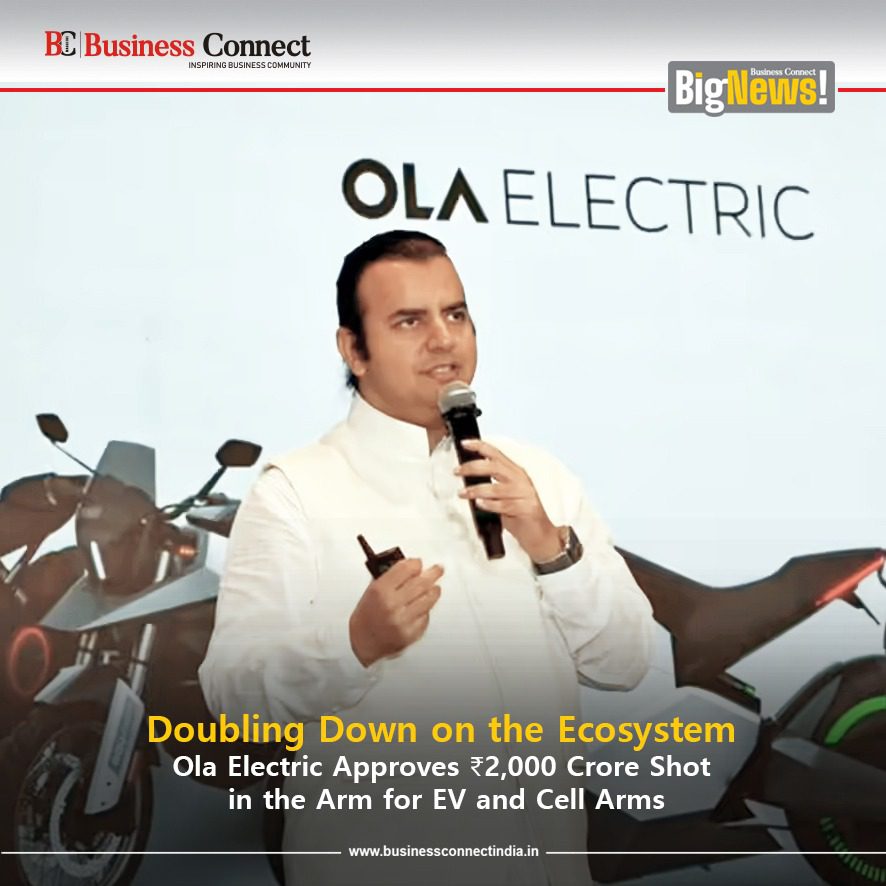
Just days before opening its books for the Q4 financial disclosures, Ola Electric’s board has greenlit a massive internal capital deployment. The EV major is pumping a combined *₹2,000 crore* into its two primary operational pillars: its vehicle manufacturing arm, Ola Electric Technologies Pvt Ltd (OET), and its highly closely watched cell manufacturing division, Ola Cell Technologies Pvt Ltd (OCT).
The structural play comes at an interesting juncture for the Bhavish Aggarwal-led firm, which is navigating a mix of cooling vehicle turnover alongside hyper-growth in its nascent battery tech ecosystem.
Breaking Down the Numbers: Where is the Money Going?
The board-approved capital will be split unequally between the two subsidiaries, with the transaction slated for a phased implementation targeted for completion by May 15, 2027.
- Ola Electric Technologies (OET): The vehicle manufacturing and services unit will absorb the lion’s share of the capital with an infusion of *₹1,500 crore*.
- Ola Cell Technologies (OCT): The battery cell manufacturing arm will receive the remaining *₹500 crore* to fund its continuous infrastructure build-out.
The financial data tucked inside the company’s recent disclosure paints a vivid picture of why this capital reallocation is happening. OET, which anchors the core scooter and upcoming motorcycle lineups, posted an 8% year-on-year decline in turnover, coming in at ₹4,717.48 crore for FY25. On the flip side, the younger OCT division saw its revenue skyrocket from a negligible baseline to *₹73 crore* for the same fiscal period.
The Strategic Play: Vertical Integration Amid Market Heat
The ₹2,000 crore internal fund-raising move underscores Ola Electric’s unwavering commitment to vertical integration. While the drop in OET’s core turnover reflects the intensifying competitive pressure from legacy two-wheeler giants hitting their stride in the EV space, Ola’s real ace up its sleeve has always been its Gigafactory ambitions.
By continuing to feed capital into Ola Cell Technologies, the company is racing to localize the most expensive component of an electric vehicle—the lithium-ion cell. Domestic cell manufacturing not only insulates the company from global supply chain shocks but also serves as the foundation for aggressive cost reduction needed to protect margins on entry-level EV models.
Furthermore, industry whispers suggest that Ola is increasingly eyeing the possibility of becoming a commercial supplier of battery packs and cells to external automotive and energy storage players. In that light, this ₹500 crore injection into OCT isn’t just about feeding its own assembly lines; it’s about laying the groundwork for a standalone energy powerhouse.
With the Q4 earnings announcement right around the corner, this massive ₹2,000 crore board approval sends a loud and clear message to the street: Ola is focused on long-term infrastructure over short-term quarter-on-quarter noise.