
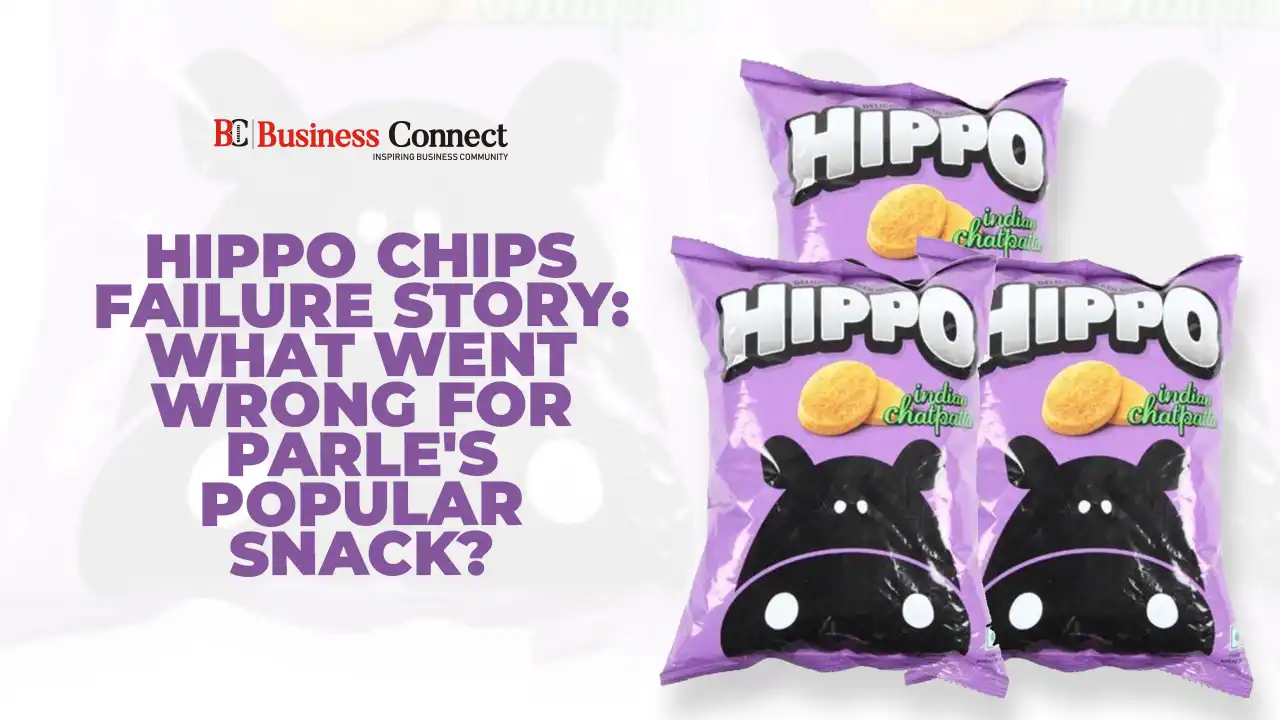
Hippo Chips were introduced as a quirky, healthful snack that quickly went out of style. Find out why, despite its popularity, Hippo Chips failed.
Snacking is more than just eating; it’s a crunchy bite that combines convenience, comfort, and memories. Giants like Lays, Bingo, Balaji, and Haldiram have dominated India’s snack stores for decades. However, Hippo Chips by Parle Agro, a new competitor with a daring promise and an eccentric attitude, reached the market in 2009.
baked rather than fried. No cholesterol. Not with MSG. Not a single trans fat. At a time when most chips were all about hedonism, Hippo seemed like a guilt-free, “better-for-you” option. The goods immediately stood out when you added bigger packets with a colorful, playful hippo symbol. Hippo became well-known after selling more than a million packets in its first year.
However, the snack that was supposed to revolutionize chewing had quietly vanished from the market by 2014. Even now, many nostalgically remember its flavors and even demand for its reintroduction. One of the most intriguing business case studies in India is the tale of Hippo Chips’ demise, which shows how even brilliant concepts can fail if they are not carried out well.
What Made Hippo Chips Unique?
- Healthier Alternative: Positioned as baked and guilt-free, it offered zero cholesterol, no MSG, no GMOs, and no trans fat.
- Quirky Packaging: The large, colorful packs with the bold hippo logo stood out on store shelves.
- Flavor Innovation: From Afghani Tikka Masala to Greek Yogurt, Thai Chilli Cream, and Indian Chatpatta, Hippo offered flavors rarely seen in the Indian market.
- Relatable Mascot: The hippo mascot was fun, goofy, and approachable, instantly connecting with younger audiences.
To put it briefly, Hippo had the personality and product strength to grow into a major brand. So why, in spite of such promising beginnings, did Hippo Chips fail?
Branding Confusion: The Identity Crisis
Poor communication and inconsistent branding were major factors in Hippo Chips’ demise.
At first, Parle attempted to associate Hippo with the noble goal of eradicating world hunger. Before dabbling with oddball cricket-inspired advertisements like the Indian Food League (IFL), it moved to emotive advertising with the “maa ka pyaar” (mother’s love) theme.
Despite the inventiveness of each ad, customers were perplexed by the frequent changes. Was Hippo a nutritious snack? An enjoyable indulgence? A comfort food for emotions? Customers weren’t sure why they should pick Hippo over Lays or Bingo because the messaging was constantly changing and there was no distinct brand identity.
The product advertised itself as a “healthy alternative,” but the package depicted a big, obese hippo, which added to the misunderstanding. The claim was refuted by the image, which further weakened its impact.
The Supply Chain Disaster
The supply chain was a crisis if branding was an issue.
Within months after its inception, Hippo’s shelves in 200,000 retailers were completely empty due to its immense popularity. Customers who couldn’t find Hippo on store shelves moved to other trustworthy brands, and it was challenging to win them back once that habit developed.
In response, Parle started the groundbreaking crowdsourced Plan-T campaign on Twitter, where customers used hashtags to report empty shelves. Distributors promptly replenished stores after receiving this information from the corporation.
The results were impressive:
- Sales rose by 76% in the short term.
- Twitter followers grew from 800 to 4,000, a 300% jump.
- Hippo gathered real-time market intelligence directly from customers.
This campaign is still regarded as a masterful illustration of problem-solving using social media. However, it was unable to address the more significant problem, which was Parle’s inability to meet demand through manufacturing and distribution. Availability is crucial in FMCG. Even the best promotion won’t help you if your shelves are empty.
Intense Competition in a Crowded Market
India’s snack sector had already reached saturation when Hippo joined the market. Nearly 30% of the market was dominated by Lays, with Bingo, Balaji, and Haldiram following closely behind. These companies possessed large distribution networks, substantial financial resources, and reliable product availability.
Hippo had novelty value due to its tastes and lively image, but long-term growth could not be sustained by novelty alone. Hippo lacked the vast scale and razor-sharp distinctiveness needed to compete against established heavyweights.
Timing: Too Early for “Better-for-You”
Timing was perhaps the most ironic factor in Hippo Chips’ demise. These days, companies like Too Yumm, Tagz, and BRB prosper by providing baked, healthier snack options. Hippo’s initial pledge is more pertinent than ever as consumers are now significantly more health-conscious.
However, most customers weren’t actively looking for “better-for-you” snacks back in 2009. As a result, Hippo’s health USP did not receive the recognition it merited. The company was just ahead of its time.
The Indian Food League (IFL): A Missed Opportunity
During the 2012 Indian Premier League (IPL) season, Hippo introduced yet another innovative campaign, Indian Food League (IFL). By putting regional delicacies against one another (e.g., Pav Bhaji from Mumbai vs. Idli Sambhar from Chennai) and encouraging fans to cast their votes online, it capitalized on the cricket craze.
During the IPL, the ad increased sales, generated attention, and increased engagement. However, the endeavor was inconsistent once more. Hippo failed to maintain the momentum when the campaign was over. The brand continued experimenting with various narratives rather than continuously promoting its health or fun perspective.
Why Hippo Chips Failed: The Key Lessons
In the long run, Hippo Chips’ failure can be attributed to five interrelated problems:
- Unclear Positioning – Health, emotion, fun—it tried to be everything, and ended up being nothing clear.
- Mixed Branding – A fat hippo mascot contradicted the health claim, confusing consumers.
- Severe Supply Issues – Empty shelves broke consumer trust, pushing people back to competitors.
- Intense Competition – Lays, Bingo, and Balaji had stronger recall and wider reach.
- Wrong Timing – The health-snacking trend was yet to mature in India.
Hippo Chips: A “Successful Failure”
Hippo is no longer available for purchase, yet its legacy lives on. Its crunch, tastes, and eccentric mascot are still remembered by fans. There are many nostalgic remarks on social media and in online forums pleading for Parle to resurrect the brand. Some even refer to Hippo as a “successful failure,” a product that left a lasting impression on consumers while failing commercially.
Hippo was a major influence on the current baked snack fad. Even if the time, branding, and supply chain prevented it from succeeding, the experiment demonstrated that Indian customers were willing to try new things.
Final Thoughts
There is more to the tale of Hippo Chips’ demise than just a discontinued snack. It serves as a reminder that having a fantastic product isn’t the only factor in business success.
- Clarity matters—brands must communicate their USP without confusion.
- Execution matters—great ideas die if shelves are empty.
- Timing matters—being early to a trend can be just as dangerous as being late.
Despite its brief commercial existence, Hippo Chips endures in marketing case studies, nostalgia, and remembrance. And occasionally, there’s the real indication of a failure that won’t go away.
FAQs:
Are Hippo Chips still in stock?
No, about 2014, Hippo Chips was discontinued. Both international and Indian markets no longer sell it.
What caused Hippo Chips to fail?
Uncertain branding, limitations in the supply chain, fierce rivalry, and being ahead of its time in pushing “healthy snacking” all contributed to Hippo’s demise.
Will there ever be another Hippo Chips?
Fans are still calling for the return of Hippo Chips online, but Parle Agro has not yet disclosed any plans to do so.
What distinguished Hippo Chips from Bingo and Lays?
Hippo, in contrast to fried potato chips, was baked, had no cholesterol, no MSG, and distinctive flavors such Greek yogurt and Afghani tikka.