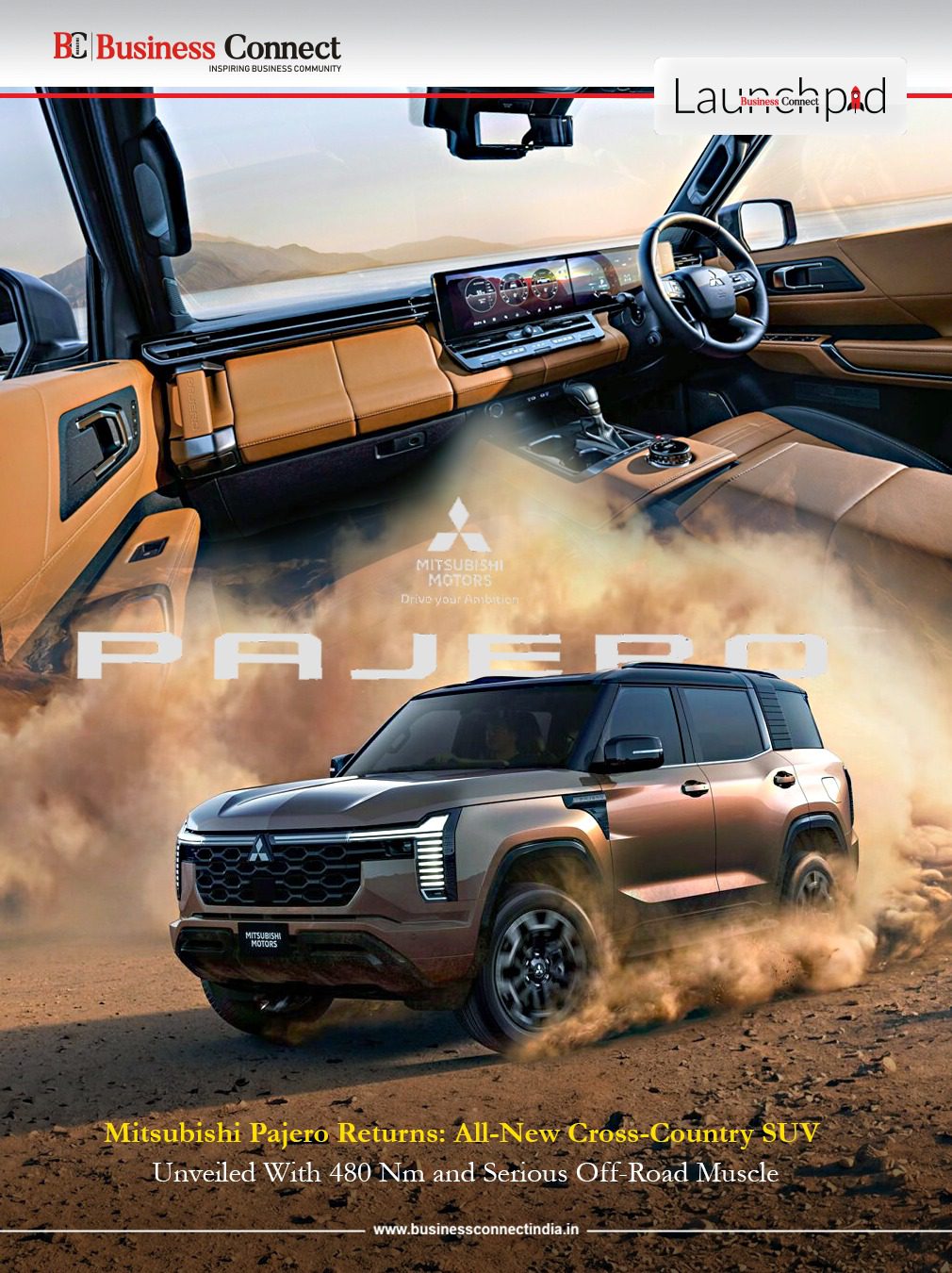
Mitsubishi Motors has officially brought back one of the most iconic names in the SUV world. The all-new Pajero has made its global debut in Tokyo, returning as a flagship cross-country SUV after years away from international markets.
Mitsubishi Pajero Returns: All-New SUV Unveiled With 480 Nm of Off-Road Muscle
For SUV enthusiasts who grew up watching the Pajero tackle deserts, mountains and some of the world’s toughest rally stages, this is more than just another new model.
The Pajero is back — and Mitsubishi wants it to be tougher, smarter and more premium than ever.
A Legendary Nameplate Gets a Modern Makeover
Mitsubishi first introduced the Pajero in 1982, building its reputation around genuine four-wheel-drive capability, durability and long-distance comfort. Across four generations, the SUV went on to sell more than 3.29 million units in over 170 countries and regions.
Its motorsport credentials are equally impressive. The Pajero recorded 12 Dakar Rally victories, including seven consecutive wins*, helping establish its reputation as a serious off-road machine.
Now, Mitsubishi is bringing that legacy into a completely new era.
The new Pajero has been developed as Mitsubishi’s next-generation flagship, combining the brand’s traditional off-road character with a more sophisticated design, technology-packed cabin and improved everyday comfort.
Bold Design With a Nod to the Original Pajero
The all-new Pajero doesn’t try to hide its heritage.
Its upright stance, strong horizontal lines, muscular wheel arches and distinctive front-end design give it the commanding appearance expected from a full-size adventure SUV. Mitsubishi says the exterior design concept is called “Grand Charisma.”
The new SUV also carries several design references to previous generations, including a C-pillar inspired by the original Pajero’s roll-bar design and a hexagonal rear treatment inspired by the spare-wheel design of earlier models.
At the front, buyers will get distinctive T-shaped lighting, while Mitsubishi is offering different grille designs depending on specification.
In short, the new Pajero looks modern without completely abandoning the identity that made the name famous.
2.4-Litre Diesel Engine Produces 480 Nm
Under the bonnet, Mitsubishi has stayed focused on what Pajero buyers expect: strong low-end performance and serious torque.
The new SUV gets a *2.4-litre clean-diesel engine* with a variable-geometry turbocharger. It produces a maximum *480 Nm of torque* and is paired with a newly developed *8-speed automatic transmission*.
That combination is designed to provide strong acceleration while also making the Pajero quieter and more refined during everyday driving.
For an SUV designed to travel far beyond paved roads, torque is arguably more important than headline horsepower — and Mitsubishi appears to have prioritised exactly that.
Built for the Rough Stuff
This isn’t an SUV that simply looks rugged.
The new Pajero uses a high-strength ladder frame, combined with a specially developed suspension system designed to maintain tyre contact over uneven surfaces.
Mitsubishi’s *Super Select 4WD-II (SS4-II)* system provides four drivetrain settings:
- 2H – Rear-wheel drive
- 4H– Full-time four-wheel drive
- 4HLc – Locked centre differential
- 4LLc – Low-range four-wheel drive with locked centre differential
The SUV also gets Mitsubishi’s Super-All Wheel Control (S-AWC) system, which manages traction, braking and vehicle dynamics to improve stability across different surfaces.
There are also seven selectable driving modes — *Normal, Eco, Gravel, Snow, Mud, Sand and Rock* — giving drivers the ability to tailor the vehicle to changing terrain.
230 mm Ground Clearance
The numbers suggest Mitsubishi isn’t treating the Pajero as a soft-roader.
The new SUV measures 4,920 mm long, 1,925 mm wide and 1,910 mm tall, with a wheelbase of 2,870 mm.
It offers up to 230 mm of ground clearance, along with a 30.4-degree approach angle, 22.6-degree ramp breakover angle and 25.8-degree departure angle.
Those figures should give the Pajero plenty of room to deal with rocky trails, steep climbs and uneven terrain.
Inside, Pajero Gets a Premium Upgrade
Mitsubishi hasn’t forgotten that modern SUV buyers want comfort as much as capability.
The new Pajero features a horizontally designed dashboard, a modern dual-screen setup and premium materials throughout the cabin. Two large 14.3-inch displays form the centrepiece of the dashboard on the specified configuration.
One of the most interesting touches is the return of the iconic Pajero triple-gauge concept — now transformed into a digital Multi Meter.
It can display information such as altitude, compass direction, outside temperature, vehicle pitch and roll angles, and torque distribution.
It’s a clever way of bringing a piece of Pajero history into a thoroughly modern cabin.
A Third Row and Premium Audio
Despite its focus on off-road performance, the new Pajero is also designed to work as a family SUV.
Mitsubishi has paid attention to third-row accessibility, passenger comfort, cabin quietness and climate control, making the vehicle suitable for long-distance travel.
For audiophiles, the SUV can also be equipped with a 12-speaker Dynamic Sound Yamaha Ultimate audio system developed jointly with Yamaha.
When Will the New Pajero Go on Sale?
The all-new Pajero will be produced in Thailand, with the Thai market scheduled to receive it first.
Mitsubishi plans to follow with launches in Japan and Australia during fiscal 2026, before expanding the model to approximately 100 countries and regions from fiscal 2027, including markets across ASEAN, Latin America and the Middle East.
For now, Mitsubishi has not announced an India launch timeline or pricing.
The Pajero Is Back — But This Time It’s Playing in a Different Game
The SUV market has changed dramatically since the previous Pajero disappeared.
Today, buyers expect large SUVs to deliver luxury, technology, connectivity and comfort alongside genuine off-road capability. That makes the new Pajero’s mission particularly interesting.
Mitsubishi isn’t simply reviving an old name.
It is attempting to transform the Pajero into a *premium flagship that can handle the daily commute on Monday and a mountain trail on Saturday.
And if the new generation can combine the legendary durability of its predecessors with modern comfort and technology, the Pajero could once again become one of the most interesting names in the global SUV market.
One thing is certain: the Pajero name has returned — and Mitsubishi clearly wants the world to remember why it became legendary in the first place.