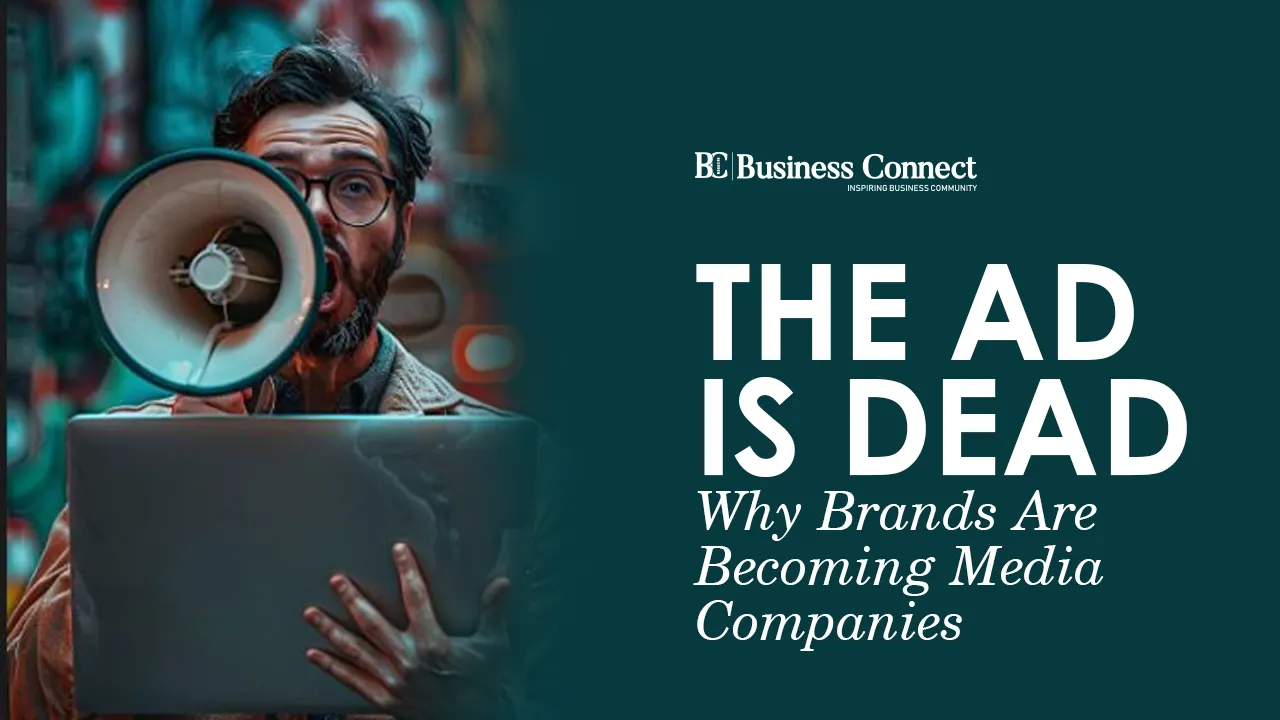
The Ad Is Dead: Why Brands Are Becoming Media Companies
For decades, brands used attention for sale. They paid for a TV spot, a billboard, and a full-page ad, and they got eyeballs. That model is dead.
Today, feeds are crowded, formats are recycled, and audiences quickly scroll past anything that smells like a pitch. Impressions are not converted into loyalty, let alone sales.
The brands winning now do not fight that; they make things people choose to watch. They are building audiences and producing entertainment. In doing so, they have become full-scale media companies.
From Interruption to Earned Attention
Earlier, brand-building meant buying interruptions and breaking into a TV show, a magazine, or a commute. People had no choice but to listen, watch and get the message.
The story has completely flipped. People follow founders on LinkedIn, subscribe to newsletters, join their WhatsApp groups and keep checking creator partnerships. Modern customers are not educated or aware; they are not absorbing ads, they are following stories, and they choose which one deserves their time, attention and money.
Advertising interrupts, but content earns its way in. When attention is the scarcest resource a brand has, earning it beats renting it.
Some Real-Life Proofs
- Taco Bell turns menu launches into production events through livestreaming, celebrities and awards-show energy.
- Mattel used the Barbie film to bridge nostalgic adults and new kids, ensuring a 25% sales hike six decades after the doll’s introduction.
- Red Bull is operating a media operation like extreme sports films, event sponsorships, and a YouTube channel that plays like ESPN, not a beverage ad.
- LEGO built an entertainment universe where the story is secondary to the world around it.
- Apple treats launches like premieres, generating anticipation most marketing teams can only imagine.
All these brands are also trying to boost their sales, but what separates them is not budget. It is the question they begin with.
The Actual Difference: One Question
In the traditional marketing structure, brands ask, ‘How do we sell more?’ Today’s media-minded brands ask, ‘What does our audience want to watch, read, and share?’ That shift in questions changes everything from what gets made and how success is measured.
Today, the payoff is not reach; it is relevance. Earned attention becomes visible on its own. Bought attention has to be chased every time.
Brands mostly treat content as something to post on social media and forget. They do not believe infrastructure is worth building. This gap creates opportunities, and winning brands are not publishing more; they are rethinking the purpose of the content.
Focus on Entertaining Instead of Selling
Branded entertainment does not work or give the feeling of an ad. It includes its own hook and its own unique story, and people go for it. Implemented correctly, it establishes a brand as a cultural contributor instead of a sponsor on the sidelines.
It looks like a recurring-character series, founder-created public content, comedy or cinema that folds the product in quietly, behind-the-scenes work, and lifestyle content that shows a broad view instead of a catalogue.
The brand becomes a media producer, not an interrupter. This is the major reason why people do not tune it out.
Storytelling is a Narrative, not a Backstory
Brand storytelling is not limited to the About Page or a founder video message. It is the ongoing narrative shared through tone, behaviour and opinions, what a brand believes, and who it is for. When brands follow this approach continuously, audiences feel like a character worth following, and characters get rooted for.
Experience Beats Ad
Audiences always carry the memory of how a brand made them feel, not what it told them. Interactive sites, AR, and CGI create participation instead of passive viewing, and AI-powered had made this affordable at scale.
Winning brands do not lead with just ads; they focus on building immersive experiences through different audio and video challenges that let people feel.
Shaping Culture: In Four Easy Steps
Instead of reaching different cultures, brands work with artists, begin conversations, and create things people share unpromoted. Here is a simple process to actually do this:
- Hire a real content team that actually aligns with your objective instead of paying freelancers to just fill the calendar.
- Build a dedicated in-house talent or partner with an individual who gets your vision.
- Publish content continuously where the audience already is.
- Measure the engagement, not reach, and better understand what comes next.
Finally, audiences do not trust ads; they trust stories, creators and consistency. That’s why brands are becoming media companies, focusing on becoming interesting, not the loudest.
Add Business Connect magazine to your Google News feed