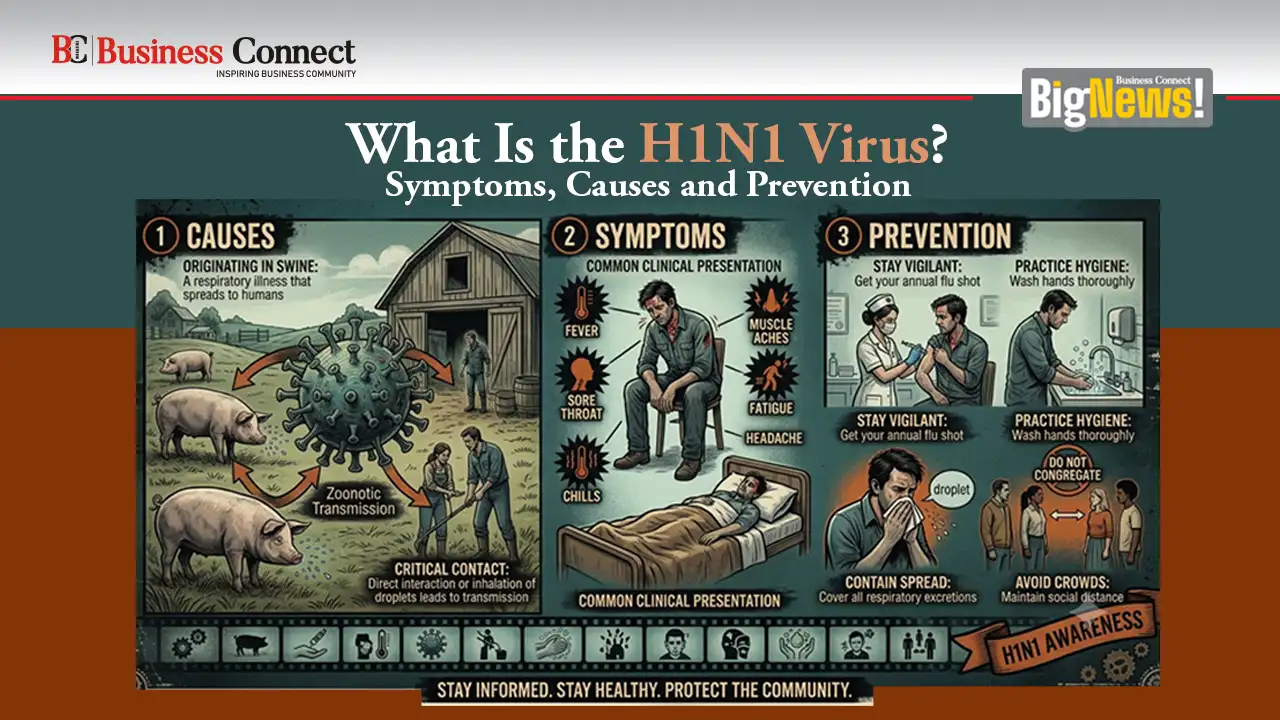
Swine Flu is also known as H1N1 and it is a type of viral infection. It is called Swine Flu as it resembles the respiratory infection that pigs can get. It is considered as a highly contagious respiratory disease. The history of this disease can be traced back from an illness which primarily affected pigs then it mutated into human pathogen and cost a global Panda make around 2009-2010.
What Is the H1N1 Virus? Symptoms, Causes and Prevention
The virus beyond the headlines
H1N1 is a type of influenza A. The “H” and “N” stand for two proteins on the virus’s surface:- Hemagglutinin and Neuraminidase. These help the virus attach to cells and then escape to infect more. In 2009 a new mix of genes from swine and human flu viruses, stitched together in pigs caused a panic. That’s what made it a pandemic.
Now the H1N1 virus is not new. It comes back each year acting like a seasonal flu. The World Health Organization and national health groups track it every season. The flu vaccine is updated each year. In February for the Southern Hemisphere and in September for the Northern Hemisphere to match the strains that are spreading.
Symptoms
After the exposure, symptoms may last for a few days. It can sometimes begin quite suddenly with fever, cough , muscle aches, headaches and fatigue. Some individuals may also face nausea or diarrhea. Children might face trouble in breathing, fever along with rash, not drinking enough fluids.
Medical professionals look at the entire pattern rather than simply taking one symptom and testing may be required to determine the actual cause.
Healthy adults get better in five to seven days. The danger is for those at the edges of the population. Kids under five, adults over 65 and anyone with diabetes, asthma or a weak immune system can go from feeling like they have the flu to needing oxygen in just a few days. The time between symptoms and serious illness might be the same as for others. The results are much worse.
Causes
The root cause of the virus is the replication inside the epithelial cells inside your respiratory tract including nose, throat and lungs. This virus formed from a unique mixture of 8 genetic fragments originating from swine, avian and human influenza strains. It transitions from an animal based disease into a permanent human seasonal respiratory virus after the mutation.
When an individual comes in contact with the virus through the exposure to the pathogens then it enters into the body via the eyes, nose or mouth. The service of this virus has two proteins namely H1 and N1. The ‘H’ protein binds the receptors on the respiratory cells which allows the virus to come inside whereas the ‘N’ protein helps in replicating the virus particles and ultimately infecting the surrounding cells.
How it actually spreads
It spreads in the environment mainly through respiratory particles and aerosols. Contaminated surfaces play a key role. It can also affect you when you stay in direct physical contact with someone who carries the virus. When a person coughs or sneezes, then the droplets go to the air. You can get the infection when you simply inhale the virus. It can also affect you when you touch a contaminated surface and then touch your mouth or nose or eyes.
Suppose a person who is sick and they are going outside without taking the proper precautions, then it can lead to exposure of this disease and hence, increasing the transmission.
It usually takes about 1 to 4 days after exposure for a person to develop the symptoms. Thereafter an infected individual can spread the virus one day before symptoms even appear and remain contagious for 5 to 7 days after becoming sick. Children and adults with weekend immune systems may remain contagious and shut the virus for around 10 days or even longer.
Prevention
Prevention can be done with personal hygiene, vaccination and community awareness.
- Personal Hygiene: practice frequent hand sanitation thoroughly with soap or running water for less than 20 seconds. Wash your hand after coughing or sneezing or even returning from public places. You can use alcohol based hand sanitizer. Avoid touching your face because this virus transfers us from contaminated surfaces to the body. Avoid touching your eyes or nose or mouth because these are the main entry points of the pathogen to enter into your body. Try to cover your mouth and nose with tissue whenever you cough or sneeze.
- Vaccination: get your annual vaccine. Everyone starting from 6 months of age and older must receive the vaccine annually.
- Awareness: since it can spread from person to person through respiratory droplets and aerosol, avoid close contact with individuals showing signs of respiratory illness such as coughing or sneezing. Periodically clean the household and office items using disinfectants. If you develop a few symptoms, then try to isolate yourself and stay at home to break the chain of transmission.
Treatment at home
- Take rest and allow your immune system to focus its energy on fighting off the virus.
- Drink plenty of fluids like electrolyte solutions or water or herbal teas to prevent dehydration caused by fever and sweating. You must avoid caffeine and alcohol.
- Take the medications which can help to bring down a high fever and soothe body aches
- Gargle with warm water + salt periodically throughout the day.
- Isolate yourself so that the virus cannot be transmitted.
Add Business Connect magazine to your Google News feed