
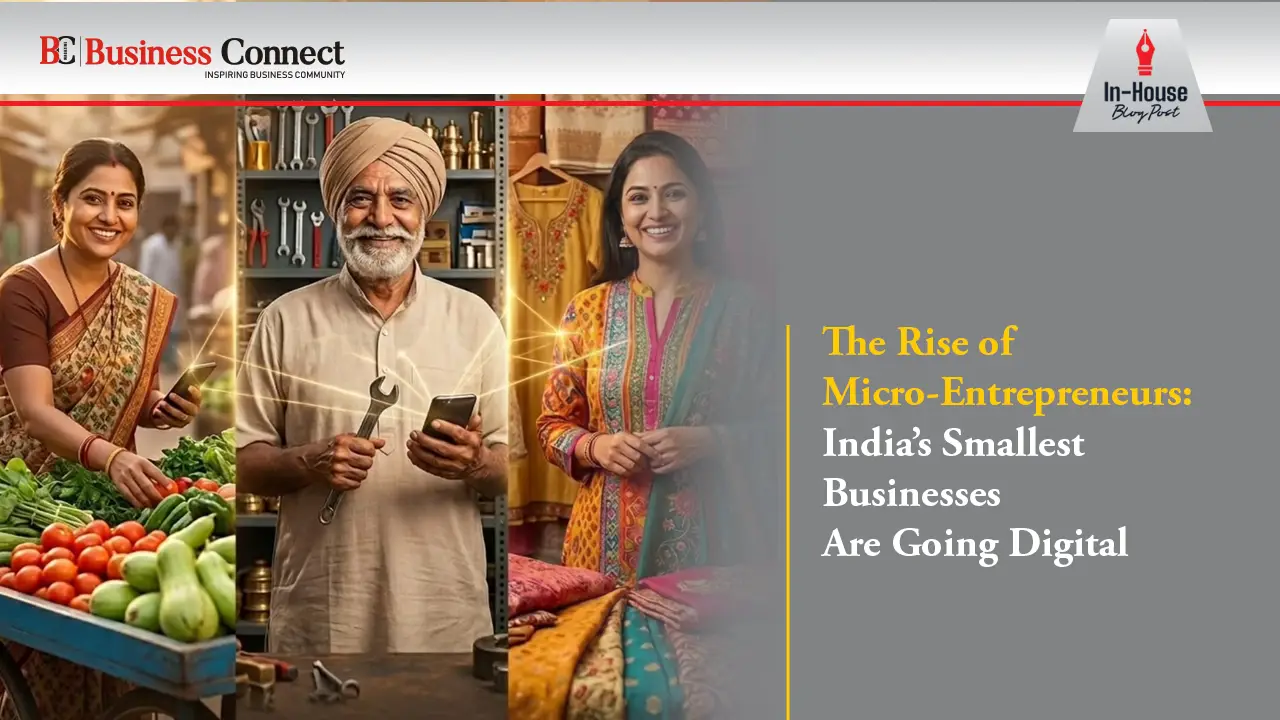
Micro-entrepreneurs in India include small businesses like kirana shops, tailoring units, home kitchens, and craft workshops. Most of them now accept UPI payments, register on government portals,, and sell beyond their own street. From the outside, it shows an evolutionary phase, but this shift is not even. In a MicroSave and Busara survey of 460 micro-entrepreneurs, only 38% had integrated digital platforms into their business.
The Rise of Micro-Entrepreneurs: India’s Smallest Businesses Are Going Digital
Key Takeaways
- Indian microentrepreneurs are moving to digital platforms.
- Presently, there are over 8.9 crore enterprises registered on the Udyam platforms.
- The use of UPI is increasing, by 23% year-on-year.
- Some micro-enterprises witnessed growth by 30%, but fees and logistics costs also went high
A Quick Glance at India’s Micro-Entrepreneurs
Under the Udyam system, a micro-enterprise has an investment of up to ₹2.5 crore and a turnover of up to ₹10 crore. In daily life, it means an owner-run business with few or no employees. Besides, micro-entrepreneurs make 31.1% of total GDP and over 38.9 crore people, as per the January 2026 government data.
Driving Forces behind Online Microbusiness
These are some factors empowering micro-entrepreneurs in India:
UPI Payment: Instant digital payment is a major driving factor. As per NPCI data, UPI processed ₹29.37 lakh crore in September 2026, with 802 million transactions a day. PhonePe states it has crossed 50 million registered merchants. In small business, cash still holds the leading position.
ONDC: The Government is running ONDC, an open network where buyers and sellers do business across apps. ORF, at present, has registered around 1.16 lakh retail sellers by December 2025. There is uneven adoption, with merchants citing friction.
Micro-entrepreneurs should register on Udyam. It is free, and with an Aadhaar number, you can begin. Put up a UPI QR code and keep sales records; it will help when applying for a loan. Next, companies can easily use WhatsApp Business and a free Google Business listing to reach nearby customers and compare commissions before joining a marketplace or ONDC app.
Challenges and Opportunities for Micro Businesses
High platform fees, complicated onboarding and limited digital literacy are some challenges for micro-entrepreneurs in India. Women and rural owners face extra barriers, such as smaller social networks, and often lean on friends, family or agents to sign up. Additionally, weak connectivity, costly devices and fear of fraud are some other reasons.
Frequently Asked Questions
What is a micro-entrepreneur in India?
A micro-entrepreneur runs a very small, owner-managed business, like a kirana shop, tailoring unit or home kitchen. As mentioned in the Udyam system, a micro-enterprise should have an investment of up to ₹2.5 crore and a turnover of up to ₹10 crore.
How many businesses are registered on Udyam?
on the Udyam Registration Portal and Udyam Assist Platform, there are over 8.9 crore enterprises registered as of July 2026. Udyam Assist covers informal micro enterprises without GST or income tax registration, which can get recognised through banks and NBFCs.
Do small shops now pay to accept UPI?
Only on some payments. From 15 October 2026, a 0.4% fee applies to specified merchant payments above ₹2,000, capped at ₹300. Payments up to ₹2,000 and person-to-person transfers stay free, and small merchants receiving up to ₹1 lakh a month through UPI QR codes pay nothing.
Why do many micro businesses stay offline?
The major reasons why many small businesses prefer not to go online are complicated onboarding, high platform fees, limited digital skills, weak connectivity, device costs and fear of fraud. Small business mostly prefer cash for trasaction as they find it a safer and more convenient option.
What does the new UPI fee mean for them?
The government has introduced a new payment rule. From 15 October 2026, a 0.4% merchant discount rate applies to specified payments above ₹2,000, capped at ₹300. Payments of ₹2,000 or less stay free. The government says about 96% of merchant transactions are unaffected, and merchants may not pass the fee on to customers.
Add Business Connect magazine to your Google News feed