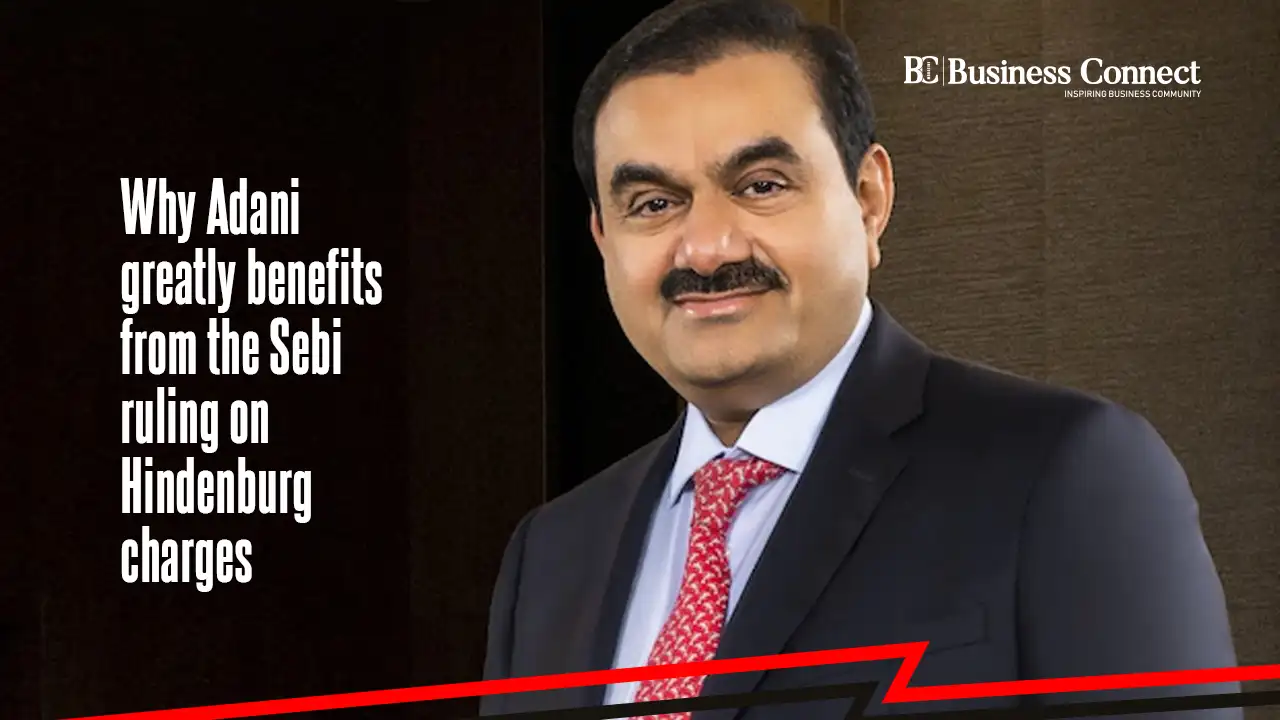
Why Sebi’s Ruling on Hindenburg Charges is a Big Win for Adani Group
On September 18, market regulator Sebi (Securities and Exchange Board of India) granted the Adani Group and its top executives, including chairman Gautam Adani and his brother Rajesh Adani, a reprieve from accusations made by the US-based company Hindenburg Research that they had hidden related party transactions in FY21 by channeling funds through three entities.
As investors applauded the move, Adani Group stocks—which include Adani Enterprises, Adani Power, Adani Green Energy, and Adani Total Gas—rose as much as 10% in early trading on the bourses on September 19.
In two comprehensive decisions, Sebi stated that there was no proof throughout its examination that the Adani Group had used connected parties to transfer money in order to boost the value of its listed companies’ stock.
In January 2023, Hindenburg released a report alleging insider trading, market manipulation, and violations of public shareholding standards. The report claimed that the Adani Group channeled funds into Adani Enterprises and Adani Power through three companies: Adicorp Enterprises Pvt Ltd, Milestone Tradelinks Pvt Ltd, and Rehvar Infrastructure Pvt Ltd. This January, Hindenburg Research ceased operations.
Read Also: Adani Power Share News: 65% Upside Potential as Morgan Stanley Turns Bullish
Both the Indian Parliament and the financial markets were rocked by the Hindenburg report, which at its lowest point destroyed the market value of the Adani Group’s listed companies by over $100 billion (about Rs 8.8 lakh crore).
According to Sebi’s examination, several transactions that were made public following the Hindenburg accusations were not fraudulent. According to the findings of the investigations, Adani Ports had loaned money to Adicorp Enterprises, which then loaned money to Adani Power. Later on, Adani Power paid back the loans to Adicorp Enterprises, which in turn paid back Adani Power’s loans with interest.
According to the regulator, the show-cause letter (from Sebi) does not reveal any losses to investors or profits gained by anybody as a result of the alleged failures. No money has been diverted, the scrip price has not been manipulated, and no investment or shareholder has received an improper benefit.
“After an extensive investigation, Sebi has reaffirmed what we have always maintained, that the Hindenburg claims were baseless,” wrote Gautam Adani in response to the Sebi clean sheet on X. We are extremely sorry for the investors who lost money as a result of this dishonest and self-serving article. False narrative propagators have an obligation to apologize to the country.
According to certain legal experts cited in the media, Adani was exonerated since these companies could not have been regarded as related parties under Sebi regulations in effect at the time of the aforementioned transactions (2020–21). Only in April 2023 was the definition of “related parties” expanded to include: a) any individual or organization that is a member of the promoter or promoter group of the listed entity, and b) any individual or organization that at any point during the immediately prior fiscal year held equity shares of 10% or more in the listed entity, either directly or through a beneficial interest.
Read Also: Today’s Adani Power Share Price Record Date: All You Need to Know About the Stock Split
FAQ: Sebi Clears Adani Group of Hindenburg Allegations
Q1. What did Sebi rule regarding the Adani Group?
On September 18, 2025, Sebi granted the Adani Group and its top executives—including Gautam Adani and Rajesh Adani—a clean chit, stating there was no proof of misuse of related parties to manipulate stock prices.
Q2. What were the allegations made by Hindenburg Research?
In January 2023, Hindenburg alleged insider trading, market manipulation, and hidden related-party transactions involving Adani Enterprises, Adani Power, and three entities:
Adicorp Enterprises Pvt Ltd
Milestone Tradelinks Pvt Ltd
Rehvar Infrastructure Pvt Ltd
The report claimed funds were routed to artificially inflate the stock value of Adani companies.
Q3. How did the market react to Sebi’s decision?
Following Sebi’s announcement, Adani Group stocks—Adani Enterprises, Adani Power, Adani Green Energy, and Adani Total Gas—rose up to 10% in early trading on September 19, 2025.
Q4. What did Sebi’s investigation find about the alleged transactions?
Sebi concluded that:
No money was diverted.
No stock price manipulation occurred.
No investors or shareholders gained unfairly.
Loan transactions between Adani Ports, Adicorp Enterprises, and Adani Power were legitimate and fully repaid with interest.
Q5. Why were the allegations considered baseless?
Legal experts note that the companies cited could not be considered related parties under Sebi regulations in 2020–21. The related-party definition was expanded only in April 2023.
Q6. What was the financial impact of Hindenburg’s report?
The report caused a temporary market shock, erasing over $100 billion (~₹8.8 lakh crore) in market value from Adani Group listed companies at its lowest point.
Q7. Did the report lead to any investor losses?
Yes, some investors faced losses due to market panic, but Sebi confirmed no wrongdoing or improper benefit occurred from the transactions themselves.
Q8. How did Gautam Adani respond to Sebi’s clean chit?
Gautam Adani stated on X (formerly Twitter) that the claims were baseless and apologized to investors who lost money due to the false narrative propagated by Hindenburg Research.
Q9. What is the current legal stance on related-party transactions?
Post-April 2023, Sebi’s regulations define related parties more broadly, including anyone in the promoter group or holding 10%+ shares in the prior fiscal year. This change did not retroactively affect the 2020–21 transactions.
Q10. What is the significance of Sebi’s ruling for the Adani Group?
The ruling restores investor confidence, removes regulatory uncertainty, and reinforces the credibility of Adani Group companies in India’s capital markets.
Q11. Which Adani Group companies were directly affected by the Hindenburg allegations?
The allegations targeted multiple listed companies:
Adani Enterprises
Adani Power
Adani Green Energy
Adani Total Gas
Adani Ports & SEZ (related through loan transactions)
Q12. What triggered the SEBI investigation?
Sebi launched a thorough investigation following Hindenburg’s January 2023 report, which accused the group of market manipulation, insider trading, and hiding related-party transactions.
Q13. How long did the Sebi investigation take?
The investigation spanned over two years, including verification of financial statements, loan transactions, and compliance with related-party transaction rules.
Q14. Were there any penalties or fines imposed on the Adani Group?
No. Sebi’s investigation found no evidence of wrongdoing, so the group received a clean chit without any penalties, fines, or regulatory restrictions.
Q15. How did Hindenburg Research’s closure affect the case?
Hindenburg Research ceased operations in January 2023, but Sebi continued its investigation independently. The closure did not impact Sebi’s regulatory authority or findings.
Q16. What does Sebi mean by “no proof of related-party misuse”?
Sebi confirmed that loans and fund transfers between Adani entities and the three companies cited were legal, transparent, and fully repaid. No transactions were aimed at inflating stock prices or misleading investors.
Q17. How did the market respond immediately after Sebi’s announcement?
Adani Power jumped 8%
Adani Enterprises rose 5%
Adani Ports gained 3%
This reflects renewed investor confidence and relief in the capital markets.
Q18. Did the allegations affect international perception of the Adani Group?
Yes. The Hindenburg report initially caused global concern over corporate governance, which temporarily impacted investor sentiment and share prices. Sebi’s ruling helps restore credibility internationally.
Q19. Will this Sebi decision impact future regulatory scrutiny?
The ruling sets a precedent that transactions compliant under the regulations at the time are legitimate, even if related-party definitions are expanded later. It provides regulatory clarity for Adani and other listed companies.
Q20. What should investors take away from this decision?
Adani Group companies are compliant with SEBI rules.
Market volatility triggered by external reports may not reflect actual corporate governance issues.
Sebi’s ruling enhances confidence in India’s regulatory framework and investor protection.
Q21. Are there any ongoing investigations or risks left for the Adani Group?
As of now, Sebi has closed this case. Other routine regulatory and compliance checks may continue, but no major legal risk remains from the Hindenburg allegations.
Q22. How can investors verify the Sebi clean chit?
Investors can check the official Securities and Exchange Board of India (SEBI) announcements on their website and review the two detailed SEBI orders dated September 18, 2025.
Q23. Does this impact Adani Group’s expansion or funding plans?
Yes. With regulatory clarity restored, the group can proceed confidently with capacity expansions, new projects, and funding plans without market uncertainty affecting investor sentiment.
Q24. What lessons can investors learn from this episode?
Regulatory verification is crucial before reacting to market rumors.
Temporary price fluctuations may not reflect company fundamentals.
Long-term confidence in compliant corporate governance is more important than short-term panic.