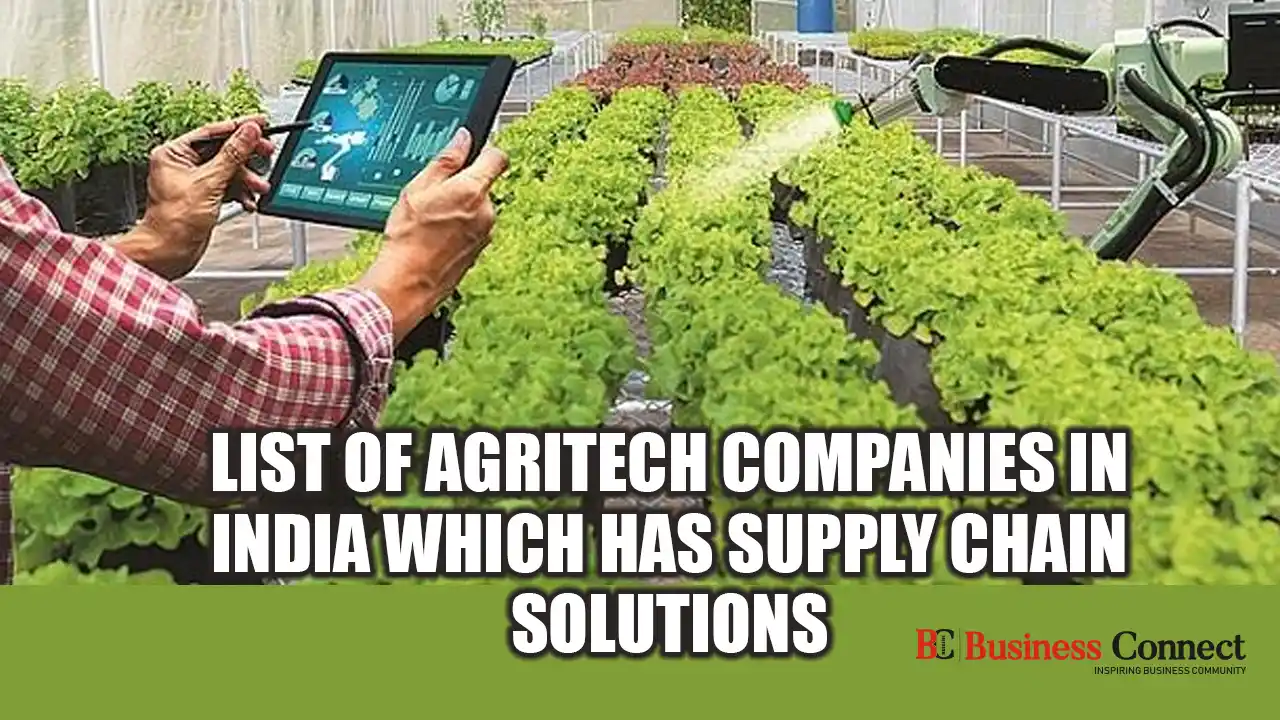
Top Agritech Companies in India With End-to-End Supply Chain Solutions
Written By: Jaya Pathak
India’s supply chains for agricultural produce lose as much as 40% of produce post-harvest due to disengaged supply chains and inefficient cold storage and opaque pricing – gaps being aggressively closed by agritech companies producing agri-technology and operating according to the highest standards of combined aggregation and transparency for the agri-businesses. These companies are bridging smallholder farmers to urban markets, and in many cases their incomes increase by 20-30%, as they are doing direct linkages, through data and data-driven routing.
Bottlenecks Causing Supply Chain Overhauls
Fragmentation is the character of Indian farming: more than 85% of the holdings under two hectares have unpredictable yields, discouraging buyers and allowing middleman to buy at large margins (40 to 60%). With cold chain capacity covering only 10% of perishables, handling waste is aggravated in the case of tomatoes (18%) and onions (12%). Agritech comes to the rescue here, using artificial intelligence for demand forecasting, blockchain for provenance and use of common warehouses to balance the flows.
Executives identify shift from inputs to unit economics: Early days The early days of agritech were marked by a focus on inputs. Post-2023 funding winter Now, the likes of agritech startups in restricted funding markets are focusing on unit economics in the logistics space. Platforms aggregate at village level because of reducing transport costs-25% by optimal truckloads. Traceability driven by EU regulations leads to premiums – 10 – 15% for verified organics. Yet execution is weakened at the ester where the rural internet is weak, having to offline-first applications.
Core Players Changing Farm-to-Fork
A dozen companies dominate and each specialize in aggregation, quality checks, or last mile delivery. Here follows an order of the top players who are hosting supply chain solutions in sequence to the size of funding and reach at early 2026:
- Ninjacart (Bengaluru): Targets B2B farmer to retailer aggregation. Serves 169,000 retailers, $164 million raised. Its AI routing has reduced transit times by 30% while the kirana-first model delivers 40% margins per kilogram to and can prove that density drives profitability on perishables.
- DeHaat (Patna): Provides end-to-end services in the murder from inputs to market linkages. Reaches 3,50,000 farmers through 1 thousand centres with the total funding over 200 million. Micro-centers allowing weekly payouts, A.I advisory reducing wastage by 15% in bihar clusters.
- WayCool (Chennai): Farm to the fork chain building with AI for reduction in wastage. Backed by $361m, supplies 10,000+ outlets. Machine learning grading helps to extend shelf life for 20%, partnerships with farmer producer organizations (FPOs) will allow backward integration.
- Crofarm (Otipy) (Gurgaon): Delivery of harvest on demand to consumers. Serves 10 lakh families using $42 million raised. Twelve-hour delivery and variety guidance drive up the farmer prices 25% above mandi rates.
- Bijak (Gurgaon): Bring about digitization of bulk trades in the form of a virtual mandi. Connects 100,000+ Buyers $50 Million+ Funding. e-NAM integration and contract reduce price volatility by 18%.
- ag (Mumbai): Producer and combines commodity financing with the logistic. Supports 500,000 farmers Raised $100 million+. By using warehouse networks, collateralized storage creates double access to the loan come types.
- TraceX (Kochi): It is a blockchain traceability-related company. Works with 100+ FPOs in EU compliant audits. QR codes per batch helping rural groups reduce audit hassles and gain 12% price premiums.
- KisanKonnect (Ahmednagar): Connects FPOs to urban fresh produce markets. Covers 7000 farmers and 1.5 Lakh Consumers after $4.5 Million Series A. Direct Mumbai to Pune center removes middlemen completely.
- AgNext (Gurgaon): Artificial intelligence (AI) quality grading for exports. Handles Grains, Dairy and Spices with $40 million raised. Machine learning leads to a 30% reduction in rejection rates which helps build global trust.
- FarmerFZ (Bengaluru): Assures pesticide free direct to consumer supply Features include prediction of yield for a steady urban flows and weekly payouts at bank with no intermediaries.
These aren’t comprehensive, Jude helps precision upstream unit but you precisely hit the target. is logistics choke points.
To scale the difference – Ninjacart is a good example. Founded 2015, skipping APMCs, it carries 1,500 tonnes a day, through 200 hubs. Retailers: 12-hour freshness Farmers: 10-15% price uplift. Also post 2024 there was a pivot in favour of absolute margins/kg rather than GMV chase – this yielded profitability. DeHaat is contrary to full stack. 1,000 rural hubs for inputs, soil test, linking markets. A Bihar tomato cluster recorded a 28% increase in incomes through sales aggregated by sell-through micro centres and this is proof that micro centres are a pull.
WayCool uses ML in 50 warehouses to predict demand to pre-empt gluts – critical since India’s $14 billion annual waste is roughly the same value as its production. Crofarm’s Otipy harvester lands at your doorsteps in a matter of few hours, giving advice on varieties that command high premiums. Bijak digitizes trades, goes along with e-sign for contracts to bind 100,000 transactors monthly.
Deep Dives: Strategies Delivering Result
Arya.ag addresses need for finance gaps: Farmers pledge grains in storehouses at 12% loans as against 24% of informal. Its 100+ warehouses range from pulses and stabilize the price during monsoons. TraceX, offline first, QR-tags harvests for FPOs Shrimati, offline first, Zimbabwe: This lobby for these farmers doubled export value, cut losses by 22%, and nailed audits.
KisanKonnect aggregation of Maharashtra Onion to Mumbai $4.5 million funding extension of business. Dairy rejections are cut by 35% by non-destructive grading of AgNext spectrometers. FarmerFZ: FarmerFZ forecasts yields using farmer information to assure consistent supply in the cities without pesticides.
Common thread: Orchestration (FPO). Platforms outsource ops+c Olivets-proocate, + aggregates, grades, dispatches or grinds, scaling? no assets. One key finding something in this press release from FICCI is that the expectations are that FPOs through 2026 could handle 20% volumes if tech-integrated.
Hurdles Amid Momentum
- Regulatory thickets are still there despite APMC reforms: regulatory thickets APMC reforms vary state-wise which stalls interstate flows. Rural is behind in terms of digitization – 45% smartphone penetration – but Voice apps and USSD fill in the gaps Funding Cool Post-2022 Endangered surviving unicorns vs. profitability
- Climate volatility amplifies needs 2025 floods hit Bengal rice Chains with weather-linked insurance (DeHaat) fared better. Exporters stumbling under EUDR scrutiny; TraceX-type tools demonstrate sustainable sourcing, opening up EU access worth $2 billion a year.
- Competition hots up: Reliance Retail intrudes but startups triumph with niches – hyperlocal, organics. Profight cannot manage without density: Ninjacart in South hubs, DeHaat in Bihar.
Supply Chain Resilience Blueprint
These firms are a signal of the tech inflection in agriculture: $1.5 billion also invested since 2020 and will target $24 billion of market in 2027. Integrators (leaders) combine upstream (advisory) with downstream (traceability) creating moats. For investors, bet on execution – Rural ops mastery over valuation.
Cold chain subsidies need to be fast-tracked by policymakers – $10 billion infrastructure funding could cut losses by 50%. Farmers benefit most: Direct sales, own data. Urban eaters receive fresher staples at fixed prices.
India endures agritech supply chains: once leaky pipelines, harden now. Watch DeHaat and Ninjacart for IPO signals, they prove tech to reorder a $400 billion sector.
FAQs: Top Agritech Companies in India With End-to-End Supply Chain Solutions
Why do agricultural supply chains in India face high post-harvest losses?
India loses up to 40% of agricultural produce post-harvest due to fragmented supply chains, limited cold storage (covering only ~10% of perishables), inefficient logistics, and opaque pricing dominated by intermediaries.
How are agritech companies solving India’s farm supply chain problem?
Agritech firms are using AI-driven demand forecasting, blockchain-based traceability, data-led routing, aggregation at village level, and shared warehouses to reduce wastage, improve price transparency, and link farmers directly to urban markets.
How much do farmers benefit from agritech-led supply chains?
Farmers typically see 20–30% income improvement, driven by direct market access, reduced middlemen margins, faster payouts, and better price discovery.
Why is fragmentation a major bottleneck in Indian agriculture?
Over 85% of Indian farms are under two hectares, leading to inconsistent yields, low bargaining power, and heavy dependence on intermediaries who often capture 40–60% margins.
What role does cold chain infrastructure play in wastage?
With limited cold storage, perishables like tomatoes (18% loss) and onions (12% loss) suffer high wastage. Agritech companies optimize flows using predictive analytics and decentralized storage.
How has the agritech business model evolved post-2023?
After the funding slowdown, agritech startups shifted focus from input sales and GMV growth to unit economics, logistics efficiency, and profitability per kilogram.
Which agritech companies lead India’s end-to-end supply chain transformation?
Key players include:
Ninjacart – B2B aggregation and AI-driven logistics
DeHaat – Full-stack rural services from inputs to market
WayCool – Farm-to-fork distribution with ML-led demand prediction
Crofarm (Otipy) – Hyperlocal farm-to-consumer delivery
Bijak – Digital bulk trading and virtual mandis
Arya.ag – Commodity finance + warehousing logistics
TraceX – Blockchain-based traceability for exports
KisanKonnect – FPO-to-urban fresh produce channels
AgNext – AI quality grading for exports
FarmerFZ – Pesticide-free D2C supply with yield forecasting
Why is Ninjacart considered a benchmark in agritech logistics?
Ninjacart handles 1,500 tonnes daily across 200 hubs, reduced transit times by 30%, delivers 12-hour freshness, and provides farmers a 10–15% price uplift, while achieving profitability by focusing on margins per kg.
How does DeHaat’s micro-centre model help farmers?
DeHaat operates 1,000+ rural hubs offering inputs, advisory, and market linkages. In Bihar tomato clusters, this model increased farmer incomes by 28% through aggregated sell-through centers.
What role do Farmer Producer Organizations (FPOs) play?
FPOs act as aggregation anchors. With tech integration, they are projected to handle up to 20% of agricultural volumes by 2026, improving scale and bargaining power.
How does traceability help Indian agritech firms access global markets?
Blockchain and QR-based traceability (used by firms like TraceX) ensure EU compliance, reduce audit friction, and deliver 10–15% price premiums, unlocking export opportunities worth $2 billion annually.
How does agritech address financing gaps for farmers?
Platforms like Arya.ag allow farmers to pledge stored produce for loans at ~12% interest, compared to 24% informal rates, stabilizing incomes during price volatility.
What challenges still hinder agritech supply chain scaling?
Major hurdles include:
State-wise APMC regulations limiting interstate trade
Low rural smartphone penetration (~45%)
Funding discipline post-2022
Climate volatility impacting yields
Rising competition from large retail players
How are agritech companies managing climate and market risks?
Some platforms integrate weather-linked insurance, AI-based yield forecasts, and demand prediction to manage flood, drought, and price shocks.
What is the market potential of agritech supply chains in India?
With $1.5 billion invested since 2020, the sector is targeting a $24 billion market by 2027, reshaping a $400 billion agriculture economy.
Which agritech companies are potential IPO candidates?
Ninjacart and DeHaat are closely watched for IPO signals, as they demonstrate strong execution, scale, and improving profitability.
What policy support is critical for the next phase of growth?
Accelerated cold chain subsidies (~$10 billion), uniform APMC reforms, and rural digital infrastructure could cut post-harvest losses by 50% and significantly boost farmer incomes.