The selling point of James Cameron’s Avatar movies is that they purport to transport us to a fantastical yet skillfully created world that seems more real than our own. If you liked the first two Avatar movies, you’re in luck since the third one, Avatar: Fire and Ash, provides a lot more of the same.
More conflicts in the sky, more white Earthlings looking to conquer new worlds after destroying their home, more reef dwellers riding the seas on the backs of elegant aquatic monsters, and more people connecting into cosmic sources more handmade fair necklaces from the 1990s. If you’ve been missing the Na’vi world and phrases such as “We do not suck on the breast of weakness” and “The fire of hate is only the ash of grief,”—Avatar: Ash and Fire are for you.
Where Avatar: The Way of Water left off in 2022, Fire and Ash continues. Or at least that’s what I believe—basically, it feels like the same film with a somewhat different plot. Lo’ak (Britain Dalton) is grieving the loss of his brother, who was killed in the previous film, on the planet Pandora. It seems sense that Neytiri (Zoe Saldaña), Lo’ak’s mother, is also grieving; she sits silently, moody, and fingers a string of beads.
Sam Worthington’s character Jake is also depressed, but in a more stoic, male manner. In the meantime, Spike (Jack Champion), the white child with locs who requires special breathing equipment to survive in Pandora’s atmosphere, and Kiri (Sigourney Weaver), the adoptive daughter of Jake and Netytiri, reenact The Blue Lagoon with her potential sweetheart.
There is betrayal going on elsewhere: With the aid of Colonel Miles Quaritch (Stephen Lang), a macho soldier and Jake’s worst nemesis who also happens to be Spike’s biological father, White Earthlings plot to take over Pandora. Edie Falco plays a domineering general lady who barks commands while strutting around in an important manner.
Jemaine Clement, a kind scientist, begs the white Earthlings to spare Pandora’s delicate whale-like creatures. A new antagonist emerges in the middle of the movie, and Fire and Ash momentarily come to life: Similar to how Jill Saint John mesmerized Adam West into performing the Batusi after giving him drugged orange juice, Oona Chaplin’s silky-nasty Varang, the warrior leader of the Na’vi Mangkwan clan (also known as the Ash People), uses a spell to control Quaritch.
As you can see, Avatar: Fire and Ash is a longer metaphor. It implies that white people wreck everything because of their greed. (Unfortunately, this is accurate.) Earth is being destroyed by humans. The future is with our children. These make up the fundamental ideas of the Avatar trilogy, and it’s likely that they will be reiterated in further Avatar films (two more are planned), so if you haven’t fully understood them, you’ll have plenty of opportunities.
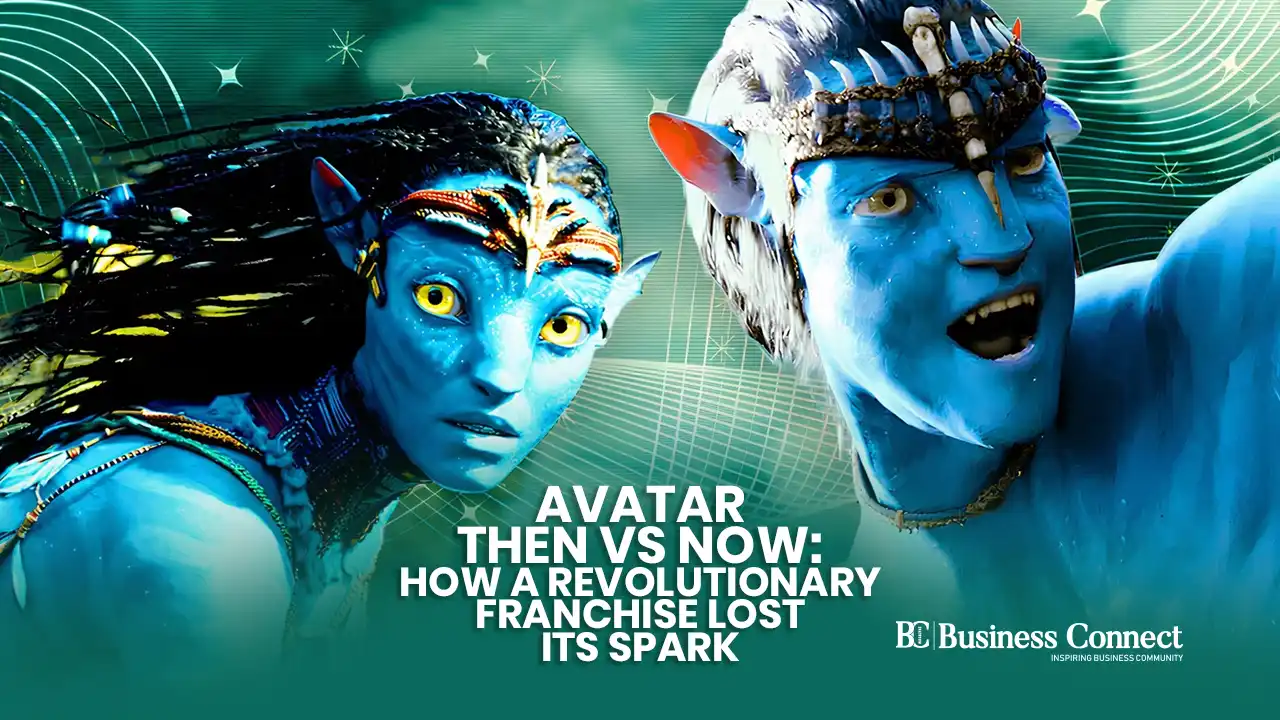
The Na’vi still have the same appearance, with elongated blue bodies devoid of body fat, adorable glitter freckles on their faces, and pointed ears that move expressively back and forth while they speak. At considerable expense, Cameron has created a three-hour and seventeen-minute epic, which culminates in a complex battle scene that is supposed to look unlike anything you’ve ever seen, but in the end, it’s pretty much exactly what you anticipate. Cameron’s purportedly cutting-edge technology produces visuals that appear oddly flat, boring, and simultaneously sparkling. For some, the sensation could still be exciting even after three films. You’re not alone, though, if you find it soporific.
When Cameron debuted the first Avatar movie in 2009, he marketed it as a ground-breaking new cinematic experience. That new method of watching movies is now outdated after fifteen years. Cameron is an expert at creating a world of created awe for viewers. Although it’s obvious that he and his army of technologists want to create a sense of transportation, the overdone visual universe they’re presenting has the opposite effect.
Particularly as hour three draws to a close, Avatar: Fire and Ash never lets you forget you’re staring at a screen. Cameron’s vision is now a nostalgic excursion, an expensive kind of “deja vu,” rather than the future. There are many different types of movie magic, but rarely is it as deliberate as this, conflating amazement with dumbness.
Frequently Asked Questions (FAQ) – Avatar: Fire and Ash
What is Avatar: Fire and Ash about?
Avatar: Fire and Ash continues the story of Pandora following the events of Avatar: The Way of Water (2022). The film revisits the ongoing conflict between the Na’vi and human colonisers from Earth, focusing on grief, generational trauma, and the consequences of human greed as new enemies and alliances emerge.
Is Avatar: Fire and Ash a direct sequel to The Way of Water?
Yes. The film picks up shortly after the previous installment, with Lo’ak mourning the loss of his brother. Jake Sully and Neytiri continue to struggle emotionally while protecting their family and Pandora from renewed human invasion.
Does Avatar: Fire and Ash offer anything new to the franchise?
While the film introduces a new Na’vi clan—the Mangkwan (Ash People)—and a new antagonist, much of the story follows familiar Avatar patterns: large-scale battles, environmental themes, spiritual connections, and human exploitation of alien worlds.
Who are the new characters in Avatar: Fire and Ash?
Key new characters include Varang (played by Oona Chaplin), the leader of the Ash People, who briefly revitalises the film with her hypnotic and dangerous presence. The movie also expands the role of Colonel Miles Quaritch and further develops Kiri and Spider’s storyline.
What themes does Avatar: Fire and Ash explore?
The film reinforces the franchise’s core themes:
Environmental destruction caused by human greed
Colonialism and exploitation
Intergenerational trauma
The idea that the future belongs to children
These messages are consistent with earlier Avatar films and are expected to continue in future sequels.
How long is Avatar: Fire and Ash?
The film runs approximately 3 hours and 17 minutes, culminating in a large-scale battle sequence that mirrors the epic finales of previous installments.
How are the visuals in Avatar: Fire and Ash?
Despite James Cameron’s continued use of cutting-edge technology, the visuals may feel familiar rather than revolutionary. While still polished and expansive, some viewers may find the imagery flat or repetitive compared to the awe inspired by the original Avatar (2009).
Is Avatar: Fire and Ash visually groundbreaking like the first Avatar?
Not quite. When Avatar debuted in 2009, it transformed cinematic spectacle. Fifteen years later, the once-revolutionary experience now feels more like a nostalgic repetition than a bold leap forward.
Will fans of the first two Avatar movies enjoy Fire and Ash?
Yes. If you loved the world of Pandora, the Na’vi culture, and Cameron’s immersive storytelling, Avatar: Fire and Ash delivers more of the same—familiar characters, themes, and visual language.
Is Avatar: Fire and Ash worth watching?
That depends on expectations. For fans seeking comfort in Pandora’s familiar rhythms, the film delivers. For viewers hoping for innovation or surprise, it may feel like an expensive case of cinematic déjà vu.
How does Avatar: Fire and Ash fit into the future of the franchise?
The film reinforces the overarching narrative of the Avatar saga, with two more sequels planned. Its themes and conflicts are clearly laying groundwork for what’s to come.