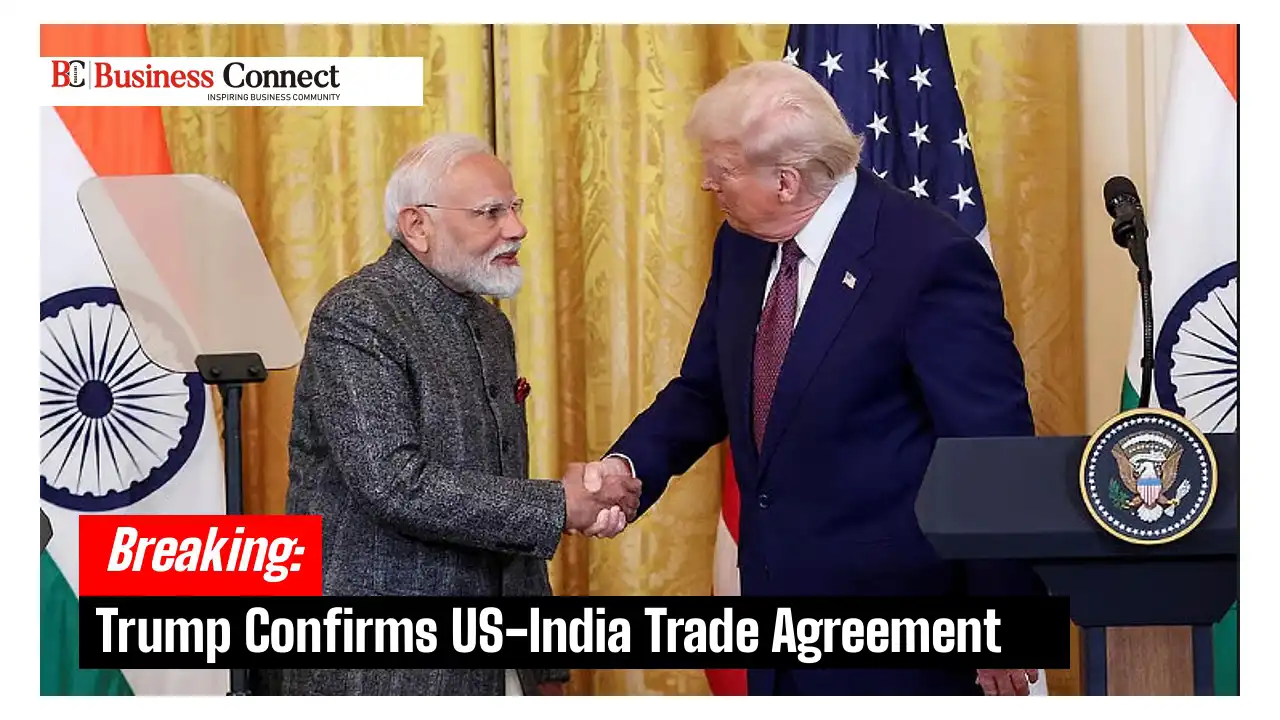
India-US trade deal: After months of negotiations that started early, everyone was caught off guard when US President Donald Trump announced the India-US trade accord. The impasse persisted after numerous rounds of negotiations, even after the US imposed 50% tariffs. The Trump administration insisted that any trade agreement with India would be contingent upon New Delhi ceasing to import crude oil from Russia.
Additionally, Trump stated that India has agreed to cease purchasing petroleum from Russia in his social media post on Truth Social. While applauding the announcement of a lowered 18% duty on Indian goods, Prime Minister Narendra Modi made no mention of imports of Russian crude oil.
What was the catalyst for the US-India trade agreement?
The recently finished India-EU Free Trade Agreement (FTA) negotiations put pressure on the Donald Trump administration, according to a News Week analysis. It said that as a result, the US blinked first and agreed to a trade agreement with India.
According to the research, New Delhi recently concluded what Brussels called a “landmark” free-trade agreement. India’s negotiation position was enhanced, but the Trump administration was concerned about being left out. Indeed, the FTA has been referred to be the “mother of all trade deals” by both the EU and India.
Just a few days prior, Prime Minister Modi had publicly praised the India-EU agreement, describing it as a major step forward that “opens new pathways for growth, investment and strategic cooperation.”
According to the News Week research, the order of events was intentional. Sergio Gor, the recently appointed US ambassador to India, alluded the impending news in a quick message just prior to the announcement:Prime Minister Modi and President Trump just had a conversation. Keep an eye out. Investors and politicians took notice when the deal quickly followed. The signal was unmistakable: the highest levels were directing the deliberate recalibration of ties.
From the US point of view, the problem involves both geopolitics and energy policy. The White House has stated unequivocally that lowering tariffs is associated with the goal of reducing Russia’s oil revenue.
Recently, US Treasury Secretary Scott Bessent claimed that Russian crude shipments from India had “collapsed” and suggested “a path” for the tariffs to be lifted.
While Trump also mentioned other supply lines, such Venezuela, to avoid a spike in world prices, the Associated Press outlined the strategy in straightforward terms: pinching Russia’s oil revenue to build pressure for an end to the crisis in Ukraine.
By the way, Trump said on Saturday that India has consented to purchase Venezuelan oil. In his Truth Social post announcing the trade agreement, he also stated that India would buy more US oil and would eventually buy Venezuelan oil as well.
According to recent reports, Tehran worries a possible US strike may destabilize the regime, which highlights how any shock in the Gulf can swiftly send shockwaves through the world’s oil markets. This assessment bears additional weight as the US manages risks associated with Iran, the analysis stated.
The problem affects both geopolitics and energy policy from the US point of view. Treasury Secretary Scott Bessent, who stated that India’s imports of Russian crude had “collapsed” and indicated “a path” for lifting the tariffs, reaffirmed the White House’s position that lowering tariffs is connected to the goal of reducing Moscow’s oil earnings.
The strategy was summed up in stark terms by the Associated Press: Trump cited alternate supply lines, including Venezuela, to stop a spike in world prices, while reducing Russia’s oil revenue to build pressure for an end to the crisis in Ukraine.
How Washington’s Strategic Calculations and Middle‑East Tensions Shaped the US‑India Trade Deal
The recent US‑India trade deal comes against a backdrop of wider geopolitical and economic pressures, where Washington has had to weigh risks tied to tensions with Iran and shifting global energy dynamics. Recent reports highlight Iranian concerns that even narrowly targeted US military action could threaten the stability of the regime, underscoring how any escalation in the Gulf quickly impacts global energy markets and economic confidence.
At the same time, there have been signals of renewed diplomatic engagement between the US and Iran, adding to the sense of volatility that markets have faced. Together, these developments illustrate how any flare‑ups in the Middle East can affect oil prices and complicate international political alignments.
Against this uncertain geopolitical backdrop, the India‑US trade deal offers both political and economic gains for the two countries. At the political level, the optics work in Washington’s favour by projecting an image of leverage and diplomacy, while New Delhi secures tariff concessions and clearer access for Indian exports to the US market.
Economically, the deal marks a major shift in trade policy after a period of tariff tensions. The United States has agreed to reduce tariffs on Indian imports to 18%, down from previous punitive levels that had reached as high as 50%, giving India a competitive edge over regional peers such as Indonesia, Bangladesh and Vietnam. India, in return, has agreed to halt purchases of Russian oil, and Prime Minister Narendra Modi welcomed the tariff cuts as a boost for Indian exports.
Beyond immediate tariff changes, there’s a broader strategic calculation at play. For the US, strengthening economic and defence ties with India helps diversify global supply chains and reduce reliance on China. For India, tangible results from closer alignment with the US – such as greater market access and lowered trade barriers – provide concrete evidence that cooperation can deliver economic benefits. Analysts say the combination of geopolitical pressures, energy market concerns and shifting alliance priorities helped push both sides toward this agreement.
FAQ: India-US Trade Deal and Strategic Implications
1. What triggered the India-US trade agreement?
After months of negotiations, US President Donald Trump surprised markets by announcing a trade deal with India. The impasse had continued despite multiple negotiation rounds and the US imposing tariffs of up to 50% on Indian goods. A key condition from the Trump administration was that India would cease imports of Russian crude oil.
2. What were India’s commitments in the trade deal?
According to Trump’s statement on Truth Social, India agreed to:
Stop purchasing Russian crude oil
Import more US oil
Eventually buy Venezuelan oil to diversify supply sources
In return, the US agreed to lower tariffs on Indian imports to 18%, down from previous punitive rates as high as 50%, boosting Indian exports to the US market.
3. Why did the US agree now?
Several factors influenced Washington’s decision:
The recently concluded India-EU Free Trade Agreement enhanced India’s negotiating position, prompting the US to act to avoid being left out.
Strategic and geopolitical calculations, including concerns over global energy markets, particularly oil flows from Russia and Venezuela.
A broader aim to strengthen India as a manufacturing and defense partner, reducing US reliance on China.
4. How did energy and geopolitical factors play a role?
Iran tensions added volatility: reports indicate Tehran fears even limited US military action could destabilize its regime, potentially disrupting Gulf oil supplies.
The US sought alternative supply lines (Venezuela and domestic sources) to prevent spikes in global oil prices while applying pressure on Russia.
Treasury Secretary Scott Bessent confirmed that India’s imports of Russian crude had already “collapsed,” supporting a path for tariff reductions.
5. What are the political benefits for both sides?
For the US: The deal projects an image of leverage in international diplomacy and strengthens strategic ties with India.
For India: The deal ensures tariff concessions and clearer access to the US market, demonstrating the tangible benefits of closer alignment with Washington.
6. What are the broader strategic implications?
Supply chains: The US aims to integrate India into global manufacturing and defense networks outside China’s orbit.
Economic validation for India: Reduced tariffs and greater market access show that cooperation with the US yields tangible results.
Analysts say the agreement reflects a combination of geopolitical pressure, energy market concerns, and alliance recalibration.
7. How does the deal benefit the US?
Geopolitical influence: Strengthens ties with India as a strategic partner in Asia.
Supply chain diversification: Reduces dependency on China for manufacturing and defense production.
Energy and sanctions strategy: By encouraging India to limit Russian oil imports, the US pressures Moscow economically while stabilizing global oil markets.
8. What are analysts saying about the broader implications?
The deal is seen as part of a larger geopolitical strategy, balancing trade, defense, and energy security.
Analysts suggest that short-term market volatility, particularly in oil prices, influenced the timing of the agreement.
The trade deal signals that global supply chains and geopolitical risks are now deeply intertwined with trade negotiations.
9. Are there any risks or challenges remaining?
Implementation of oil import changes could face logistical or diplomatic hurdles, especially with Venezuela.
Future US administration policies may alter tariff structures or trade rules.
Regional tensions in the Middle East or energy shocks could still impact both economies despite the agreement.
10. Key takeaways
India gains tariff relief, export access, and strategic validation.
The US strengthens its position in Asia, reduces reliance on China, and pressures Russia economically.
Energy and geopolitical factors, particularly Middle East volatility and oil supply, were critical in shaping the deal.