Burari Metro Station Opening on Feb 21-22 2026
Burari Metro Station Opening Date: What We Know So Far Big news for the residents of North Delhi! The Burari metro station opening date is tentatively set for February 21st or 22nd, 2026. PM Narendra Modi is expected to inaugurate this vital 12.3 km stretch of the Pink Line metro station extension, connecting Majlis Park to Maujpur. This launch is set to revolutionise the daily commute for thousands in the region, finally bringing high-speed connectivity to one of Delhi’s fastest-growing residential pockets.
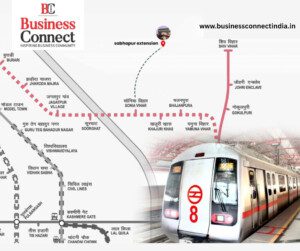
The opening of the Burari metro station is a game-changer for those tired of the heavy traffic on the Outer Ring Road and Burari Road. This new corridor completes the DMRC’s first “Ring Metro,” allowing passengers to circle the city seamlessly. Along with Burari, the line will feature key stations at Jharoda Majra, Jagatpur Village, Soorghat, Sonia Vihar, Khajuri Khas metro station, Bhajanpura metro station, and Yamuna Vihar metro station.
Where is Burari?
Burari is located in the North East Delhi district, positioned along the high-traffic Outer Ring Road and bordered by the scenic banks of the Yamuna River. This rapidly developing locality has gained immense popularity due to its proximity to the Delhi University North Campus and its seamless connectivity to major transit hubs like Azadpur and Model Town. The upcoming Burari metro station on the Pink Line extension is set to transform the area into a premier residential destination, bridging the gap between North Delhi and the North-East corridors. With its blend of urban development and vast green patches like the Yamuna Biodiversity Park, Burari offers a balanced lifestyle that is attracting thousands of daily commuters and families looking for affordability within the capital.
Burari has emerged as a top-searched investment hotspot, specifically for those searching for plots in Burari and property in North Delhi. The neighbourhood is comprised of thriving sub-localities such as Sant Nagar, Kaushik Enclave, and Nathupura, which are seeing a massive surge in demand as the Burari metro station opening date approaches. Investors are increasingly eyeing residential plots in Burari due to the high capital appreciation expected from the DMRC Phase 4 expansion. As the area becomes fully integrated with the Ring Metro network, Burari is evolving from a peripheral settlement into a well-connected urban hub, offering lucrative opportunities for both end-users and long-term real estate investors.
More than just a routine transportation update, PM Narendra Modi’s February 21–22, 2026, opening of the Burari, Sonia Vihar, and Bhajanpura metro stations is the last component needed to complete Delhi’s first-ever “Ring Metro.” Residents of Sabhapur Extension and the neighboring Pusta regions have endured difficult daily commutes for many years. By providing a first-rate, air-conditioned substitute for the traffic on Signature Bridge, this project fully closes that transit gap.
Burari Metro Station in Trial Phase Pink Line Phase 4 Extension to Boost North-East Delhi Connectivity
Good news for commuters in North-East Delhi! Burari Metro Station is currently undergoing trial runs as part of the Pink Line Metro Phase 4 extension. This new stretch will significantly improve metro access in the region, covering key stations like Burari, Sonia Vihar, Bhajanpura, Jagatpur Village, and Jharoda Majra.
The Phase 4 extension is one of the major projects by the Delhi Metro Rail Corporation (DMRC), adding 44 new stations across three corridors. One of these corridors is the 12.3 km Maujpur–Majlis Park stretch, which includes eight stations: Sonia Vihar, Burari, Jharoda Majra, Jagatpur Village, Soorghat, Khajuri Khas, Bhajanpura, and Yamuna Vihar.
A short section of the corridor, spanning 4.6 km between Majlis Park and Jagatpur Village, is nearly complete, with trial runs having started in December 2024.
Burari Metro Launch Date:
As part of the Delhi Metro’s Pink Line Phase 4 extension (Majlis Park-Maujpur), a 12.3 km route that adds eight additional elevated stations to complete the ring corridor connecting North and Northeast Delhi, Burari Metro Station is anticipated to open by Diwali 2026 .
Currently, the operational focus is on stations such as Burari, Sonia Vihar, Bhajanpura, Jharoda Majra, and Jagatpur Village. The remaining stations along the Maujpur–Majlis Park corridor are expected to be fully functional by 2025–26, offering commuters improved access and connectivity across North and North-East Delhi.
With the completion of Phase 4, residents can expect faster, more convenient, and seamless metro travel, connecting them to key residential, commercial, and business hubs across the capital.
How the Burari Metro Station Will Benefit Daily Commuters
The upcoming Burari Metro Station promises to be a game-changer for residents of Burari, Sonia Vihar, Sabhapur Extension, Wazirabad, Jagatpur Village, Jharoda Majra, and surrounding areas. Here’s how it will help:
1. Shorter Travel Time
Commuters will get direct metro access, eliminating the need for long bus or rickshaw rides. Daily journeys to work, school, or shopping areas will become faster and more convenient.
2. Better Connectivity
With the Pink Line extension, traveling across different parts of Delhi will require fewer metro line changes. Residents can now move more easily between North, North-East, and other areas of the city.
3. Reliable Transport
Metro services are generally punctual and less affected by traffic, making daily commutes less stressful. Regular travelers can now plan their schedules with more confidence.
4. Cost Savings
Commuters save both time and transport costs. Improved connectivity also opens access to jobs, educational institutions, and markets, making areas that were previously hard to reach far more accessible.
Rising Property Prices in Burari
Metro connectivity often boosts the real estate value in surrounding areas. People prefer living near metro stations to save travel time, making such localities more desirable.
In Burari, property prices are already soaring even before the Pink Line extension officially opens.
Plots and homes that were once expensive are becoming out of reach for middle- and lower-income families.
The new Burari Metro Station will revolutionize commuting for North Delhi residents who previously depended on distant stations like Vishwavidyalya or GTB Nagar to travel across Delhi, Noida, Greater Noida, and Gurugram.
Delhi govt releases ₹3,300 crore to fast-track phase 4 metro corridors
The Delhi government has released funds worth over ₹3,300 crore – its state contribution – to expedite work on the remaining three corridors of Phase 4 of the Delhi Metro, which will connect Lajpat Nagar to Saket, Inderlok to Indraprastha, and Rithala to Kundli, the government said in a statement on Sunday.
The three Phase-IV Metro corridors will have a combined length of 47.23 kilometres. The projects are estimated to cost approximately ₹14,630.8 crore, of which ₹3,386.18 crore will be met by the Delhi government, chief minister Rekha Gupta said.
“The Delhi government has released its share of funds for the remaining three corridors of Phase IV of the Delhi Metro Rail Transit System. These projects will provide improved Metro connectivity to various parts of Delhi and further strengthen the public transport system,” Gupta said, adding that the corridors are expected to be completed within four years and would help control pollution through efficient Metro operations.
Of the three corridors, the first is proposed from Lajpat Nagar to Saket G-Block, with a length of 8.4 km and eight elevated Metro stations. It will pass through Lajpat Nagar, Andrews Ganj, Greater Kailash-1, Chirag Delhi, Pushp Bhawan, Saket District Centre and Pushp Vihar.
The second corridor is proposed from Inderlok to Indraprastha, with a length of 12.38 km. This line will have a total of 10 Metro stations, one elevated and nine underground. It will connect areas such as Inderlok, Dayabasti, Sarai Rohilla, Ajmal Khan Park, Jhandewalan, Nabi Karim, New Delhi Railway Station, Delhi Gate, and Delhi Secretariat-IG Stadium.
This corridor has been included under a combined financial framework with the Lajpat Nagar–Saket G-Block corridor. “The combined project cost of these two corridors is ₹8,399.81 crore, of which the Delhi government’s share will be ₹1,987.86 crore,” a government official said.
The third and longest corridor is proposed from Rithala to Kundli, extending Metro connectivity to Haryana. “This corridor will be 26.46 km long and will include 21 stations. The total cost of this project has been estimated at ₹6,230.99 crore, with the Delhi government’s share amounting to ₹1,398.32 crore,” the official said, adding that ₹5,685.22 crore will be spent on the Delhi stretch and ₹545.77 crore on the Haryana portion.
Gupta said the tendering process for the three corridors is underway and preliminary work has already begun. “The construction of these metro corridors will enhance connectivity across northern, central and southern parts of Delhi, as well as the Delhi-NCR region. This will reduce traffic pressure on roads, save commuters’ time and promote the use of public transport,” she said.
1. What is the Burari Metro Station and why is it important?
Burari Metro Station is part of the Pink Line Phase 4 extension of the Delhi Metro. It will significantly improve metro connectivity for North-East Delhi, covering areas like Burari, Sonia Vihar, Bhajanpura, Jagatpur Village, and Jharoda Majra.
2. When will the Burari Metro Station become operational?
Trial runs for Burari Metro Station began in December 2024. The station, along with other key stations on the Maujpur–Majlis Park corridor, is expected to be fully functional by 2025–26.
3. Which other stations are included in the Phase 4 Pink Line extension?
The Maujpur–Majlis Park corridor spans 12.3 km and includes the following stations:
Sonia Vihar
Burari
Jharoda Majra
Jagatpur Village
Soorghat
Khajuri Khas
Bhajanpura
Yamuna Vihar
Additionally, Phase 4 adds 44 new stations across three major corridors in Delhi.
4. How will the Burari Metro Station benefit daily commuters?
Shorter Travel Time: Direct metro access eliminates long bus or rickshaw rides.
Better Connectivity: Fewer line changes make traveling across Delhi easier.
Reliable Transport: Metro services are punctual and less affected by traffic jams.
Cost Savings: Reduced travel time and transportation costs, with better access to jobs, schools, and markets.
5. How will property prices be affected in Burari?
Metro connectivity usually boosts real estate values in surrounding areas. In Burari:
Property prices are already rising sharply, even before the Pink Line extension opens.
Plots and homes that were affordable are now increasingly out of reach for middle- and lower-income families.
6. How will the new metro station improve commuting across Delhi?
Residents of North Delhi previously depended on stations like Vishwavidyalya or GTB Nagar to travel to far-off locations like Noida, Greater Noida, or Gurugram.
With the Burari Metro Station:
Travel becomes faster, more convenient, and seamless.
Commuters can easily reach residential, commercial, and business hubs across the capital.
7. What is the current status of trial runs?
A 4.6 km section between Majlis Park and Jagatpur Village is nearly complete, and trial runs started in December 2024. The operational focus is currently on Burari, Sonia Vihar, Bhajanpura, Jharoda Majra, and Jagatpur Village.
8. What are the long-term benefits of the Burari Metro Station?
Faster and more efficient daily commuting.
Reduced traffic congestion in North-East Delhi.
Increased property value and development opportunities.
Enhanced access to educational, commercial, and employment hubs.
9. Will Burari Metro improve access to nearby areas like Noida and Gurugram?
Yes! With the Pink Line Phase 4 extension, commuters can connect seamlessly to other metro lines, making travel to Noida, Greater Noida, Gurugram, and other major areas faster and more convenient.
10. How will the Burari Metro impact daily bus and rickshaw services?
With the metro operational, local bus and rickshaw dependency will reduce, as residents now have faster, more reliable, and affordable travel options. This will also help reduce traffic congestion in North-East Delhi.
11. Are there any special facilities planned at Burari Metro Station?
While specific station amenities are not yet fully confirmed, standard Delhi Metro features are expected, including:
Escalators and elevators for easy access
CCTV surveillance for safety
Ticketing machines and smart card counters
Seating and waiting areas
12. How will this metro extension benefit students and professionals?
The extension provides direct connectivity to key educational institutions and workplaces, making commuting quicker and stress-free. Students and professionals can avoid long multi-mode journeys using buses or auto-rickshaws.
13. How is Delhi Metro Phase 4 different from previous phases?
Phase 4 adds 44 new stations across three major corridors and includes modern infrastructure, such as:
Longer metro trains
Improved station design
Efficient rail operations
Better regional connectivity for underserved areas like North-East Delhi
14. When will all stations along the Maujpur–Majlis Park corridor be operational?
The remaining stations along the corridor are expected to be fully functional by 2025–26, ensuring that commuters across all neighborhoods get improved metro access.
15. Can first-time homebuyers benefit from this metro expansion?
Yes. Properties near metro stations, like Burari, are becoming more desirable but expensive. Alternative locations slightly farther, such as Sabhapur Extension or Sonia Vihar, still offer good metro connectivity at more affordable prices, making them suitable for first-time buyers.
16. Will the Burari Metro have parking facilities?
Yes, most new metro stations under Phase 4 are expected to include parking for cars and two-wheelers, making it convenient for commuters who drive to the station before boarding the metro.
17. How safe will commuting be at Burari Metro Station?
Safety is a priority for Delhi Metro:
CCTV cameras at all entry/exit points
Security personnel on-site
Well-lit platforms and footpaths
Emergency alarms and medical assistance availability
18. Will the metro reduce travel costs for North-East Delhi residents?
Yes. Commuters will save money by reducing dependency on rickshaws, taxis, and buses, especially for long-distance travel across Delhi. Affordable fares make metro travel cost-effective and predictable.
19. How will property demand change after the Burari Metro opens?
Properties near Burari Metro will increase in value due to better connectivity.
Areas like Burari may become premium residential hubs, while surrounding localities like Sabhapur Extension offer affordable alternatives for buyers seeking proximity to the metro.
20. Are there plans for commercial development around Burari Metro?
Yes. With improved connectivity, developers and businesses are likely to invest in shopping complexes, offices, and other commercial hubs near Burari Metro, enhancing local employment and business opportunities.
21. How does Burari Metro connect with other major Delhi Metro lines?
The Burari station on the Pink Line provides seamless transfers to:
Red Line
Blue Line
Violet Line
This allows commuters to reach central, south, east, and west Delhi without relying on multiple modes of transport.
22. Can Burari Metro help reduce traffic congestion in North-East Delhi?
Yes. With many commuters shifting from road transport to the metro, local roads are expected to see less congestion, making overall travel faster and safer in the region.
23. Will the metro have facilities for differently-abled passengers?
Absolutely. Delhi Metro stations are designed to be disabled-friendly, including:
Wheelchair-accessible ramps and lifts
Reserved seating on platforms and trains
Tactile paths for visually impaired passengers
24. When is the expected full launch of Burari Metro Station?
The Burari Metro Station is expected to be operational by Diwali 2025, providing a major boost to connectivity in North-East Delhi.
25. How can residents benefit from metro-connected real estate?
Easy commuting to work, schools, and markets
Increased property value over time
Access to modern infrastructure and lifestyle amenities
Opportunities to invest in upcoming affordable residential projects near metro lines
26. Will the Burari Metro trains run frequently?
Yes. Once operational, trains on the Pink Line extension are expected to run every 5–10 minutes during peak hours and every 10–15 minutes during off-peak hours, ensuring smooth travel for daily commuters.
27. Are there plans for feeder bus or last-mile connectivity?
Delhi Metro generally provides last-mile connectivity options near new stations, including:
Feeder buses connecting nearby neighborhoods
Auto-rickshaw stands
Bicycle-sharing and walking paths
This will make commuting from Burari Metro station to nearby localities easier.
28. Can students benefit from the Burari Metro?
Absolutely. Students traveling to colleges and schools across Delhi will save time and reduce commuting stress, as the Pink Line provides direct connectivity to educational hubs.
29. How will the metro help office-goers and professionals?
Quicker and more predictable travel
Reduced dependence on road transport
Access to business hubs in Central Delhi, Noida, and Gurugram
This makes daily commuting less tiring and more reliable.
30. Will Burari Metro reduce pollution and traffic in the area?
Yes. By shifting commuters from private vehicles and buses to the metro, it is expected to:
Reduce air pollution
Decrease traffic congestion
Make roads safer for pedestrians and cyclists
31. Are there plans to integrate Burari Metro with future Delhi Metro expansions?
Yes. Burari Metro is part of Phase 4, which is designed to integrate seamlessly with upcoming lines and extensions, ensuring long-term connectivity across Delhi and nearby cities.
32. How accessible is Burari Metro for nearby neighborhoods?
Burari Metro serves:
Sabhapur Extension
Wazirabad
Jagatpur Village
Jharoda Majra
Residents can reach the station in 5–15 minutes depending on their exact location, making it highly convenient.
33. Will there be special passes or discounts for commuters?
Delhi Metro often provides:
Smart cards for daily travel
Student and senior citizen discounts
Monthly passes for frequent commuters, helping reduce travel costs further
34. How is Burari Metro expected to affect local businesses?
Increased foot traffic near metro stations
Easier customer access
Boost to retail, food, and service sectors
Overall, improved connectivity stimulates economic activity in the area.
35. Will there be facilities for cyclists at Burari Metro?
Yes. Delhi Metro is expanding bicycle-friendly access at new stations, allowing commuters to:
Park their bicycles safely
Combine cycling with metro travel for last-mile connectivity
36. What will be the metro ticket fares for Burari Metro?
Fares will follow Delhi Metro’s standard pricing, which is distance-based. Short-distance travel costs less, while longer trips (cross-city) are priced higher. Commuters can use:
Smart cards for cashless travel and discounts
Tokens for single journeys
37. Can commuters use mobile apps to check schedules?
Yes. Delhi Metro provides:
Official mobile apps for timetable, route info, and fare calculation
Real-time updates on train arrivals and departures
38. How long will it take to travel from Burari to central Delhi?
With the Pink Line connection, travel time from Burari to Central Delhi stations is expected to be around 30–40 minutes, depending on the exact destination and transfer points.
39. Will Burari Metro have ATMs and shops inside the station?
Most new metro stations include:
ATMs for cash access
Convenience stores and kiosks
Food and beverage outlets for passenger convenience
40. How does Burari Metro improve access to healthcare and hospitals?
Residents in North-East Delhi can now reach major hospitals and healthcare centers faster, as metro connectivity reduces reliance on congested roads.
41. Will Burari Metro reduce reliance on private vehicles?
Yes. By providing faster, reliable, and cost-effective travel, more commuters are expected to switch from cars and two-wheelers to metro, easing traffic and lowering pollution.
42. How is the metro helping with real estate development in Burari?
Properties near Burari Metro are becoming highly desirable
Developers are building residential and commercial projects in nearby areas
Alternative localities like Sabhapur Extension offer affordable options with good connectivity
43. Are there facilities for senior citizens at Burari Metro?
Yes. Delhi Metro stations are equipped with:
Priority seating in trains
Wheelchair ramps and elevators
Reserved counters for ticketing
44. How will tourists benefit from Burari Metro?
Tourists visiting North-East Delhi or nearby attractions can use the metro for:
Quick access to key areas like Wazirabad, Sonia Vihar, and Bhajanpura
Reduced dependence on taxis or buses
Cost-effective travel across Delhi
45. How often will trial runs continue before full operation?
Trial runs usually continue for several months, testing safety, efficiency, and operational readiness. Burari Metro is expected to start regular passenger service by Diwali 2025.
46. Can commuters expect future metro line extensions from Burari?
Yes. Burari Metro is planned to integrate with future Delhi Metro corridors, ensuring long-term connectivity and access to more areas across Delhi and NCR.
47. Will there be announcements and alerts for commuters?
Delhi Metro provides:
Station announcements for arrivals and departures
Mobile notifications via official apps
Updates on service changes or disruptions
48. How will Burari Metro impact daily commuting costs?
Reduced spending on autos, rickshaws, and taxis
Smart card discounts and monthly passes further lower daily travel costs
Time saved translates to more productive commuting