If you look at how businesses operate today, one thing becomes very much clear from what we have observed i.e. logistics is no longer just a backend function. It’s front and center, shaping how customers experience a brand. And when a brand knows how to deliver a unique customer experience, success follows without any delay.
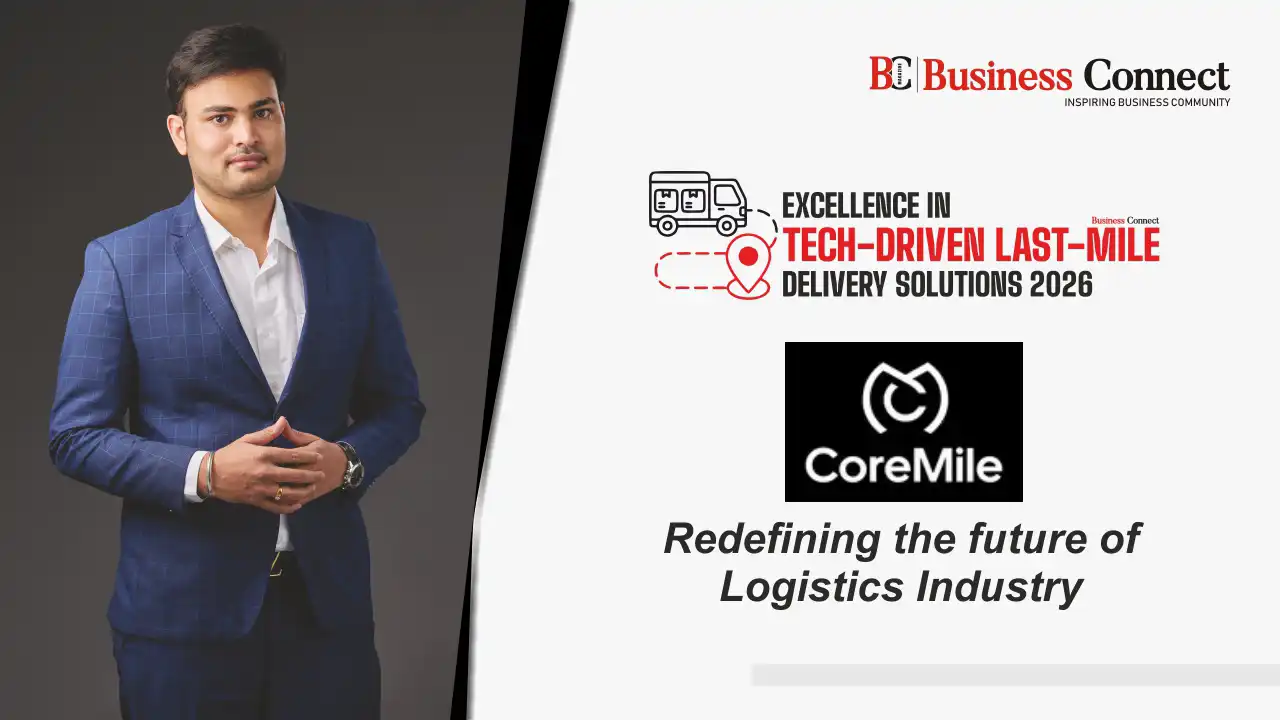
That’s exactly the space CoreMile is working in. Superficially, CoreMile is a logistics company. But if you go a little deeper, it’s really a technology-led supply chain enabler that’s trying to fix what most businesses quietly struggle with, speed, visibility, and reliability.
The company operates across last-mile delivery, quick commerce, dark stores, fulfilment centers, and linehaul. But what actually makes it work is the combination of on-ground strength and tech. With a network of 500+ fleet partners across 50+ pin codes, backed by an AI-led platform, CoreMile helps businesses not just deliver faster, but deliver with more control and predictability. And today, that difference matters more than ever.
In an engaging conversation with our team, there is a young and dynamic entrepreneur, ShreeNiketan Nayak who is leading the charge of the company as the Founder & CEO. This whole read is based on the valuable insights shared by him throughout the session:
Building with Intent
CoreMile was built with a larger and straightforward vision i.e. to build a logistics ecosystem that is ready for the future. The intention was not to make the process just faster, but smarter and more sustainable. The mission ties into the statement: simplify supply chains using technology so businesses can scale without constantly worrying about operations. It may sound simple when read like that, but in logistics, simplicity is actually the hardest thing many players strive hard to achieve.
A glance at the industrial shift
The logistics space has changed a lot over the last few years. Earlier, delivery timelines were flexible. A delay here and there didn’t really impact brand perception. That’s no longer the case.With the rise of quick commerce, the expectation has completely flipped. Customers now think in terms of hours,even minutes. And that has forced companies to rethink everything, from warehousing to routing to execution on ground. .
Another big shift is how decisions are being made. Data, automation, and real-time tracking are no longer ‘nice to have’ ; they’re basic requirements. And honestly, businesses that are not adapting to this shift are already falling behind.
Where It All Started
The idea behind CoreMile didn’t come from theory, it came from actually seeing the gaps. Mr.ShreeNiketan has an exposure working closely with large-scale supply chain systems and he has advanced through critical roles over a significant Six-year tenure at Amazon, including Operations Manager, where he mastered large-scale logistics, and later in program development and as a Channel Leader, where he drove strategic growth initiatives, it became obvious that even the most advanced setups had inefficiencies, especially in last-mile delivery and hyperlocal fulfillment.
That’s where most delays, inconsistencies, and customer dissatisfaction actually come from. CoreMile was built to solve exactly that. What started as a focused attempt to improve last-mile operations has now grown into a more complete logistics platform, one that supports businesses end-to-end, not just at one stage.
Why Innovation Isn’t Optional Anymore
If there’s one thing that’s clear in this industry, it’s the fact that standing still is not an option. The brand has never treated R&D as a separate department, as it is more of an ongoing process. Gone are the days, when R&D used to be optional.
“Your market relevance as a business now depends a lot on how well you’ve researched your niche. So, our team is always using AI and automation to make routing better, operations more predictable, and efficiency higher. The companies that win are the ones that keep changing and growing in the background,” stated Shreeniketan.
Marketing Without Noise
Interestingly, CoreMile hasn’t grown through aggressive marketing. In logistics, reputation travels faster than ads. The company has built its presence by consistently delivering results and forming strong partnerships with players like Amazon, Flipkart, Shadowfax, DTDC, and LULU. It’s more about trust than visibility. And over time, that approach tends to compound.
Leadership principles
Leadership at the organisation has never been about who is in charge, but about being clear. The goal is to create systems that let teams do their jobs well without needing to be watched all the time. People are expected to take charge, make choices, and act quickly.
At the same time, being practical is very important. In logistics, planning is important, but doing is everything. And that balance is what makes someone a leader in the company. His modern and dynamic leadership style has made the workplace thrive on the values of ownership, openness, and flexibility.
As per the leader, the management is always striving to encourage people to think for themselves, alongside staying on track with the bigger picture. Most decisions are based on data, which cuts down on unnecessary confusion. At the same time, everyone feels like they are responsible. Everyone knows what they’re working toward i.e. a collective vision.
What’s Next for CoreMile?
For the upcoming times, the focus of the company is quite clear. It would be expanding its network, especially in terms of dark stores and last-mile infrastructure. There’s also a strong push towards building better tech products that can improve operational efficiency at scale. Sustainability is another area that’s getting attention, with increased adoption of EV fleets.
Because growth today is not just about scaling, but about scaling responsibly. The long-term vision is to create a logistics system that doesn’t just react, but predicts. A system where supply chains are optimized in real time, with minimal friction. It’s an ambitious space, but also where the industry is clearly heading.
Milestones That Actually Matter
In a relatively short time, CoreMile has managed to build a network across 50+ pin codes with 500+ fleet partners and 300+ employees. It operates through 15 last-mile hubs and 12 dark stores enabling faster fulfilment. But beyond numbers, what stands out is the level of trust it has built with its partners. And in logistics, that’s probably the most important metric.
A piece of advice for emerging entrepreneurs
“Focus on building something that truly solves a problem. Scale will follow relevance. As a leader, one must always be prepared for uncertainty, stay resilient, and never lose sight of execution. Yes, your innovative ideas are significant, but disciplined execution is a real gamechanger at the end. We’re in a phase where industries are changing faster than ever.
The only ones who will keep up are the ones who stay flexible, think long-term, and keep the customer at the center. That’s the space CoreMile is trying to operate in. And in many ways, this is just the beginning.”