Medical tourism platforms, which work closely with foreign patients and caregivers, say concerns do come up but queries can be resolved with clear and practical discussions.
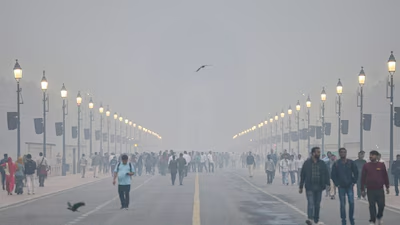
As air quality worsens across Delhi-NCR and large parts of northern India, concerns are beginning to surface among international patients travelling to the country for medical treatment, Businessconnectindia.in has learnt.
While pollution has long been a seasonal challenge, medical tourism facilitators and industry bodies say patients and their families are increasingly asking questions about air quality, even as India continues to remain one of the world’s most sought-after destinations for affordable, high-quality healthcare.
Industry experts say the concern is real, particularly during peak winter months, but add that medical travellers eventually prioritise clinical outcomes and access to specialists over environmental conditions, especially when treatment cannot be delayed.
Patients And families Worried
Dr Abhay Sinha, director general of the Services Export Promotion Council (SEPC), which operates under the Ministry of Commerce, told News18 that air pollution is now a consideration for international patients choosing India.
“Air quality is a genuine concern for international travellers, especially for patients who choose India for medical treatment, and we acknowledge our responsibility in this very seriously.”
Sinha explained that with implementation of stricter measures, including GRAP across major urban centres, there have been improvements in particulate matter levels. “Based on recent data released by the Central Pollution Control Board (CPCB), we see a regain of trust building towards the Indian healthcare ecosystem.”
He added that pollution-control measures, though challenging, are showing results. “While air quality management is an ongoing challenge, these outcomes reinforce that coordinated action does make a measurable difference. More importantly, they form part of a broader, long-term commitment to environmental improvement.”
Medical tourism platforms, which work closely with foreign patients and caregivers, say concerns do come up — but queries can be resolved with clear and practical discussions.
According to Pankaj Chandana, co-founder of medical tourism firm Vaidam Health, “Patients and their families do express concerns around air quality, and these are addressed through practical guidance and precautionary planning, as care often cannot be postponed.”
He added that concerns are addressed through planning rather than reassurance. “What patients and caregivers value most is clarity rather than reassurance: practical guidance on precautions, travel timing, and recovery planning.”
Similarly, Sonam Garg Sharma, founder and CEO of medical consultancy firm Medical Linkers explained that when someone travels for treatment, they are not planning a holiday. “They are planning around fear, hope, time, and recovery.”
“Air quality does come up in conversations, particularly for elderly patients or those with respiratory or cardiac concerns, but for most international medical travellers, the urgency of care remains the primary driver.”
These experts added that while the journey around treatment does matter, from airport arrival to follow-ups and recovery, it’s also important to note that day-to-day exposure for medical travellers is often limited.
“A large part of their stay is spent inside hospitals or in controlled, home-style recovery environments, and the overall duration is usually time-bound. In practice, only a small segment of patients, approximately 10 per cent, raise air quality concerns proactively. These are often from Indian-origin countries such as Mauritius who are more familiar with seasonal conditions, and usually when treatment is planned specifically in the Delhi-NCR region,” Chandana said.
India’s Medical Strengths Outweigh Concerns
Despite pollution-related anxieties, stakeholders say India’s core strengths as a medical tourism destination remain unchanged. The country attracts international patients for complex surgeries, cancer care, organ transplants and cardiac treatment because of its skilled doctors, accredited hospitals, and cost advantage.
“India continues to be a trusted global hub for medical tourism, backed by world-class healthcare infrastructure, internationally accredited hospitals, highly skilled clinicians, and sustained efforts to create a safer, more comfortable environment for patients and their families throughout their stay,” Dr Sinha from SEPC said.
Sharma from Medical Linkers said for most patients, medical urgency overrides environmental concerns.
She added that patients coming for critical care remain focused on outcomes rather than surroundings. “Patients coming for critical care are focused on outcomes, timelines, and access to the right expertise. Their stay is structured, time-bound, and largely centred around hospitals or recovery settings.”
The industry echoed similar views. “India’s medical strengths remain the core draw, and transparent information combined with thoughtful planning helps ensure a safe and supportive experience for these patients from their arrival to discharge,” Chandana said.
FAQs: Air Pollution Concerns and Medical Tourism in India
1. Are international medical tourists worried about air pollution in India?
Yes, some international patients and their families have started raising concerns about air quality, especially during peak winter months in Delhi-NCR and northern India. However, these concerns are usually addressed through clear guidance and planning.
2. Is air pollution affecting India’s medical tourism industry?
Industry experts say air pollution is a consideration, but it has not significantly impacted India’s position as a leading medical tourism destination. Most patients prioritise treatment quality, specialist access, and outcomes over environmental factors.
3. Which patients are most concerned about air quality?
Concerns are more common among elderly patients and those with respiratory or cardiac conditions. Patients from Indian-origin countries, such as Mauritius, who are familiar with seasonal pollution patterns, are also more likely to ask about air quality.
4. How do medical tourism platforms address pollution-related concerns?
Medical tourism facilitators address concerns through practical planning, including advice on travel timing, precautions, recovery environments, and limiting outdoor exposure rather than offering generic reassurance.
5. Do most medical tourists spend time outdoors during treatment?
No. Experts note that most medical travellers spend the majority of their stay inside hospitals or in controlled recovery environments. Their visits are structured, time-bound, and centred around treatment and recuperation.
6. Has air quality management improved in recent times?
According to industry bodies, stricter measures such as GRAP and data from the Central Pollution Control Board (CPCB) indicate improvements in particulate matter levels, helping rebuild trust among international patients.
7. What percentage of patients raise air pollution concerns proactively?
Medical tourism platforms estimate that only about 10 per cent of international patients proactively raise air quality concerns, mainly when treatment is planned in the Delhi-NCR region.
8. Why does India remain a top destination for medical tourism despite pollution issues?
India continues to attract patients due to its world-class hospitals, internationally accredited facilities, highly skilled doctors, advanced treatments, and significant cost advantages compared to many other countries.
9. Does medical urgency outweigh environmental concerns for patients?
Yes. For most international patients, especially those seeking critical or time-sensitive care such as cancer treatment, organ transplants, or cardiac procedures, medical urgency outweighs environmental considerations.
10. What reassures international patients visiting India for treatment?
Transparent communication, precautionary planning, accredited healthcare facilities, and a structured treatment journey from arrival to discharge help ensure a safe and supportive experience for medical travellers.