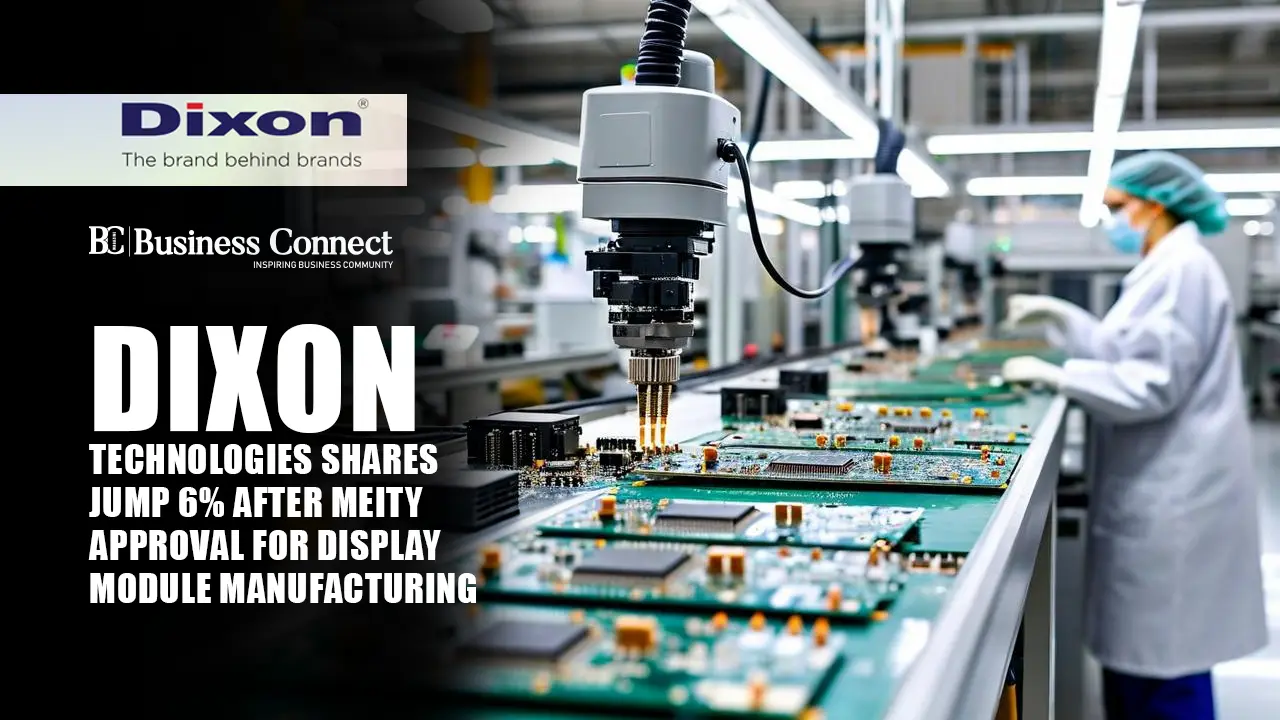
Shares of Dixon Technologies (India) Ltd. rose sharply on Tuesday after the company announced that it had received government approval to manufacture display modules in India. The stock climbed nearly 6% to ₹10,530 on the NSE during morning trade, reflecting positive investor sentiment following the regulatory clearance.
According to an exchange filing, Dixon Display Technologies Private Limited (DDTPL)—a wholly owned subsidiary of Dixon Technologies—plans to sell a 26% stake to HKC Overseas Ltd. as part of a strategic partnership. The collaboration aims to establish manufacturing capabilities for display modules in India.
The approval was granted by the Ministry of Electronics and Information Technology under Press Note 3, which regulates foreign investments from countries that share a land border with India. Under this rule, investments from such entities must go through the government approval route before they can proceed.
The clearance allows HKC Overseas to invest in the proposed joint venture with DDTPL. However, the final investment and partnership will still depend on the fulfillment of certain conditions outlined in the approval letter, as well as the terms specified in the shareholders’ agreement.
Once operational, the joint venture will focus on the development, manufacturing, and distribution of advanced display modules, including liquid crystal modules (LCM) and thin-film transistor liquid crystal display (TFT-LCD) modules. These components are widely used in products such as smartphones, laptops, televisions, monitors, automotive displays, and industrial equipment.
Industry experts believe the partnership could significantly strengthen India’s domestic electronics manufacturing ecosystem. By producing display components locally, the venture may help reduce reliance on imports while supporting the government’s “Make in India” initiative and boosting supply chains for sectors like consumer electronics and automotive technology.
Despite Tuesday’s rally, Dixon Technologies’ stock has experienced a sharp correction in recent months. The shares have erased nearly 45% of their gains from the record high of ₹18,471 reached in September 2025. On Monday, the stock had dropped to a 52-week low of ₹9,630, before rebounding following the news of the government approval.
FAQs: Dixon Technologies Share Price Jump and Display Module Manufacturing Approval
Q1: Why did the shares of Dixon Technologies (India) Ltd. rise recently?
A1: The company’s shares rose nearly 6% after it received government approval to manufacture display modules in India, boosting investor confidence.
Q2: What was the share price after the surge?
A2: The stock climbed to around ₹10,530 per share on the NSE during morning trading following the announcement.
Q3: Which subsidiary of Dixon Technologies is involved in the project?
A3: The project will be carried out by Dixon Display Technologies Private Limited (DDTPL), a wholly owned subsidiary of Dixon Technologies.
Q4: Which company will partner with Dixon for this manufacturing venture?
A4: Dixon plans to sell a 26% stake in DDTPL to HKC Overseas Ltd. as part of a strategic partnership.
Q5: What is the purpose of the partnership between Dixon and HKC Overseas?
A5: The collaboration aims to develop and manufacture display modules in India, strengthening the domestic electronics manufacturing ecosystem.
Q6: Which government authority approved the investment?
A6: The approval was granted by the Ministry of Electronics and Information Technology.
Q7: What is Press Note 3 and why is it important?
A7: Press Note 3 is a policy that requires investments from countries sharing land borders with India to receive government approval before proceeding, ensuring regulatory oversight.
Q8: What types of display modules will the joint venture produce?
A8: The venture will manufacture Liquid Crystal Modules (LCM) and Thin Film Transistor Liquid Crystal Display (TFT-LCD) modules.
Q9: Which industries will benefit from these display modules?
A9: These components are widely used in smartphones, laptops, televisions, monitors, automotive displays, and industrial equipment.
Q10: How will this project impact India’s electronics sector?
A10: Local production of display modules could reduce reliance on imports, strengthen domestic supply chains, and support the “Make in India” initiative.
Q11: Has the joint venture been finalized?
A11: The partnership is still subject to certain conditions mentioned in the approval letter and the shareholders’ agreement before the investment is finalized.
Q12: How has Dixon Technologies’ stock performed recently?
A12: Despite the latest rally, the stock has fallen significantly from its record high of ₹18,471 reached in September 2025.
Q13: What was the company’s recent 52-week low?
A13: The shares dropped to a 52-week low of ₹9,630 before recovering after the government approval news.
Q14: Why had Dixon Technologies’ stock declined earlier?
A14: The decline is largely attributed to profit booking and broader market corrections after the stock had surged to record highs.
Q15: What is the long-term significance of the display module project?
A15: The initiative could boost India’s electronics manufacturing capabilities, create local component ecosystems, and strengthen the country’s position in global supply chains.