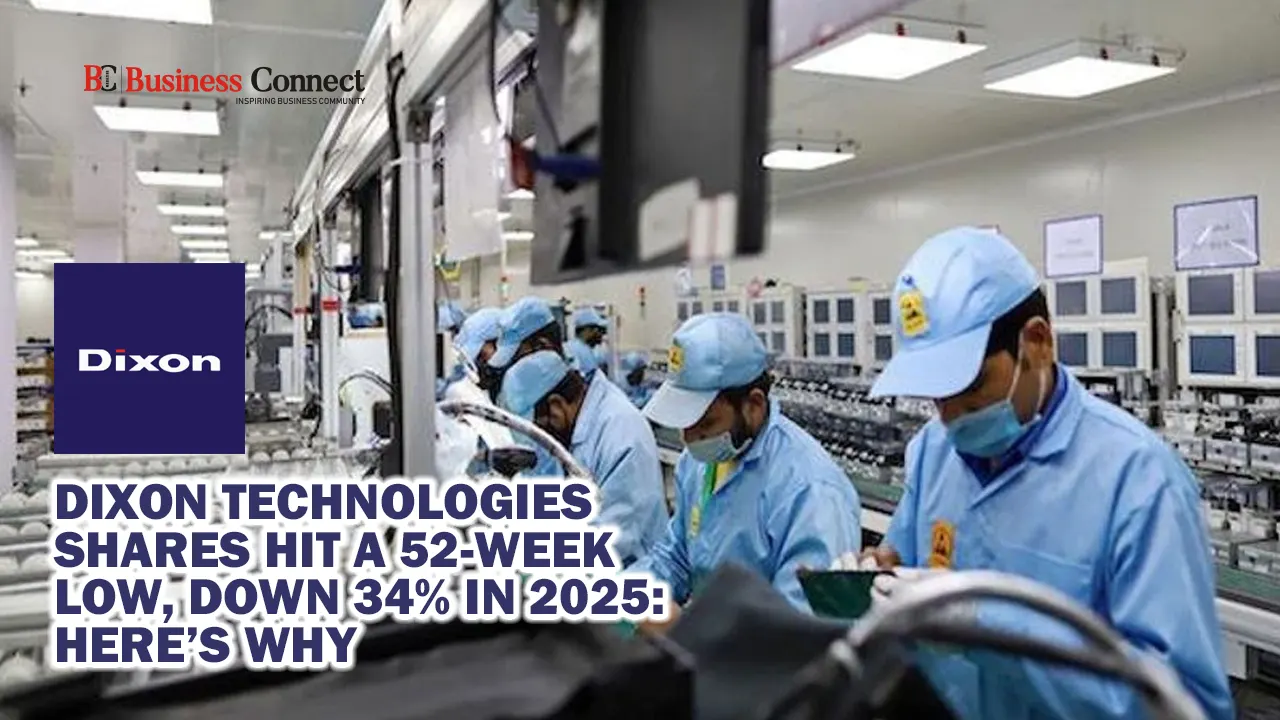
Dixon Technologies shares declined for the sixth straight session to hit a 52-week low of ₹11,851 per share on NSE. The company’s stock has seen a consistent sell-off in 2025 amid multiple factors, including profit booking after a strong rise in the previous two fiscal years.
Dixon Technologies shares declined for the sixth straight session to hit a 52-week low of ₹11,821 per share on NSE. Dixon Technologies, which offers electronics manufacturing services (EMS) to major domestic and international electronic brands, has witnessed a rollercoaster rise in the stock market this year.
The company’s stock hit a 52-week high of ₹18,700 apiece on 6 January 2025, and since then, the stock has declined by over 36% to reach a 52-week low of ₹11,821 per share. The stock has declined nearly 34% year-to-date, while its market cap stood at ₹72,094 crore as of 29 December 2025.
Dixon Technologies stock performance
| 1-month | 6-month | YTD | 3-Year return |
|---|---|---|---|
| ▼18.8% | ▼20.4% | ▼33.9% | ▲207% |
As seen from the above table, Dixon Technologies has seen a consistent sell-off in 2025 amid multiple factors, including steady profit booking by investors after a strong rise in the previous two fiscal years.
Another probable reason behind the stock fall is the recent extension of India’s IT hardware import norms by another year until December 31, 2026. This will allow the global electronics brands like Lenovo, HP, Asus and others to continue importing products under the required licences and disclosures, impacting the local manufacturing companies like Dixon Technologies.
Import Management System (IMS) covers items such as laptops, tablets, and all-in-one personal computers. Extension of IMS norms reduces the incentive to move production to India for global players and limits opportunities for local EMS companies.
As per the global investment firm Morgan Stanley’s report, Dixon Technologies could face difficulties in meeting its revenue guidance under the current policy environment.
Besides this, Dixon Technologies also awaits final approval for its joint venture (JV) with Vivo, which was announced last year in December 2024. This JV with Vivo could boost the company’s smartphone production capacity and could be positive for the company’s future revenue and profitability.