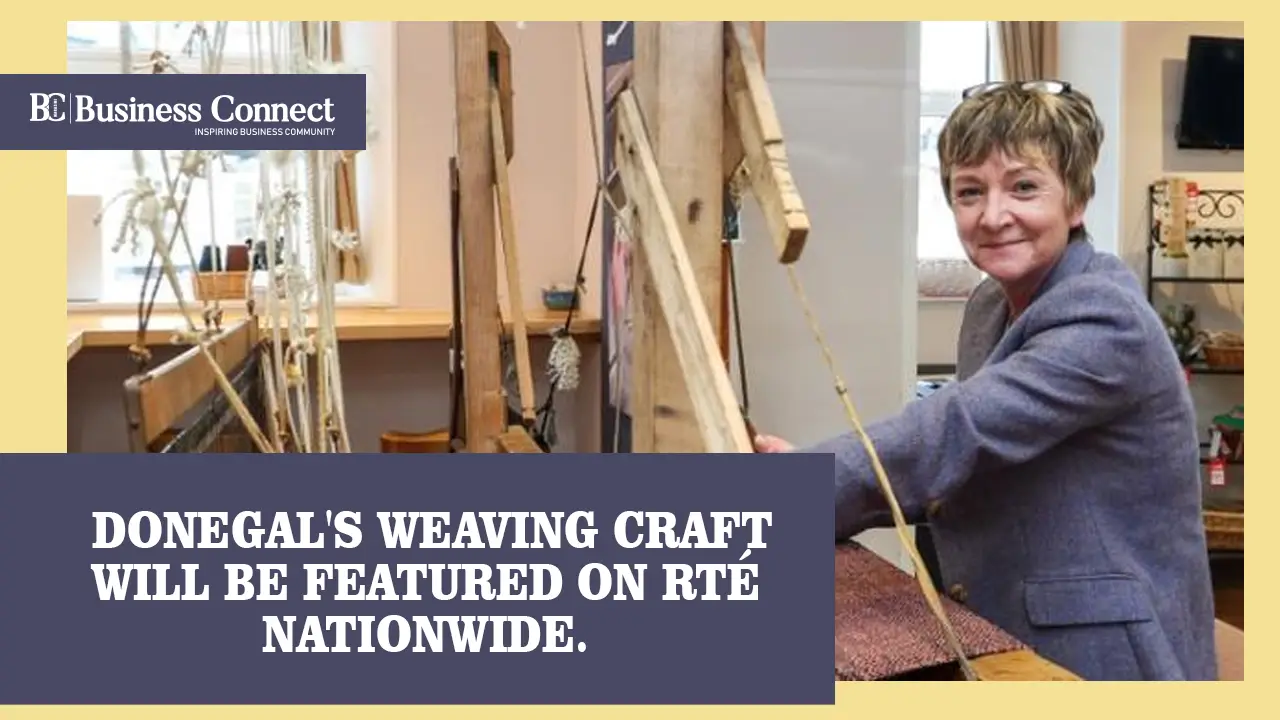
The show highlights the art of weaving in Donegal as host Bláthnaid Ni Chofaigh visits rural areas where this ancient cottage skill has endured throughout the ages. RTÉ Nationwide will highlight weaving businesses from all around the county.
The show highlights the art of weaving in Donegal as host Bláthnaid Ni Chofaigh visits rural areas where this age-old cottage craft has been practiced for centuries, delving into its intriguing past.
Blathnaid Ni Chofaigh
Bláthnaid also meets with a number of companies dedicated to saving the age-old art of weaving, such as Studio Donegal, a small family-run company established in 1979 to preserve the hand-weaving tradition while creating jobs in the area, and Donegal Weaving Yarns in Kilcar, one of Ireland’s last surviving woollen mills.
Another modest, family-run mill in Ardara that started weaving in the 19th century, Molloy & Sons, is also highlighted on the show. McNutt Woollen Mill, another business committed to conserving the age-old art of weaving, is located in the village of Downings.
Additionally, Bláthnaid learns how Magee of Donegal, a strong multigenerational family company, was able to grow and prosper thanks to the power loom, which was introduced in the 1970s.
FAQs on RTÉ Nationwide’s Episode on Donegal Weaving
Q1. What is the focus of RTÉ Nationwide’s latest episode?
The episode highlights the art of weaving in Donegal, showcasing how this centuries-old cottage craft continues to thrive in rural communities across the county.
Q2. Who is the host of the Donegal weaving episode?
The show is hosted by Bláthnaid Ní Chofaigh, who travels through Donegal to meet local weavers, artisans, and mill owners preserving this historic tradition.
Q3. Why is weaving significant to Donegal?
Weaving is an integral part of Donegal’s cultural heritage, with roots tracing back centuries. The county is world-renowned for its Donegal tweed and handcrafted textiles that reflect Ireland’s rural craftsmanship and identity.
Q4. Which weaving businesses are featured in the episode?
The episode features several notable weaving businesses, including:
Studio Donegal in Kilcar – a family-run company founded in 1979 to preserve hand-weaving traditions.
Donegal Weaving Yarns, one of Ireland’s last surviving woollen mills.
Molloy & Sons in Ardara – a historic family mill that began in the 19th century.
McNutt Woollen Mill in Downings – a business devoted to conserving traditional weaving methods.
Magee of Donegal – a multigenerational company that embraced modern weaving through the introduction of power looms in the 1970s.
Q5. What is Studio Donegal known for?
Studio Donegal is celebrated for its handwoven tweeds and blankets, blending traditional techniques with modern design while sustaining local employment in rural Donegal.
Q6. What makes Donegal Weaving Yarns unique?
Donegal Weaving Yarns is among the few remaining woollen mills in Ireland, producing authentic yarns used by local and international textile makers who value quality and heritage craftsmanship.
Q7. How old is Molloy & Sons mill?
Molloy & Sons, based in Ardara, began weaving operations in the 19th century and has passed down its weaving legacy through several generations.
Q8. Where is McNutt Woollen Mill located?
McNutt Woollen Mill is located in Downings, County Donegal. The company focuses on conserving traditional weaving techniques while adapting to modern markets through innovative textile products.
Q9. What role does Magee of Donegal play in preserving weaving traditions?
Magee of Donegal, a multigenerational family business, modernized the local weaving industry by introducing the power loom in the 1970s, allowing the company to expand while keeping its heritage alive.
Q10. What is the goal of this RTÉ Nationwide episode?
The goal is to celebrate and document Donegal’s rich weaving history, promote the artisans keeping it alive, and raise awareness of how traditional crafts can coexist with modern technology and global demand.
Q11. When will the Donegal weaving episode air?
The exact air date hasn’t been mentioned in the summary, but viewers can watch RTÉ Nationwide on RTÉ One and stream episodes later on the RTÉ Player.
Q12. How does RTÉ Nationwide contribute to Irish heritage preservation?
By spotlighting local crafts, heritage industries, and rural livelihoods, RTÉ Nationwide plays a vital role in promoting Ireland’s cultural identity and inspiring appreciation for traditional skills like weaving.
Q13. What is the cultural message behind this episode?
The episode underscores the idea that heritage crafts are living traditions, not relics of the past. Through innovation and community effort, Donegal’s weavers are ensuring that the art of hand-weaving remains relevant in the modern age.