There was a time when flyers were just scraps of paper — flimsy, forgettable, barely more than a line or two of info. They’d sit on café counters or get pinned to bulletin boards, hoping someone might glance their way. Most folks didn’t even notice the design.
But things have changed. Now, flyers come alive. These days, they’re more than simple notices – they’re almost like tiny film billboards. Think dark shadows, intense moments, a full scene caught in one shot; you catch the mood right away, no text needed. With platforms such as Dreamina and its AI image generator, creators nail this striking style without touching real gear or setups. Now, pretty much anyone can whip up a poster that hints at a larger tale behind it.
Honestly, we’re living in the era of cinematic design. Even a flyer can look and feel like a blockbuster trailer.
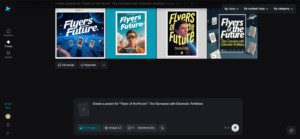
When flyers learned to dream like cinema
The cinematic flyer is all about evoking emotion before information. You don’t just read it; you feel it. Designers are now borrowing from filmmaking’s visual language-composition, depth, and atmosphere-which gives still images motion and story.
This change hits like live drama. A gig poster could bring up old detective flicks – thick haze, dim beams cutting through. The reveal of some gadget? Feels ripped from a space thriller’s cover, buzzing with neon light that hums under your skin. An invite to spoken word vibes might mirror a still from a slow cinema scene, soft focus, golden tones bleeding at the borders.
That’s what makes these creative risks work: cinematic design activates the imagination. You’re not being told what’s happening-you’re being invited to experience it.
The visual grammar of cinematic flyers
So what makes a flyer feel cinematic rather than conventional? It’s not so much the stuff you see, rather the way it feels. Top movie-style trailers share something – rhythm, tone, a certain pull
- Layers add depth: This plus draw your eye deeper, giving a sense of open area.
- Lighting that pops: use bold shadows, bright beams, or warm sunset tones to shape how it feels.
- Story told by how things are placed: main characters shown clearly, slanted views, or crosswise layouts that hint at movement or stress.
- Color analysis: Muted blues hint at sadness, bright reds spark action, warm yellows bring back old memories.
Essentially, these flyers don’t just publicize events; they steer them.
The painterly touch of modern digital art
While rooted in film aesthetics, the beauty of cinematic flyers is so often in the subtle artistry of detail. That’s where Dreamina’s AI art generator shines, blending realism with painterly softness. Capable of simulating brushstrokes, lens textures, and lighting bloom, it creates visual tension that feels handcrafted.
- Artists use this to craft flyers that feel alive yet artful.
- Watercolor-like blurs in a jazz night poster.
- Oil-painted edges in a vintage film festival flyer.
Abstract overlays hint at emotion more than narrative.
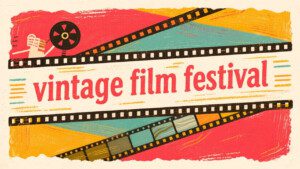
Movement without motion: The rise of emotional rhythm
Even though flyers are still images, they can move you. With subtle design cues in directional blur, layered transparency, or gradient flow, motion can be suggested rather than shown. That’s where video logic meets print.
The cross-media approach does come from digital storytelling. Designs created nowadays feel like they are alive and capture the tension of a film frame that is on pause.
Taking that idea one step further with Dreamina’s AI video generator feels natural: taking static designs and turning them into short, atmospheric teaser clips. The concert flyer might evolve into a looping video where light flickers across instruments. A theater event could have motion added to smoke or curtains. The soul of the flyer remains-but its rhythm expands. It’s no longer an invitation; it’s a preview.
The movement of movie-making through Dreamina
Step 1: Write a descriptive text prompt
First up, fire up Dreamina – picture the flyer like a single shot from a film. Think about how it makes you feel; dive into that mood. The light? Is it harsh or soft, dim or bright? Set the scene clearly: where does this moment take place? Let each element build the vibe without spelling it out loud.
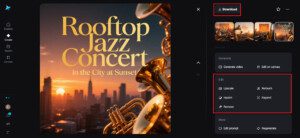
For example: Cinematic flyer for a rooftop jazz concert in the city at sunset: warm orange lighting, reflective instruments, elegant type composition, slight motion blur, golden highlights, and a nostalgic atmosphere.
This is a descriptive prompt that gives Dreamina emotional cues, therefore helping it create a scene and a moment in time frozen within a story.
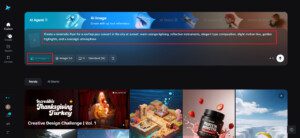
Step 2: Refine parameters and generate
Once your prompt feels right, fine-tune it. Choose your model for visual tone, set your aspect ratio to match flyer dimensions, and select resolution (1k or 2k for crisp print-ready clarity). Then, click Dreamina’s icon to generate your image. Within seconds, you’ll see a flyer concept that captures cinematic storytelling-light, depth, and drama in one perfect frame.
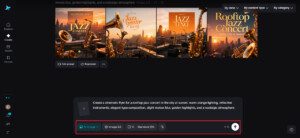
Step 3: Customize and save
Fine-tune the mood with the advanced tools of Dreamina: inpaint for adjusting key elements, expanding to widen your composition, removing to declutter an area, or retouching to heighten the light effect. Once your flyer feels balanced and emotional, click the Download icon to save it — your cinematic mini-poster ready to print or share.
How does cinematic design change engagement?
Flyers designed with cinematic flair don’t just promote; they intrigue. People stick to them longer, tracing their visual rhythm, wondering what story lies beyond. That is pure gold in the marketing world, where attention spans shrink by the second.
Cinematic design turns passive viewing into active imagination. Viewers feel part of the story, not passive spectators. The flyer becomes an emotional handshake — not a sales pitch..
And the same visuals can easily extend into short motion clips or teasers in digital formats. With tools such as video generation from Dreamina, designers can blur the line between graphic design and filmmaking by creating cohesive campaigns that move both literally and emotionally.
The creative heartbeat of the future flyer
Flyers of the future will be neither static nor sterile. They will be alive with atmosphere, small canvases carrying big emotion. With Dreamina, creators can become a director, lighting designer, and painter all at once. Its AI image generator captures a cinematic spark; its AI video generator adds in the breath of movement; and its AI art generator lends warmth, texture, and character.
Together, they form a new design language where even the smallest format can have cinematic ambition. Dreamina isn’t just shaping visuals; it’s shaping how we feel about them.
The flyers we hand out, scroll past, or pin up tomorrow may not speak-but they’ll hum softly with story, color, and motion, like still frames from a dream that refuses to fade.