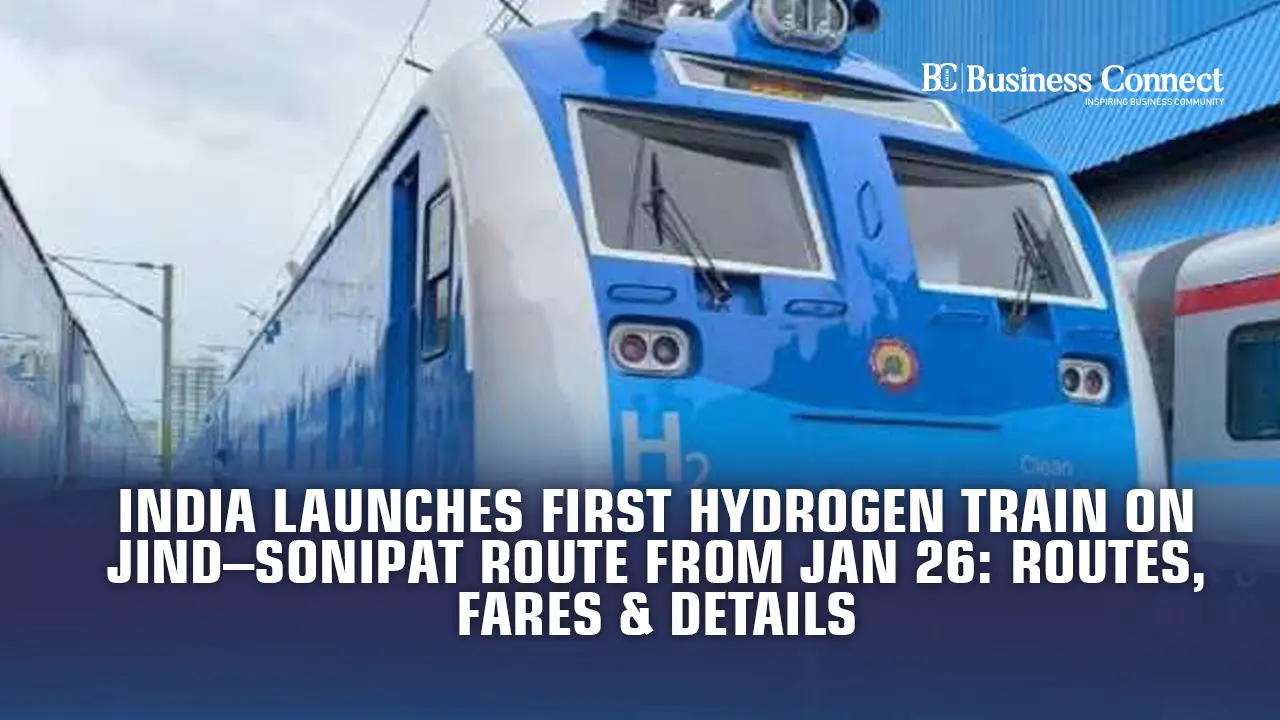
As the India’s first hydrogen-powered train gets ready for test runs, India is poised to begin 2026 with a historic step in green mobility. Prime Minister Narendra Modi is anticipated to launch the service this month. In an important move to lessen Indian Railways’ dependency on diesel traction, the first trial run is anticipated to begin on January 26, 2026, on the 90-kilometer Jind–Sonipat section in Haryana.
The first trial’s preparations have been finished by Indian Railways, the Research Designs and Standards Organization (RDSO), and Spanish partner Green H. There will be eight passenger coaches and two driver power vehicles on the train. The Center, which will make a decision about the further implementation of hydrogen-powered train services, will subsequently receive a joint performance report.
The train is powered by electrochemical technology, which creates hydrogen from water and allows it to travel at up to 150 kmph. The train can run for one kilometer on about 900 grams of hydrogen produced from nine kilos of water. 3,000 kg of hydrogen and 7,680 kg of oxygen can be stored in the system. With Spanish technological assistance, India’s biggest hydrogen manufacturing facility was established at Jind. It is supported by a 1.5 megawatt power supply to guarantee continuous fuel production.
The coaches were shipped to Shakurbasti for phased induction after being produced at the Integral Coach Factory in Chennai. There are two driver cars on the train, each with a 1,200-horsepower engine. 3,750 amps of DC electricity are produced by fuel cells to power onboard systems like air conditioning, fans, and lighting. Additionally, computerized passenger displays and automated doors are implemented.
According to officials, the service is anticipated to start off at between 110 and 140 kmph, finishing the Jind–Sonipat trip in roughly an hour as opposed to the two hours currently required by the diesel multiple unit that operates on the route. The alignment has six stations, and tickets are anticipated to be between Rs 5 and Rs 25. The train is said to have cost Rs 89 crore to build and can accommodate roughly 2,500 passengers.
Nearly 3,000 kilograms of hydrogen will be stored in subterranean tanks at the Jind railway junction hydrogen plant, which is being built over a 2,000-square-meter plot at an estimated cost of Rs 120 crore. Hydrogen-powered engines will only produce water and steam, greatly lowering air pollution. According to officials, the train might have lower maintenance costs than diesel locomotives and achieve fuel efficiency comparable to about 4.5 liters of diesel per kilogram of hydrogen. Additionally, it is anticipated that hydrogen-powered trains will be able to go farther than electric trains without requiring external power.
The train is powered by lithium-ion batteries that are charged by fuel cells, which mix hydrogen and oxygen to produce energy. There are plans to store renewable energy using super-capacitors or batteries. The plant would need up to 40,000 liters of water per hour, and the system will be fed by rainwater collected from station rooftops.
Dr. Krishan Middha, a Jind MLA and deputy speaker of the Haryana Assembly, described the project as a source of pride for the area, pointing out that having the nation’s largest hydrogen plant is a significant milestone for both Haryana and India. Officials describe the project as a cornerstone for Indian Railways’ future green infrastructure, and it is anticipated that the service will start operating between Jind and Sonipat before being extended further.
FAQs on India’s First Hydrogen-Powered Train
What is special about India’s first hydrogen-powered train?
India’s first hydrogen-powered train marks a historic step toward green mobility, aiming to reduce Indian Railways’ dependence on diesel by using clean hydrogen fuel that emits only water and steam.
When will the hydrogen train begin its trial run?
The first trial run is expected to begin on January 26, 2026, coinciding with India’s Republic Day celebrations.
Which route will the hydrogen train operate on?
The trial will take place on the 90-kilometre Jind–Sonipat route in Haryana, which includes six stations along the alignment.
Who is expected to inaugurate the hydrogen train service?
Prime Minister Narendra Modi is anticipated to launch the hydrogen-powered train service this month.
Who developed India’s first hydrogen train?
The project is a joint effort by Indian Railways, the Research Designs and Standards Organization (RDSO), and Spanish technology partner Green H.
How many coaches does the hydrogen train have?
The train consists of eight passenger coaches and two driver power vehicles, each equipped with a 1,200-horsepower engine.
What technology powers the hydrogen train?
The train uses electrochemical fuel cell technology, which combines hydrogen and oxygen to generate electricity. This electricity powers lithium-ion batteries that run onboard systems such as lighting, fans, and air conditioning.
What is the maximum speed of the hydrogen train?
The train is capable of reaching speeds of up to 150 kmph, though initial operations are expected between 110 and 140 kmph.
How long will the Jind–Sonipat journey take?
The journey is expected to be completed in around one hour, compared to nearly two hours taken by the current diesel multiple unit service.
How much hydrogen does the train consume?
The train can travel one kilometre using about 900 grams of hydrogen, which is produced from roughly nine kilograms of water.
How much hydrogen can the train store?
The onboard system can store up to 3,000 kg of hydrogen and 7,680 kg of oxygen.
What is the expected ticket fare for passengers?
Ticket prices are expected to range between ₹5 and ₹25, making the service affordable for daily commuters.
How many passengers can the hydrogen train accommodate?
The train can carry approximately 2,500 passengers.
What is the cost of building the hydrogen train?
The hydrogen-powered train has been built at an estimated cost of ₹89 crore.
Where is the hydrogen fuel produced?
India’s largest hydrogen production plant has been set up at Jind, supported by a 1.5-megawatt power supply to ensure uninterrupted fuel generation.
What is the cost and capacity of the Jind hydrogen plant?
The hydrogen plant, built over a 2,000-square-metre area, is estimated to cost ₹120 crore and can store nearly 3,000 kg of hydrogen in underground tanks.
Is the hydrogen train environmentally friendly?
Yes. Hydrogen-powered engines emit only water and steam, significantly reducing air pollution and carbon emissions.
How does hydrogen compare to diesel in terms of efficiency?
Officials estimate that one kilogram of hydrogen offers fuel efficiency comparable to about 4.5 litres of diesel, with potentially lower maintenance costs.
How is water supplied for hydrogen production?
The system requires up to 40,000 litres of water per hour, which will be partly sourced through rainwater harvesting from station rooftops.
Will the hydrogen train service be expanded beyond Jind–Sonipat?
Yes. After evaluating trial performance, the Centre will decide on wider implementation, and the service is expected to be extended to additional routes in the future.
Why is the project significant for Haryana?
Dr. Krishan Middha, Jind MLA and Deputy Speaker of the Haryana Assembly, called the project a matter of pride, highlighting that hosting the country’s largest hydrogen plant is a major milestone for both Haryana and India.
Why is Indian Railways shifting towards hydrogen-powered trains?
Indian Railways is adopting hydrogen technology to reduce carbon emissions, cut diesel fuel dependence, lower long-term operating costs, and support India’s net-zero and green energy goals.
How does a hydrogen train differ from an electric train?
Unlike electric trains that rely on overhead power lines, hydrogen trains generate electricity onboard using fuel cells, allowing them to operate on non-electrified routes without external power infrastructure.
Can hydrogen trains operate longer distances than electric trains?
Yes. Officials believe hydrogen-powered trains can cover longer distances than electric trains because they do not require continuous external power supply.
What role does Spain’s Green H play in the project?
Green H provides advanced hydrogen fuel cell technology and technical expertise, supporting India’s push toward indigenous green rail solutions.
Where were the hydrogen train coaches manufactured?
The coaches were manufactured at the Integral Coach Factory (ICF) in Chennai and later transported to Shakurbasti for phased induction.
What onboard features are available for passengers?
The hydrogen train includes automated doors, computerized passenger information displays, air-conditioning, lighting systems, and enhanced safety controls.
How is electricity generated inside the hydrogen train?
Fuel cells generate 3,750 amps of DC electricity, which powers onboard systems and charges lithium-ion batteries.
Is hydrogen fuel safe for railway operations?
Yes. The hydrogen storage and handling systems are designed with multiple safety layers and are housed in controlled underground tanks to ensure safe operation.
What happens after the trial run is completed?
A joint performance report by Indian Railways, RDSO, and Green H will be submitted to the Centre, which will decide on broader deployment.
Will hydrogen trains replace diesel locomotives completely?
Hydrogen trains are expected to gradually replace diesel traction on select routes, especially where electrification is not feasible.
How much water is required to produce hydrogen fuel?
The hydrogen plant may require up to 40,000 litres of water per hour, with rainwater harvesting helping meet sustainability goals.
Does the hydrogen train support renewable energy integration?
Yes. There are plans to integrate renewable energy storage using batteries or super-capacitors to enhance efficiency.
What economic benefits can hydrogen trains offer?
Hydrogen trains may lead to lower maintenance costs, reduced fuel imports, and long-term savings compared to diesel locomotives.
How does the project support India’s Make in India initiative?
While supported by foreign technology, major components—including coaches and infrastructure—are built domestically, boosting local manufacturing.
What environmental impact will hydrogen trains have?
Hydrogen trains significantly reduce air pollution, noise pollution, and greenhouse gas emissions, contributing to cleaner cities and railway corridors.
Can hydrogen trains operate in extreme weather conditions?
Yes. Hydrogen fuel cell systems are designed to function efficiently across varied climatic conditions.
Will passengers notice any difference in travel experience?
Passengers are expected to experience quieter rides, faster travel times, and improved comfort compared to diesel-powered trains.
Why was the Jind–Sonipat route chosen for the trial?
The route offers an ideal mix of passenger demand, non-electrified track, and logistical feasibility for testing hydrogen rail technology.
What is the long-term vision of Indian Railways for hydrogen trains?
Indian Railways aims to develop hydrogen-powered trains as a key pillar of future green infrastructure, supporting sustainable mobility nationwide.