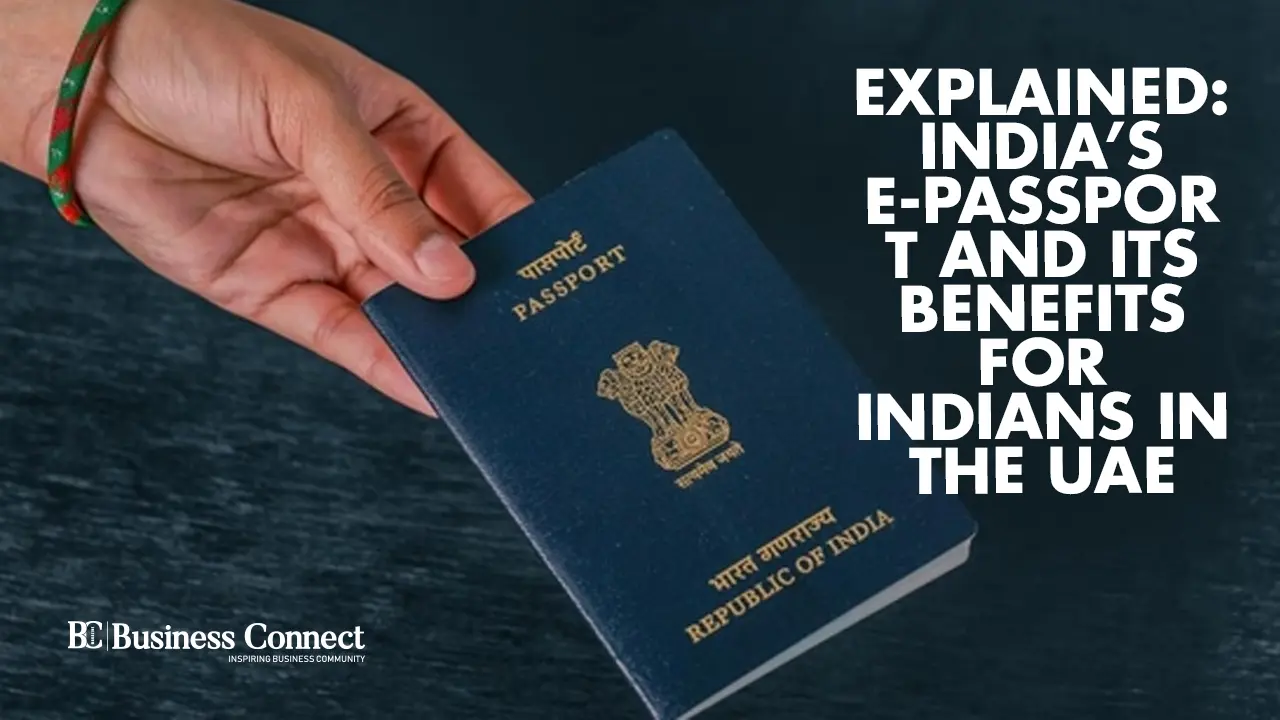
Indian expats living in the United Arab Emirates are being encouraged to use India’s new chip-enabled e-Passport, a cutting-edge travel document that complies with international immigration regulations and makes foreign travel quicker, safer, and more secure. The implementation is a component of India’s Passport Seva Programme 2.0 (GPSP 2.0), which uses digital platforms and enhanced security measures to modernize passport services.
What is the new e-Passport?
Unlike traditional passports, the e-Passport embeds a secure Radio Frequency Identification (RFID) chip that stores the holder’s biometric data, including photograph and fingerprints, in encrypted form directly inside the booklet. The presence of the embedded chip is usually identified by a small gold-coloured symbol on the front cover.
This RFID-equipped document conforms to International Civil Aviation Organization (ICAO) standards, meaning it is recognised globally for automated identity verification and enhanced security. UAE-based Indians can now apply for these e-Passports through the Indian Embassy in Abu Dhabi or the Consulate in Dubai, with the rollout officially starting in October 2025 under GPSP 2.0.
India’s new e-Passport will expedite immigration and improve travel.
Reduced immigration wait times are one of the main benefits of the e-Passport; travelers can pass through border control considerably faster with automated lanes like SmartGates and e-gates at airports than with manual checks. According to reports, at major UAE airports, such expedited inspections can reduce average wait times from about twenty-five minutes to less than five.
Indian e-Passport users may take advantage of automated border procedures in nations like Singapore, Australia, and others that embrace e-Passport infrastructure, making travel easier for frequent travelers. These speedier channels are not just available in the United Arab Emirates.
Improved security and less fraud thanks to India’s new e-Passport
Advanced encryption and Public Key Infrastructure (PKI) technology are used by the e-Passport’s implanted chip to guarantee that identity and biometric information is safely saved and verified at international checkpoints. This improves the overall integrity of travel documents by making it far more difficult for fraudsters to alter or falsify passport information.
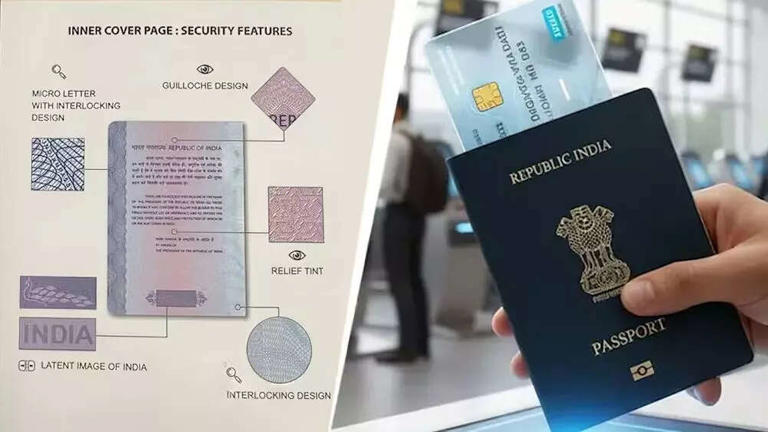
These security enhancements give authorities and travelers greater assurance about the legitimacy of documents and are in line with international initiatives to lower identity theft and passport fraud.
GPSP 2.0: An ecosystem for digital passports
The transition to e-Passports is a component of a broader digital transformation under the Passport Seva Programme 2.0 (GPSP 2.0), an updated passport issuance system that prioritizes online services, transparency, and ease of application. By allowing applicants to upload papers, photos, and signatures online, GPSP 2.0 lessens the need for paper forms and shortens wait times at service centers like BLS International.
This means a digitized, end-to-end passport application process that reduces bureaucratic friction and enhances user comfort for the approximately 3.5 million Indian inhabitants of the United Arab Emirates.
Why UAE-based Indians should apply now for the e-Passport
- Seamless Travel Through Automated Gates: Indian e-Passports give travellers access to ICAO-compliant automated immigration systems at international airports, including those in the UAE, India, and other countries that support e-Passport e-gates. This can dramatically reduce queues and processing times, especially for frequent travellers.
- Future-Proof Document for Global Mobility: As digital visa initiatives like the UK ETA and EU ETIAS become the norm, e-Passport holders are better prepared for integrated and secure travel documentation requirements.
- Enhanced Data Security: The embedded chip and modern security protocols significantly lower the risk of tampering, forgery and identity theft, a key benefit in an age of increasingly sophisticated fraud attempts.
- Faster and More Transparent Service: GPSP 2.0’s online platform reduces manual back-and-forth, enabling applicants to complete more steps online and cut down on visits to BLS centres. Minor errors can be corrected without re-submitting the entire application, saving time and stress.
Is your previous passport still valid?
Yes, current passports that do not have a chip are still valid until they expire. Indian missions in the United Arab Emirates have stated that the e-Passport deployment does not necessitate additional biometrics or fees. Due to the new document type, applicants who have already submitted their biometrics won’t be requested to do so again.
To take advantage of the entire range of advantages, travelers who want to travel frequently or for an extended period of time are advised to switch to the e-Passport as soon as possible.
UAE citizens’ e-Passport application process
All Indian passport applications, including renewals and new passport applications, must be submitted using the GPSP 2.0 portal starting on October 28, 2025. This platform allows online registration, document uploads, and appointment scheduling at BLS centers in Dubai and Abu Dhabi.
To prevent delays or rejection, applicants should make sure their photos meet ICAO criteria. These stringent photo specifications, which are applicable to all passport applications, including e-Passports, were implemented in September 2025.
A significant advancement in travel document technology, India’s new chip-enabled e-Passport offers improved security, quicker immigration processing, and future-proof compatibility with international systems. Applying today using the cutting-edge GPSP 2.0 digital method can result in more seamless travel experiences for Indians living in the UAE and abroad.