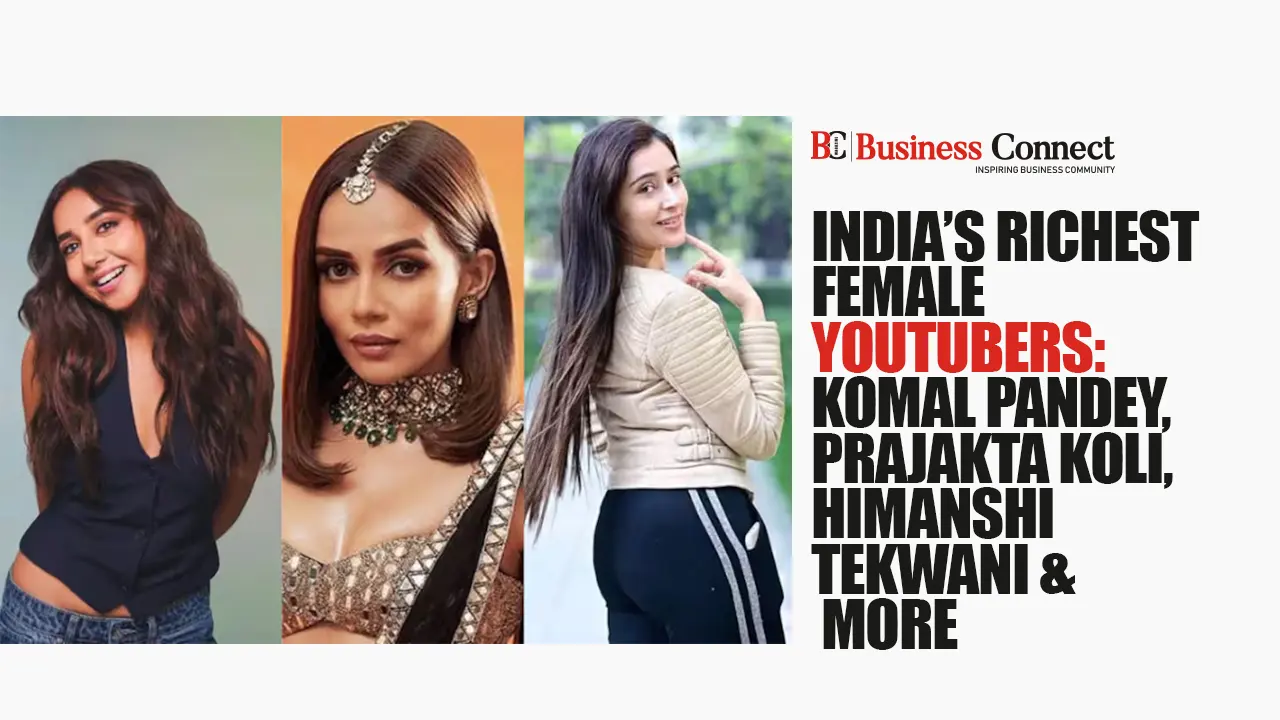
The phrase “India’s richest female YouTubers” sounds as though the answer should sit in a neat ledger, audited and ranked with corporate precision. It does not. Creator wealth is private, layered, and increasingly detached from YouTube advertising alone. That is precisely what makes the subject worth examining. The women who now sit atop India’s creator economy are not simply earning from videos; they are building media franchises, licensing personal taste, monetising trust, and, in some cases, converting digital fame into something far more durable than platform revenue.
That distinction matters because India’s creator economy has stopped behaving like a sideshow. As per the recent study conducted by the Boston Consulting Group, it is estimated that the Indian content creators are influencing between $350 billion to $400 billion in the consumer spending and by the end of 2030 it will eventually grow to over $1 trillion. Those numbers do not merely flatter the sector. They explain why brand managers, investors and legacy media companies now treat top creators less like internet personalities and more like distribution assets with unusually loyal customer acquisition pipelines.
India’s Wealthiest Women Creators: Top Female YouTubers Dominating Digital Income
1.Nisha Madhulika

Seen through that lens, Nisha Madhulika belongs near the top of any serious conversation about wealth among Indian women on YouTube. Public net-worth figures that circulate around creators are often little more than entertainment copy dressed as finance, so one should be cautious. But scale, category strength and longevity are visible enough. Nisha built a food empire out of something the Indian internet has repeatedly underestimated: consistency in Hindi. Her recipes do not depend on aspiration so much as utility, which is a deeply profitable distinction. In a market where beauty and lifestyle creators often ride trend cycles, food enjoys a different rhythm. It is repetitive, habitual, and family-wide.
2. Shruti Arjun Anand

Shruti Arjun Anand represents another, more systematised model of wealth creation. If Nisha’s strength is authority built through repetition, Shruti’s lies in turning attention into an ecosystem. Beauty and lifestyle may appear crowded from a distance, but Anand understood early that Hindi-speaking mass audiences were not being served with enough seriousness. That insight became commercial leverage. The audience scale on her flagship channel is substantial, but what matters more is the network effect around it: multiple channels, family-facing content, a wider content studio logic, and a business model that does not collapse if one format cools off. India’s creator economy has produced plenty of stars. It has produced fewer operators. Anand belongs in the second category, which is usually the more lucrative one.
3. Prajakta Koli

Prajakta Koli sits in a different part of the wealth curve, and perhaps in a more sophisticated one. Her business is no longer reducible to YouTube at all. MostlySane gave her reach, certainly, but reach has since been converted into mainstream acting, publishing, global recognition, and a brand identity that can travel beyond the platform that built it. TIME’s inaugural 2025 list of the world’s 100 most influential creators included Koli, a telling marker of how far Indian creator capital can now travel. What is commercially significant here is not simply celebrity. It is mobility. Koli has demonstrated that creator equity, when managed carefully, can migrate into film, streaming, live appearances, books and long-term brand work without losing its original audience base. In business terms, that is margin expansion through reputation transfer.
4. Komal Pandey
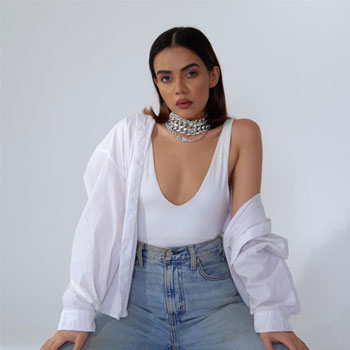
Komal Pandey offers yet another lesson, and one that corporate India has grasped faster than parts of the media have. If one were naïve enough to judge wealth only by YouTube subscriber count, Komal would seem smaller than several other names in the category. That would miss the point entirely. Premium fashion creators do not monetise like mass-market vloggers. Their value lies in pricing power, not volume. Komal Pandey’s content sits in between of styling, aspiration, brand fluency and visual language, which makes her unusually attractive to fashion and beauty advertisers looking for cultural precision rather than raw scale. Forbes India’s digital stars list recognised that quality years ago, and the broader creator economy has only reinforced it since. Hers is the business of premium persuasion. In many creator markets, that can be more profitable than mass reach.
5. Himanshi Tekwani

She is a prominent influencer and a YouTuber. Her YouTube channel is That Glam Girl. In her YouTube videos, she shares makeup tutorials and fashion tips. Apart from being a successful female YouTuber, she is also popular in Instagram where she shares her lifestyle videos and beauty & fashion related content. This matters commercially because India’s most monetizable audiences are not always the most glamorous ones. They are often the most trusting ones. Beauty, skincare and personal-care brands do not merely buy impressions; they buy the illusion, sometimes the reality, of peer recommendation. Himanshi’s strength has been to maintain that register at scale. For a business readership, the more interesting insight is this: creators like Tekwani sit in a high-conversion category where audience trust can be turned into repeat commerce, affiliate flows and durable brand partnerships. The income statement behind that may be private, but the commercial architecture is not hard to read.
There is also a broader cohort around these names that complicates the idea of “richest” in useful ways. Sejal Kumar, for instance, has spent years proving that creator businesses can stretch across fashion, music, lifestyle and personal branding without fully surrendering to any one format. Others have built profitable, if less loudly publicised, businesses by serving niche audiences with remarkable discipline. The mature business question is no longer who has the most views this quarter. It is who has built the most defensible revenue stack. The answer increasingly favours creators who own a category, diversify early, and understand that platform fame is rented unless converted into something proprietary.
That is why the richest female YouTubers in India should not be read as a list of the loudest internet celebrities. They are, in effect, case studies in monetisation design. Nisha Madhulika shows that utility and trust can out-earn trendiness. Shruti Arjun Anand demonstrates the value of scaling from personality to network. Prajakta Koli proves that creator capital can move into mainstream entertainment without evaporating. Komal Pandey illustrates the economics of premium audience monetisation. Himanshi Tekwani reveals the enduring power of mass-market intimacy in categories where recommendation still drives purchase. These are different businesses wearing the same platform badge.
There is, however, a note of caution worth keeping in view. Creator wealth is one of the easiest modern phenomena to exaggerate. Private companies are opaque; endorsement contracts are confidential; ad rates fluctuate; off-platform earnings are rarely disclosed in any disciplined way. A “rich list” in this space often relies on estimation stacked atop estimation. That is why business readers should resist the fetish for exact net-worth numbers. The more intelligent exercise is to examine visible signals: category economics, subscriber depth, cross-platform resilience, brand fit, business extensions, and the ability to survive algorithmic volatility. In that sense, wealth is not merely what these women earn. It is what they have built that can endure after platform fashions shift.
And that, perhaps, is the real story beneath the headline. India’s top female YouTubers are no longer just beneficiaries of the creator economy; they are among its architects. They have taught brands how digital trust works in vernacular markets, shown investors that attention can become enterprise value, and demonstrated that women in creator-led businesses are not operating at the periphery of commerce but increasingly at its front edge. The next phase will be even more revealing. The biggest fortunes in this sector may not come from ad revenue at all, but from ownership, licensing, commerce and equity stakes in brands these creators can launch or move. By then, the phrase “YouTuber” may sound far too small for the businesses they actually run.
FAQs: India’s Richest Female YouTubers
Q1. Who are the richest female YouTubers in India?
Some of the richest female YouTubers in India include Nisha Madhulika, Shruti Arjun Anand, Prajakta Koli, Komal Pandey, and Himanshi Tekwani. Their wealth comes from multiple income streams beyond YouTube.
Q2. How do female YouTubers in India earn money?
Indian female YouTubers earn through ad revenue, brand sponsorships, affiliate marketing, merchandise sales, and collaborations. Many also expand into acting, business ventures, and personal brands.
Q3. Is YouTube the main source of income for top creators?
No, YouTube is just one revenue stream. Top creators like Prajakta Koli have diversified into films, OTT platforms, books, and brand endorsements, making their income more sustainable.
Q4. Why is it difficult to calculate the exact net worth of YouTubers?
Creator income is private and varies widely. Earnings from sponsorships, off-platform deals, and business ventures are not publicly disclosed, making exact net worth estimates unreliable.
Q5. Which category of YouTube content is most profitable in India?
Categories like food, beauty, fashion, and lifestyle are among the most profitable due to high brand demand and audience engagement. Creators like Nisha Madhulika and Himanshi Tekwani benefit from strong audience trust.
Q6. What makes a YouTuber successful in terms of wealth?
Success depends on audience trust, niche authority, brand partnerships, and diversification into multiple income streams rather than just subscriber count.
Q7. Are smaller creators less profitable than large YouTubers?
Not always. Creators like Komal Pandey show that niche audiences with high engagement can generate premium income through brand collaborations.
Q8. What is the future of India’s female creator economy?
India’s creator economy is expected to grow significantly, with influencers playing a key role in consumer spending. Female creators are increasingly building businesses, launching brands, and expanding beyond YouTube.