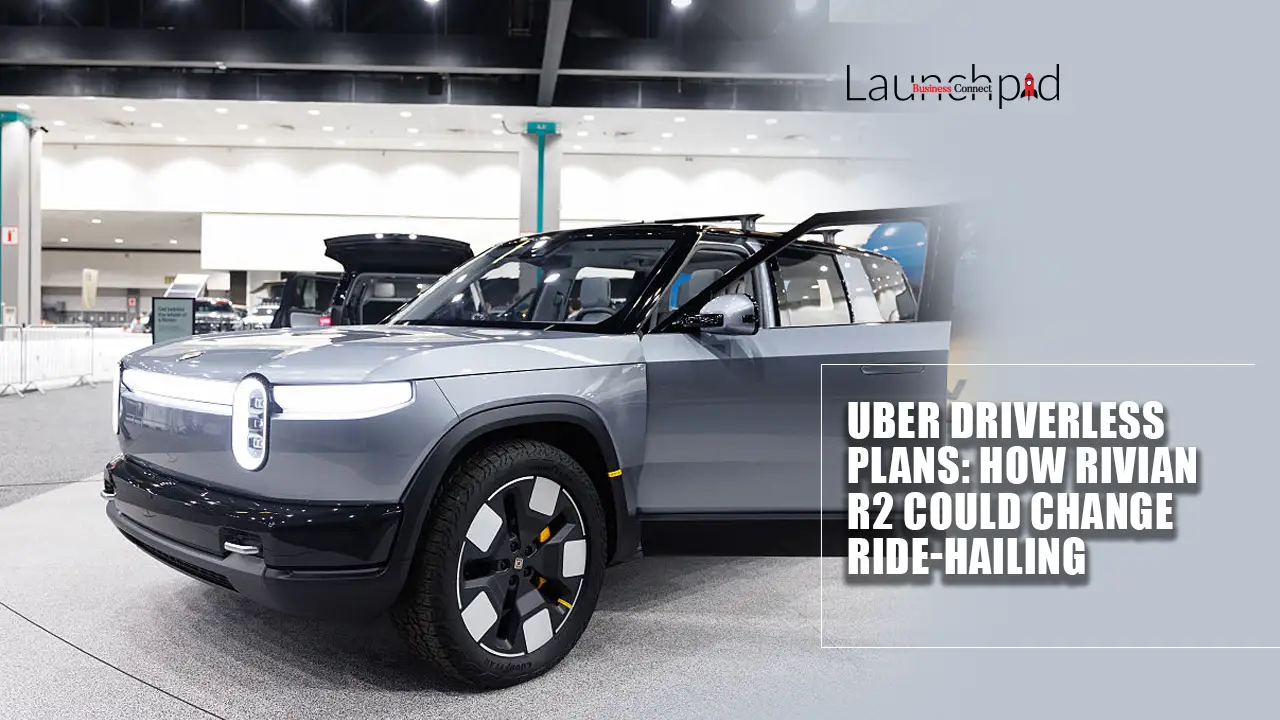
Uber and Rivian are collaborating to introduce automated cabs to San Francisco and Los Angeles.
Prepare to see more Rivian R2s driving around San Francisco and Los Angeles in the near future, but don’t be shocked if you pull up next to one without a driver. Uber and the American EV pickup and SUV maker are collaborating to provide Uber’s growing robotaxi fleet with its midsize electric SUVs. Uber will also be utilizing Nvidia’s driverless software in a different arrangement, which is as fascinating.
The Rivian collaboration is the most current in a string of new alliances between automakers and Uber, which also includes a recent news that Lucid will provide its Gravity SUV. Nissan, Zoox, Stellantis, and Volkswagen (which has its own hardware and software connections to Rivian) are some of the other companies vying to supply Uber with Nvidia-powered cars.
Human-Reliant Issues with R2 Robotaxis
Although there are clear advantages for both Rivian and Uber, we anticipate a few problems with this collaboration, all of which are related to the R2. To be sure, Rivian’s newest all-electric SUV is perfect, but an autonomous robotaxi is more than just a vehicle that can drive itself. The first problem is that if a customer gets out of the SUV without closing the doors, how would the R2’s doors close? Even though this question seems ridiculous, it is common for someone who is rushing to forget to shut the door.
A human will always get out and close a non-autonomous vehicle, such as a regular taxi or rideshare. Additionally, some specialized robotaxis will have self-closing doors. However, the R2 was intended to have a driver at all times and isn’t a fully autonomous taxi.
Gig workers may be used as “human helpers” to close vehicles like the Rivian, as Waymo has done. Another option would be for Rivian to design and modify a self-closing door system for the R2, but that would need significant re-engineering. Since Uber already has non-rideshare drivers in its ecosystem through its Uber Eats and Uber Courier divisions, hiring human assistants is the most likely short-term answer between the two choices.
The other problem has to do with charging. Once more, as intended, the R2 requires a human to connect and disconnect the car from the charger. Waymo now employs a human-staffed hub to manage the charging of its fleet of all-electric Jaguar i-Paces.
Alternatively, they may not even be concerned about plugging in. The autonomous R2 may be able to pull in at its base for a quick or overnight charge without the requirement for a connected connection by using inductive charging pads at designated parking spaces. Compared to figuring out how to install a servo or actuator into the R2’s door frames and hinges, this concept would be a simpler engineering and retrofit challenge.
Hiring Uber drivers to meet its R2s at a public charger may be the simplest way to address the possible door shutting issue without the need for a home base. Those gig drivers would have to remain with the car in order to disconnect it, but paying for that time may be less expensive than paying for a big parking spot with infrastructure for charging in San Francisco and Los Angeles.
Uber is Also Partnering with Nvidia Software
The announcement that it will use Nvidia technology is arguably just as significant as the Uber partnership. The massive computer hardware and software company’s Drive AGX Hyperion 10 and Alpamayo AI modeling software will be used by the ridesharing company for an unidentified Uber robotaxi fleet. Given that many of the OEMs that have worked with Uber have their own self-driving hardware and software designed specifically for their own cars, it is unclear how these autonomous driving solutions will be integrated into other robotaxis. In any case, by the first half of 2027, it is anticipated that these unidentified Hyperion-controlled autonomous taxis will be operating on the streets of San Francisco and Los Angeles.
The fleet won’t be completely driverless at the beginning of this program because a driver will be inside for the first several months (or perhaps all of 2027; neither Uber nor Nvidia have estimated how long it would take). Nvidia’s Alpamayo technology will be collecting driving data in those two significant California cities throughout this initial phase. The fleet will eventually become a fully automated Level 4 robotaxi service, as determined by either Uber or Nvidia.
For current Uber drivers, these are still trial initiatives, and it will probably be years before the Uber robotaxis is widely used. However, it seems certain that most cars—Rivians or not—will come to pick you up without a driver.
FAQs: Uber & Rivian Robotaxi Plans
1. What is the Uber–Rivian partnership about?
Uber is collaborating with Rivian to deploy autonomous ride-hailing vehicles using the Rivian R2 in cities like San Francisco and Los Angeles.
2. Will Uber rides become fully driverless soon?
Not immediately. The initial rollout will likely include safety drivers onboard. Fully autonomous (Level 4) robotaxis are expected to take a few years before becoming widespread.
3. What technology will power these robotaxis?
Uber plans to use autonomous driving systems from Nvidia, including its Drive AGX Hyperion platform and AI software.
4. Which other companies are working with Uber on robotaxis?
Apart from Rivian, Uber has partnerships or discussions with companies like:
- Lucid Motors
- Nissan
- Volkswagen
- Stellantis
- Zoox
5. What challenges do Rivian R2 robotaxis face?
Key issues include:
- Doors may not close automatically after passengers exit
- Charging still requires human intervention
- The R2 was not originally designed as a fully autonomous taxi
6. How might Uber solve these operational challenges?
Possible solutions include:
- Hiring gig workers to assist with doors and charging
- Adding self-closing door mechanisms
- Using inductive (wireless) charging stations
7. How does charging work for robotaxis?
Currently, EVs like the Rivian R2 need manual plug-in charging. Companies may adopt:
- Human-operated charging hubs
- Wireless charging pads at parking stations
8. When will Uber robotaxis launch?
Pilot programs are expected to expand over the next few years, with more advanced autonomous fleets potentially arriving by 2027.
9. Will Uber drivers lose their jobs?
Not immediately. These are early-stage trials, and human drivers may still be needed for:
- Monitoring rides
- Assisting vehicles
- Handling edge-case situations
10. What is Level 4 autonomy?
Level 4 autonomy means a vehicle can drive itself without human input in most conditions, though it may still operate within specific areas or limitations.
11. How does this compare to other robotaxi services?
Companies like Waymo already operate robotaxi fleets, often using support staff for maintenance and charging.
12. What does this mean for the future of ride-hailing?
The shift toward autonomous vehicles could:
- Reduce ride costs over time
- Improve efficiency
- Transform the gig economy