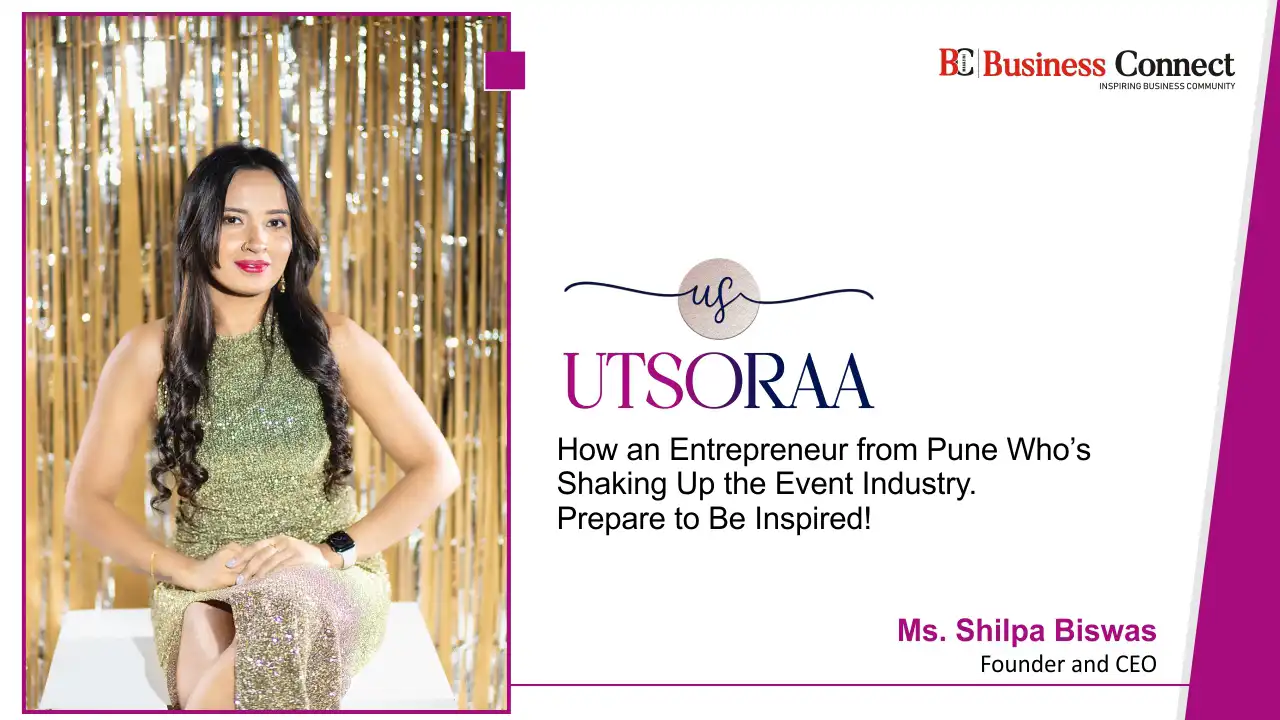
Would you share what inspired the vision behind your entrepreneurial journey? How has it evolved over time
My entrepreneurial journey began with observation and curiosity rather than urgency. Over time, I noticed how central events are to organisational life. They shape culture, reinforce trust, and bring people together at decisive moments. Yet, despite their importance, events were often managed in an ad hoc manner, with each engagement treated as a standalone effort.
What stood out was not a lack of creativity but the absence of dependable systems. Teams repeatedly navigated uncertainty around vendors, timelines, infrastructure, and coordination. This limited their ability to plan engagement consistently across the year.
Utsoraa emerged from the idea that events should function like a well-run operation rather than an occasional activity. That thinking has since matured into a broader vision: building a structured ecosystem that allows organisations to engage more frequently without increasing complexity or risk. The focus today is not only execution but predictability and confidence at scale.
As I often reflect, meaningful growth happens when systems begin to support ambition, not when ambition tries to outrun systems.
How do you translate your vision into actionable strategies that your team can align with
I believe leadership is about making complexity manageable. At Utsoraa, vision is translated into action through clarity of responsibility and simplicity of process.
Every team member understands that reliability is the outcome we are accountable for. We emphasise ownership, preparation, and realistic timelines. When expectations are clear, alignment follows naturally.
Rather than driving motivation through targets alone, we focus on building habits that support consistency. This allows even lean teams to operate with confidence and adaptability. Alignment, in my experience, is strongest when people trust the framework they are working within.
As an entrepreneur, how do you balance innovation with practicality
Innovation, to me, is valuable only when it improves execution. I view it as a tool to reduce friction rather than introduce novelty.
At Utsoraa, innovation shows up in how workflows are structured, how resources are shared, and how access is created where there was once a delay. These decisions may appear understated, but they materially improve outcomes for clients.
Practicality ensures that ideas remain grounded and scalable. It is what allows innovation to endure beyond discussion and translate into impact.
What was the defining moment when you realised your venture was on the path to success?
The moment came quietly. Clients began trusting us to anticipate needs rather than explain them. Conversations shifted from instructions to collaboration.
That change signalled something important. When an organisation relies on you for consistency rather than intervention, it reflects confidence. For me, that trust marked a meaningful step forward.
What are the USPs of your offerings?
Most organisations struggle with fragmentation. Every event – large or small – often requires rebuilding teams, vendors, processes and infrastructure from scratch, leading to inefficiencies and delays.
Utsoraa addresses this by integrating planning, execution, coordination and infrastructure access into one structured system. This allows organisations to manage flagship events as well as frequent engagements with consistency, without reinventing processes each time.
An important extension of this model is our upcoming event marketplace platform, designed to support the evolving needs of Corporate India. It will provide professional event infrastructure not only to clients but also to independent organisers, agencies and individuals who want faster access and greater operational control.
I believe strong industries are built on shared infrastructure rather than closed networks. Our advantage lies in treating events as a repeatable operational function – bringing reliability, speed and clarity to an industry that is rapidly evolving.
How do you leverage emerging technologies, including AI?
Technology supports our thinking rather than replacing it. We use it to standardise workflows, improve preparedness, and identify operational patterns. As event frequency increases, predictability becomes critical. AI helps us strengthen that predictability while keeping human judgement central to decision-making
Do sustainability and social responsibility influence your operations?
Yes, though in a measured way. Sustainability for us is rooted in efficiency. Shared access to resources reduces duplication and waste. Equally important is responsibility toward teams and partners. Events demand long hours and composure under pressure. Creating systems that respect people’s time and effort is integral to building a sustainable organisation.
How do you gather and apply customer insights?
We pay attention to friction. Delays, repeated questions, and last-minute changes. These moments reveal where systems need strengthening.
Insights gathered from real situations guide our refinements. Most of our improvements originate from lived experience rather than assumptions.
How do you foster a culture of innovation and adaptability?
By encouraging responsibility before experimentation. When people understand the impact of their decisions, they naturally think more carefully.
Adaptability emerges when teams are trusted with ownership and given clear boundaries. Innovation then becomes a process of improving execution rather than pursuing ideas for their own sake.
How do you stay inspired and continue pushing boundaries
I draw inspiration from industries that prioritise precision and reliability. Logistics, aviation, and manufacturing. Events deserve the same discipline.
The question I return to often is whether something truly needs to be complex. That inquiry keeps us refining systems rather than accepting inefficiency as inevitable.
How do you foresee the industry evolving over the next five years?
Events will increasingly become part of an organisation’s communication rhythm rather than isolated milestones. Frequency will rise. Timelines will compress. Reliability will matter more than spectacle. The future belongs to models that support both scale and consistency.
One piece of advice to aspiring entrepreneurs
Focus on building systems before seeking speed. Enduring impact is created through repeatability and trust.
Any closing thoughts?
Utsoraa is still early in its journey, but the foundation is intentional. We are building infrastructure for an industry that is evolving rapidly.
I believe organisations, partners, and long-term stakeholders recognise the value of businesses that prioritise clarity, discipline, and resilience. Growth follows naturally when those elements are in place.