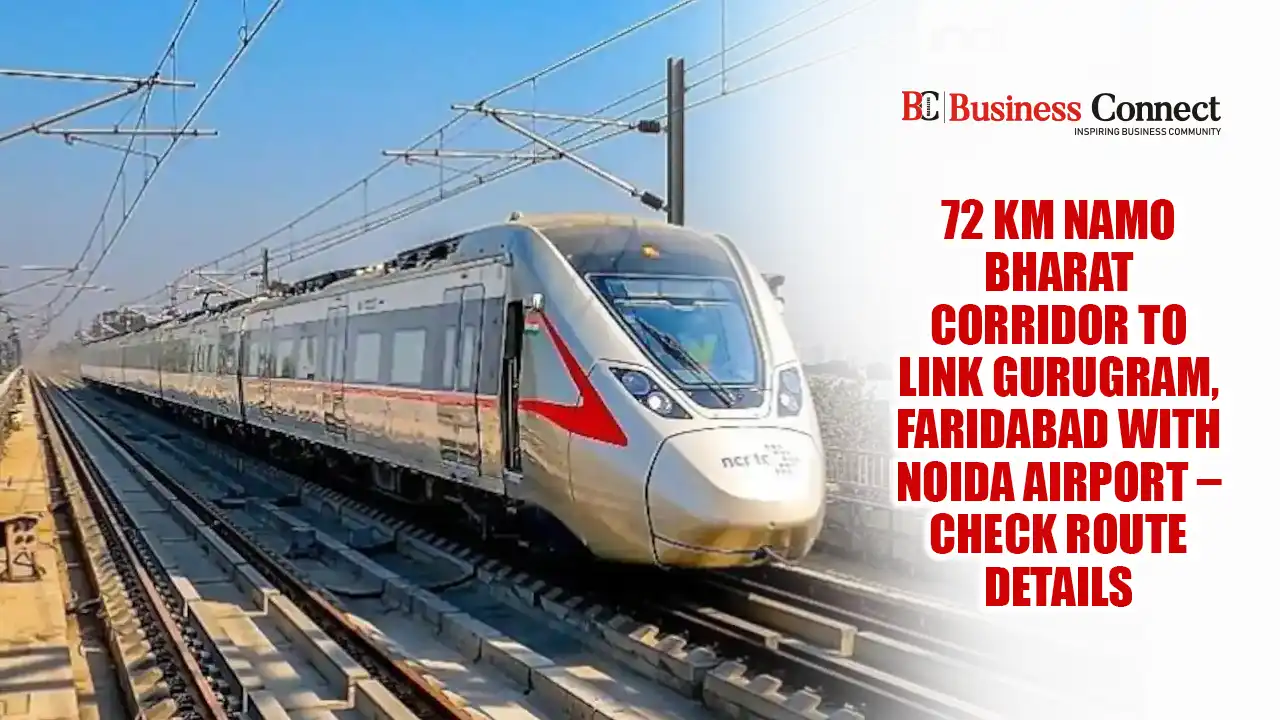
The upcoming Noida International Airport at Jewar in Uttar Pradesh is going to transform travel across the Delhi-NCR region. The impact will not be seen in the air but on the ground too. For this, a new high-speed corridor named the Namo Bharat (RRTS) corridor is being planned so that Ghaziabad, Gurugram, and Faridabad can be directly connected with the airport. It will also ensure less traffic. The detailed report of the project has been submitted by the Yamuna Expressway Industrial Development Authority (YEIDA). The project report has been given to the centre. The corridor is likely to be spread across 72.44 kilometres and will be built at an estimated cost of Rs. 20,360 crores.
The Namo Bharat corridor
Because it will link Jewar airport with places like Ghaziabad, Meerut, Gurugram, and Faridabad, the Namo Bharat corridor will serve as an excellent connectivity corridor for Delhi-NCR. The corridor’s goal is to shorten travel times and do away with reliance on congested highways. Officials claim that the corridor will facilitate passengers’ direct access to the terminal.
Greater Noida’s Surajpur
The corridor is being made as an interchange hub for which the most prominent region for the plan is Surajpur in Greater Noida. The Haryana government’s proposed Gurugram-Faridabad-Noida rail route and the Ghaziabad-Jewar Airport Namo Bharat line will both intersect at Surajpur.
The corridor’s infrastructure
With a total of 22 stations, the project will be notable for its integrated transit architecture. Eleven of these twenty-two stations are designated for Namo Bharat trains, while the remaining eleven are metro stations. The residents of Noida West and several places close to Char Murti Chowk will largely profit from the corridor’s incorporation of the metro on the Aqua Line. Additionally, the Namo Bharat corridor’s infrastructure would be used by the proposed light metro that will link Jewar Airport and Film City. This will provide travelers with a seamless changeover and significantly lower building costs.
Improved connectivity at airports
The integration of light rail, metro services, and high-speed regional rail along a single route will assist planners in developing an efficient connectivity system throughout Delhi-NCR. The Namo Bharat corridor’s connection to Noida Airport would alter mobility after the project is finished.
FAQs on Namo Bharat Corridor to Noida International Airport
-
What is the Namo Bharat corridor?
The Namo Bharat corridor is a planned high-speed RRTS (Regional Rapid Transit System) line connecting Delhi-NCR cities directly to Noida International Airport at Jewar. -
Why is the Namo Bharat corridor being developed?
It aims to provide fast, direct access to Jewar Airport from Ghaziabad, Gurugram, Faridabad, and other NCR regions, reducing reliance on congested highways. -
How long will the Namo Bharat corridor be?
The corridor is planned to span approximately 72.44 kilometres. -
What is the estimated cost of the corridor?
The project is estimated to cost around Rs. 20,360 crores. -
Which authority submitted the project report?
The Yamuna Expressway Industrial Development Authority (YEIDA) submitted the detailed project report. -
Has the project report been approved?
The report has been submitted to the central government for approval. -
Which regions will the corridor connect?
It will connect Ghaziabad, Meerut, Gurugram, Faridabad, Greater Noida, and the Jewar Airport terminal. -
What is the primary goal of the corridor?
To reduce travel time and congestion while providing direct access to Noida International Airport. -
How will the corridor benefit passengers?
Passengers will have faster, seamless travel with direct access to the airport and integration with metro and light rail systems. -
Will the corridor ease traffic on highways?
Yes, by providing an alternative high-speed transit route, it will reduce congestion on major highways leading to Jewar Airport.
Stations and Interchanges
-
How many stations will the Namo Bharat corridor have?
The corridor will have a total of 22 stations. -
How many stations are specifically for Namo Bharat trains?
Eleven of the 22 stations will serve Namo Bharat high-speed trains. -
How many stations are metro stations?
The remaining 11 stations will serve the metro network. -
What is the significance of Surajpur in Greater Noida?
Surajpur will act as a major interchange hub, connecting the Namo Bharat line with other metro and regional rail routes. -
Will metro and Namo Bharat trains intersect at Surajpur?
Yes, Surajpur will facilitate seamless interchange between the Namo Bharat corridor and metro lines. -
Which metro line is integrated into the corridor?
The Aqua Line of the metro is incorporated into the corridor, benefiting areas like Noida West and Char Murti Chowk. -
Will the corridor integrate with light metro services?
Yes, the corridor is designed to accommodate the proposed light metro linking Jewar Airport and Film City. -
How will the interchange hub reduce travel costs?
Shared infrastructure and seamless transfer points reduce construction and operational costs for multiple transit modes. -
Will all stations have facilities for passengers?
Yes, integrated transit architecture ensures that stations support efficient movement, ticketing, and transfers. -
Can commuters switch from metro to Namo Bharat trains easily?
Yes, the corridor is designed for smooth interchange between Namo Bharat trains, metro, and light rail.
Connectivity and Routes
-
Which NCR cities will directly benefit from the corridor?
Ghaziabad, Meerut, Gurugram, Faridabad, and Greater Noida will get direct connectivity to Jewar Airport. -
Will the corridor serve eastern NCR regions like Meerut?
Yes, Meerut will be directly connected to the high-speed corridor. -
Will western NCR cities like Gurugram be included?
Yes, Gurugram will have a direct link to Noida Airport via the corridor. -
How will Faridabad benefit from the corridor?
Faridabad residents will gain faster, hassle-free access to the airport without depending on congested highways. -
Will the corridor connect to Ghaziabad?
Yes, Ghaziabad will be directly connected to the corridor. -
Does the corridor only connect cities to the airport?
No, it also integrates with metro and light rail networks, improving overall regional mobility. -
Will it improve air connectivity indirectly?
Yes, faster access to Jewar Airport will make air travel more convenient for Delhi-NCR residents. -
Will the corridor reduce travel time compared to road travel?
Yes, the high-speed rail system will significantly reduce travel times compared to highways. -
Is the corridor part of the larger RRTS network?
Yes, it is a high-speed regional rail line under the RRTS initiative for Delhi-NCR. -
Will commuters from Noida West have direct access to the corridor?
Yes, areas near Noida West, including Char Murti Chowk, will benefit from integrated metro access.
Airport Connectivity
-
Which airport will the corridor connect to?
The corridor will connect to Noida International Airport at Jewar. -
Will passengers get direct terminal access?
Yes, the corridor is designed to provide direct access to the airport terminal. -
Will the corridor improve airport passenger flow?
Yes, seamless connectivity will reduce traffic and improve overall airport accessibility. -
Will the corridor support cargo transport to the airport?
The focus is primarily on passengers, but infrastructure may support limited cargo movement. -
How will the corridor complement the airport project?
It will serve as a key ground transport link, enhancing overall airport accessibility and efficiency. -
Will the corridor reduce congestion around the airport?
Yes, by providing a high-speed alternative, road congestion near Jewar Airport will decrease. -
Will taxi or shuttle services integrate with stations?
Yes, transit-oriented planning will include last-mile connectivity via taxis, shuttles, and buses. -
How will business travelers benefit?
Faster airport access will save time and improve convenience for business travelers in Delhi-NCR. -
Will the corridor help passengers avoid Delhi city traffic?
Yes, passengers from Ghaziabad, Faridabad, Gurugram, and Meerut can bypass city congestion. -
Will airport connectivity influence real estate near stations?
Yes, high-speed connectivity usually increases commercial and residential real estate demand nearby.
Infrastructure & Design
-
What kind of transit architecture will the corridor have?
It will have integrated transit architecture, combining Namo Bharat trains, metro, and light rail services. -
Will the corridor use existing metro lines?
Yes, it integrates with the Aqua Line and proposed light metro lines for seamless connectivity. -
How many bridges or tunnels will the corridor have?
Exact numbers are not specified, but integrated infrastructure will include elevated tracks, bridges, and underpasses as needed. -
Will it have modern stations with amenities?
Yes, stations will feature modern passenger amenities, ticketing, and transfer facilities. -
Is the corridor designed for high-speed trains?
Yes, it is a high-speed corridor under the RRTS framework for rapid regional transit. -
Will it be electrified?
Yes, the corridor will use electric trains to support high-speed operations. -
Will the corridor be environmentally friendly?
High-speed electric rail reduces road congestion and emissions, contributing to sustainable transport. -
Will the corridor reduce travel costs for passengers?
Yes, high-speed rail is typically cheaper, faster, and more efficient than taxis or private vehicles for airport access. -
Who is funding the Namo Bharat corridor?
The corridor is funded through a combination of central government investment, state support, and RRTS project allocations. -
When is the corridor expected to be completed?
The completion date is not officially confirmed, but planning and approvals are underway, with construction expected to follow soon after approvals.