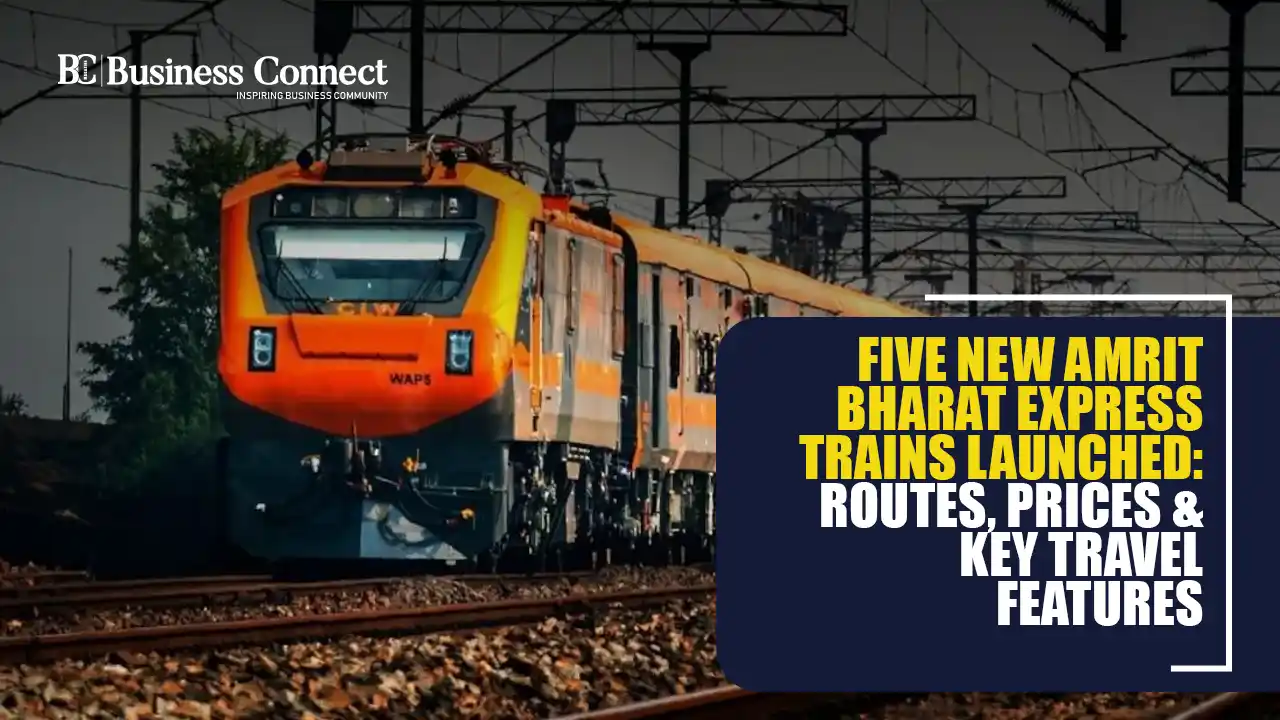
India, Jan. 18 — Prime Minister Narendra Modi expanded long-distance rail connections connecting Northeast, East, North, and South India on Sunday by inaugurating five new Amrit Bharat Express trains. During his trips to West Bengal’s Singur and Assam’s Nagaon district, the flag-off ceremony was held as part of initiatives to improve passenger experience and fortify national rail connections.
By enhancing connectivity to important cities and areas, the new services would help millions of commuters.
Today, Modi launched five Amrit Bharat Express trains, each of which connected important locations in many states:
These new trains promise better access to remote areas and more direct connections between important economic and demographic centers.
With the launch of the Amrit Bharat II Express services in January 2026, Indian Railways introduced a new fare structure designed to make long-distance travel more affordable. The Railway Board declared, “It has been decided to introduce Amrit Bharat II Express (introduced from or after January 2026 onwards) over Indian Railways.”
Indian Railways has set a minimum charged distance of 50 km for second class passengers and 200 km for sleeper class passengers under the new price policy. This arrangement maintains affordable short-distance prices while guaranteeing consistent pricing.
The non-AC Sleeper class ticket for lengthy trips is set at about Rs. 500 per 1,000 kilometers. Crucially, these tickets do not adhere to dynamic pricing, which means that ticket prices stay constant regardless of demand, giving travelers greater predictability.
This pricing strategy was emphasized in the official announcement, which said, “Non-AC sleeper travel priced at ~ Rs.500 per 1,000 km, with no dynamic pricing.” Budget-conscious travelers are anticipated to gain from this change, particularly on short and medium routes.
Base ticket costs have not changed despite the new fare structure. According to Trak.in, sleeper class tickets on Amrit Bharat Express cost Rs. 149 for trips up to 200 km, while second class tickets cost Rs. 36 for trips up to 50 km.
The overall goal of the Amrit Bharat II Express is to strike a balance between comfort and cost by providing set, clear pricing without the usual variations found in other long-distance trains.
The Amrit Bharat Express trains run on modern LHB coaches with advanced push-pull technology. This configuration places locomotives at both ends of the train, helping it accelerate faster and operate more efficiently. The modern design also enhances ride quality and stability.
Passengers can expect features such as ergonomically designed berths, modular toilets, LED lighting, CCTV cameras, and mobile charging points. These upgrades aim to provide a comfortable, safe, and convenient travel experience on long journeys.
The new Amrit Bharat services from Assam will significantly improve travel between the Northeast and northern India. The Guwahati-Rohtak and Dibrugarh-Lucknow routes will carry passengers across multiple states, offering a vital link for students, professionals, and families.
In West Bengal, the three trains flagged off from Singur will expand connectivity across eastern and southern states. For example, the Santragachi-Tambaram train provides a direct connection from Kolkata to Chennai-region destinations, supporting travel for education, employment, and tourism.
The inauguration of the Amrit Bharat Express trains comes as part of a larger focus on rail and road development. On the same day, Modi also performed the Bhoomi Pujan for the Kaziranga Elevated Corridor Project in Assam, a major highway enhancement that will improve regional access and safety.
Officials say the Amrit Bharat trains will not just serve passengers but also support the movement of goods and strengthen economic ties between diverse regions. Enhanced connectivity is expected to give a boost to trade, tourism, and local development across states.
With these five new services, Indian Railways continues its push to modernize long-distance travel. The trains’ added features are aimed at raising comfort levels for everyday travelers without replacing existing air-conditioned or premium services. The expansion reinforces the government’s commitment to broadening mobility options and enhancing transport infrastructure nationwide.
FAQs: Five New Amrit Bharat Express Trains Launched by PM Modi
1. When were the new Amrit Bharat Express trains launched?
Prime Minister Narendra Modi inaugurated the five new Amrit Bharat Express trains on January 18, 2026, during visits to Singur in West Bengal and Nagaon in Assam.
2. How many new trains were launched and which areas do they connect?
A total of five new Amrit Bharat Express trains were launched, connecting important cities across Northeast, East, North, and South India. Key routes include:
-
Guwahati-Rohtak
-
Dibrugarh-Lucknow
-
Santragachi-Tambaram (Kolkata to Chennai region)
These trains improve access to remote areas and major economic centers.
3. What are the ticket prices for these new trains?
Indian Railways introduced a new fare structure for Amrit Bharat II Express:
-
Non-AC Sleeper class: ~₹500 per 1,000 km (no dynamic pricing)
-
Sleeper class tickets: ₹149 for trips up to 200 km
-
Second class tickets: ₹36 for trips up to 50 km
The fares are fixed, ensuring predictability for budget-conscious travelers.
4. What is special about the fare policy?
-
No dynamic pricing: Prices remain consistent regardless of demand
-
Minimum charged distance:
-
50 km for second class
-
200 km for sleeper class
-
-
Focused on affordable short and medium-distance travel while maintaining clear pricing
5. What features do the new Amrit Bharat Express trains offer?
The trains run on modern LHB coaches with push-pull technology, offering:
-
Faster acceleration and better efficiency with locomotives at both ends
-
Ergonomically designed berths
-
Modular toilets
-
LED lighting
-
CCTV cameras
-
Mobile charging points
-
Enhanced ride comfort and stability
6. How do these trains improve connectivity?
The new Amrit Bharat Express trains:
-
Connect remote and economically important regions
-
Facilitate travel for students, professionals, and families
-
Strengthen trade, tourism, and local development
-
Offer direct routes between eastern, southern, northern, and northeastern states
7. Are these trains replacing existing premium services?
No, the new Amrit Bharat Express trains complement existing air-conditioned and premium trains, providing modern, comfortable, and cost-effective travel options for long-distance passengers.
8. What is push-pull technology in these trains?
Push-pull technology means the train has locomotives at both ends, which allows:
-
Faster acceleration
-
Better operational efficiency
-
Improved ride quality and stability
9. Do these trains have modern safety features?
Yes, the Amrit Bharat Express trains are equipped with:
-
CCTV surveillance
-
Ergonomic and safe interiors
-
Modular toilets and LED lighting
-
Advanced LHB coaches for safer travel
10. How do these trains support economic and regional development?
By improving rail connectivity, the trains:
-
Reduce travel time between remote regions and major cities
-
Facilitate movement of goods alongside passengers
-
Support regional trade, tourism, and employment opportunities
11. What other infrastructure projects were announced alongside these trains?
On the same day, PM Modi also performed the Bhoomi Pujan for the Kaziranga Elevated Corridor Project in Assam, aimed at improving road connectivity and safety in the region.