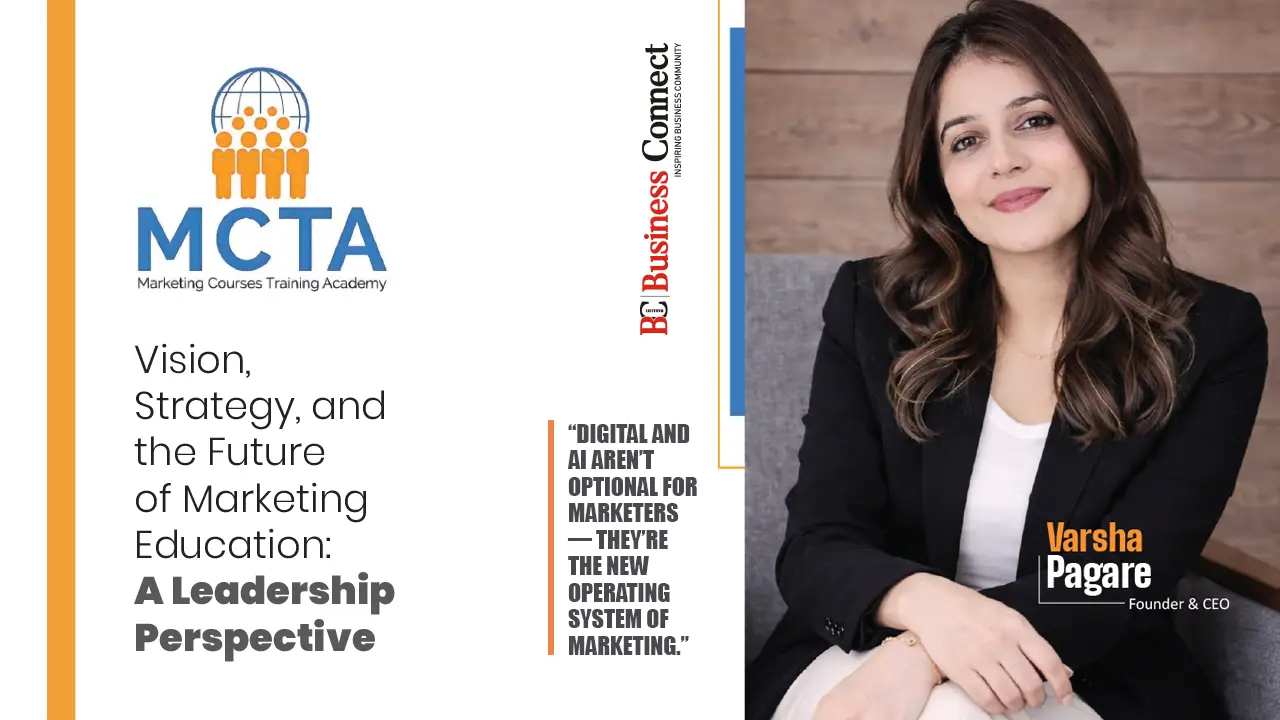
As the digital marketing landscape continues to evolve at an unprecedented pace, one institution stands out for its innovative approach to education: MCTA. Under the leadership of CEO Varsha Pagare, MCTA has established itself as a premier destination for individuals and organisations seeking to upskill in the latest digital marketing realm. With a team of seasoned industry experts and a comprehensive curriculum encompassing SEO, social media marketing, PPC, and more, MCTA is empowering the next generation of marketers to succeed.
We recently had the opportunity to sit down with the leading lady, Varsha Pagare, to delve into MCTA’s journey, vision, and plans. Here are the edited excerpts.
BCM: What inspired the vision behind your entrepreneurial journey, and how has it evolved?
Varsha: My entrepreneurial journey was sparked by a profound realisation during my tenure in senior marketing leadership roles, where I worked closely with businesses and young marketing professionals. I noticed a glaring disconnect between academic education and real-world marketing requirements. As marketing rapidly evolved with digital platforms, data analytics, and shifting consumer behaviour, graduates were entering the workforce without the practical skills needed to hit the ground running.
This led me to wonder: why train talent after hiring when education can be designed to meet industry needs? This question led to the foundation of MCTA, with a vision to create an academy that delivers practical, industry-aligned, and outcome-driven marketing education.
Over the years, our vision has evolved into a comprehensive learning ecosystem that empowers individuals to become future-ready marketers and leaders. Today, MCTA is about sharing professionals who think strategically, adapt to change, and practise responsible marketing. Our mission extends beyond filling job roles; we aim to empower individuals to create impact, drive innovation, and contribute lasting value to businesses and the global marketing landscape.
BCM: How do you translate your vision into actionable strategies that your team can align with?
Varsha: For me, a vision is only as good as its execution. I translate our vision into simple, outcome-driven goals that resonate with every team member, from leadership to frontline staff. We define success in measurable terms—student outcomes, industry relevance, and long-term impact—and ensure everyone understands how their role contributes to the bigger picture.
Alignment comes from communication and ownership. I ensure the team understands the “why” behind every strategy, not just the ‘what’. This is followed by structured roadmaps, defined responsibilities, and clear performance indicators that link individual roles to our larger mission.
BCM: How do you balance innovation with practicality to create impactful solutions?
Varsha: Innovation without practicality can lead to inefficiency, while practicality without innovation risks stagnation. We strike a balance by validating every innovative idea against real-world applicability. For instance, while we continuously adopt emerging tools and trends, we ensure they solve tangible problems for learners and employers.
Pilot programmes, feedback loops, and data-driven evaluation play a key role. Before scaling any initiative, we test it in controlled environments and assess outcomes. This approach allows us to remain agile, innovative, and grounded—delivering solutions that are both forward-thinking and effective.
BCM: What was the defining moment when you realised your venture was on the path to success?
Varsha: The defining moment came when the industry itself validated our vision. We started seeing students hired as professionals who could contribute from day one, with employers requiring minimal handholding, and delivered results much faster than expected. This shift—from explaining our vision to seeing it reflected in real outcomes was a powerful signal that we were on the right path.
Companies started approaching us proactively for talent, collaborations, and customised training programmes, transforming MCTA into a trusted talent partner. This reinforced our focus on practical skills, industry alignment, and outcomes. Personally, success hit home when learners gained confidence, transformed careers, and created impact. The combination of industry trust, student success, and repeat demand marked the moment we moved beyond an idea to something truly sustainable and meaningful.
BCM: What are the USPs of your offerings, and what gives you a leading edge in the market?
Varsha: MCTA’s strength lies in its strong alignment with real industry needs. We focus on hands-on, outcomedriven learning so students are jobready from day one. Our curriculum is continuously updated and built around live projects, real tools, and practical execution.
What sets us apart is that we go beyond tool usage. We train learners to think strategically — understanding the ‘why’ behind marketing decisions — supported by personalised learning paths, dedicated career support, and strong industry partnerships.
Additionally, our AI-powered digital education ecosystem equips learners to work confidently with emerging AI tools, workflows, and marketing automation. This ensures they are prepared not only for today’s roles but for the future of work in marketing as technology rapidly evolves.
BCM: How do you leverage AI and emerging technologies to stay ahead of the competition?
Varsha: We harness AI’s transformative power in both teaching and operations. Our curriculum integrates AI-driven tools, enabling learners to work with real-time analytics, automation platforms, and predictive insights. This hands-on experience makes them future-ready professionals.
Internally, AI personalises learning experiences, tracks progress, and optimises engagement. Tools like chatbots enhance, while data-driven insights refine our curriculum. By embracing AI, we create smarter education and drive better outcomes.
BCM: Do sustainability and social responsibility play a role in your business vision?
Varsha: Absolutely. Sustainability and social responsibility are integral to our long-term vision. We believe education can drive meaningful change. Our initiatives include affordable programmes, scholarships, and skilldevelopment opportunities for underrepresented communities. We promote ethical marketing practices, responsible data usage, and inclusive growth as part of our curriculum.
BCM: How do you gather and utilise customer insights to refine your offerings?
Varsha: Customer insights drive our decisions. We gather feedback through surveys, one-on-one interactions, alumni check-ins, and employer reviews. This helps us spot skill gaps, learning challenges, and emerging needs. We analyse these insights to refine our curriculum, teaching methods, and support systems. By staying connected with learners and industry stakeholders, we ensure our offerings remain relevant, impactful, and aligned with expectations.
BCM: What strategies do you use to foster a culture of innovation and adaptability?
Varsha: We cultivate a culture where experimentation thrives and learning from failure is valued. Open forums, brainstorming sessions, and crossfunctional collaboration spark creativity. Continuous upskilling is key – we invest in our team’s growth, keeping them updated with industry trends and technologies. When teams feel empowered, informed, and supported, innovation becomes a natural outcome.
BCM: How do you foresee the future of your industry in the next five years?
Varsha: The future of marketing education is looking bright, with a focus on personalised, technology-driven, and skill-centric learning. Over the next five years, we can expect AI, data analytics, and automation to play a huge role in redefining marketing roles, making adaptability and strategic thinking essential skills for marketers.
BCM: What advice would you give to aspiring entrepreneurs aiming to make a global impact?
Varsha: My advice to aspiring entrepreneurs would be, “Start by solving a real problem, not by chasing trends. A business that creates lasting global impact is built on relevance, value, and consistency. Take the time to understand your customers intimately, test your ideas in the real world, and remain open to refining your approach as needed.
Equally crucial is investing in a strong team and culture from the outset – vision alone is not enough; execution is driven by people who truly believe in the mission and are empowered to take ownership. Finally, focus on long-term impact rather than short-term wins.”