
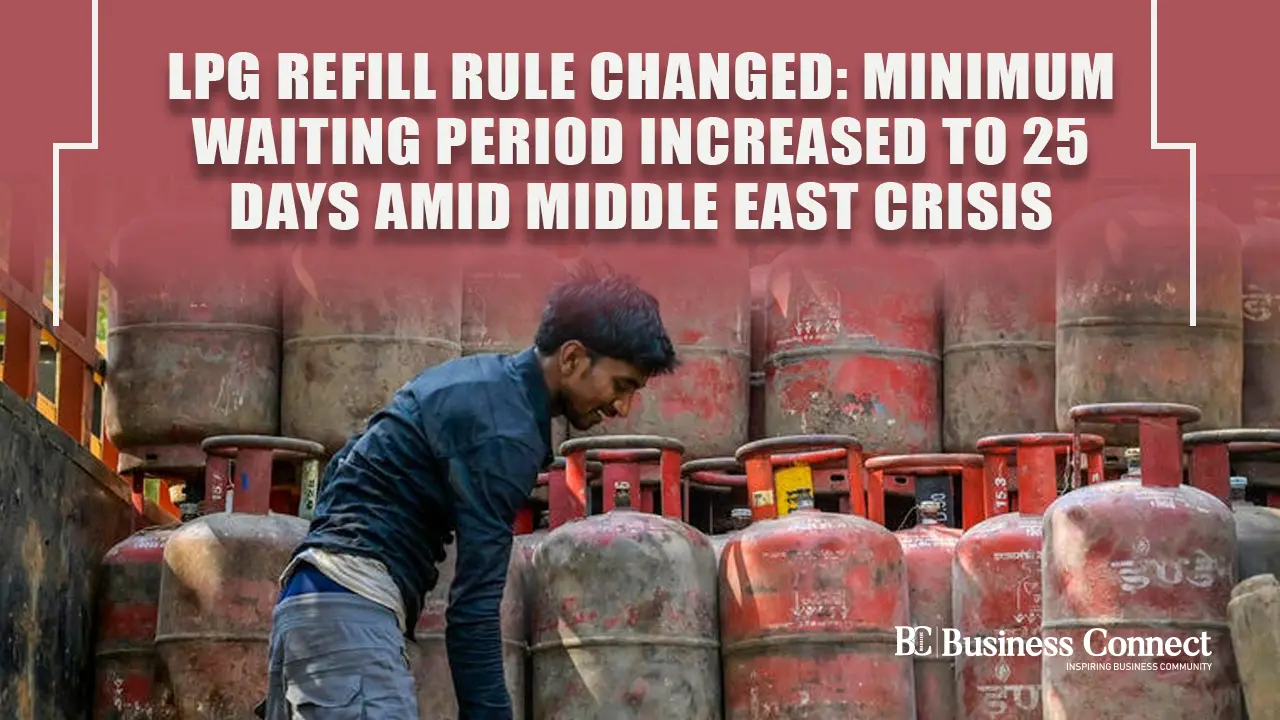
In an effort to prevent hoarding and guarantee fair distribution of cooking gas, the government has extended the minimum waiting period for home LPG cylinder refill reservations from 21 days to 25 days, government sources told new agency PTI.
The sources state that unless global crude oil prices surpass the USD 130 per barrel threshold, gasoline and diesel prices are anticipated to stay steady. Current forecasts indicate that crude may stay around USD 100 per barrel.
According to reports, “there is no shortage of petrol and diesel at any pump in the country, and the supply situation remains comfortable.” In order to reduce the danger of disruptions, India has increased its sourcing of oil from routes beyond the Strait of Hormuz.
Additionally, officials stated that there is no need to worry about the availability of aviation fuel because the nation has a sufficient supply of Aviation Turbine Fuel (ATF).
“There is no need to panic about aviation fuel supplies because India is also a producer and exporter of ATF,” the sources continued.
They added that India is currently in a better position than many other nations to handle the changing energy landscape, with various countries contacting New Delhi to learn about its supply readiness and stock position.
LPG Cylinder Selling for ₹1,500 Amid Iran War Panic Buying – Is There Really a Shortage?
Markets do exhibit noticeable stress as supply chains tighten and demand spikes, even for a small period of time. That stress is currently manifesting outside LPG outlets in a number of towns and cities, including the National Capital Region (NCR), amid the conflict in Iran. On Monday, long lines of customers holding empty LPG cylinders were observed outside a Bharat Gas store in Sector 22 of Noida. At least hundreds of people were seen sitting on their empty LPG cylinders in a line outside a gas station in a widely shared video from Birdpur hamlet in the Sitapur district of Uttar Pradesh. On Saturday, March 7, the video became viral.
There was no real shortage of LPG supply on the ground, according to a number of people India Today Digital spoke with, despite reports of lines for LPG cylinders in some cities, towns, and villages. Claims of an LPG crisis have also been refuted by the national administration.
Some suppliers may have created the sense of crisis in order to profit from rumors of supply shortages brought on by the conflict in Iran. A resident of a tiny Uttar Pradesh town stated that she was compelled to spend Rs 1,500 on a residential LPG cylinder on the underground market.
The homemaker from the Pratapgarh region of Uttar Pradesh told India Today Digital, “It’s Ramzan, gas is essential,” without revealing her identity.
Panic buying has been observed “over the past four to five days,” according to an Indane Gas cylinder delivery partner who serves customers in South Delhi, as reported by India Today Digital. He affirmed that there were no restrictions on the supply of LPG.
LPG CYLINDER BOOKINGS RISE, LOCK-IN PERIOD FOR BOOKING RAISED TO 21-25 DAYS
Today marks the tenth day of the US and Israel’s war on Iran, which has raised concerns about an interruption in supplies. Last week, the government tightened regulatory regulations and increased the cost of LPG cylinders. Nearly two-thirds of India’s LPG needs are satisfied by imports, the majority of which come from Gulf nations including Kuwait, Saudi Arabia, the United Arab Emirates, and Qatar. They are transported across the Strait of Hormuz, a crucial choke point.
According to news agency Reuters, India is the second-largest importer of LPG worldwide. The vital Strait of Hormuz in the Persian Gulf is traversed by almost 80% of India’s imports of LPG.
According to the Times of India on March 7, which cited representatives of oil marketing companies (OMCs), LPG reservations increased by roughly 15% to 20% over the previous five to six days in various parts of West Bengal, especially in Kolkata and the surrounding districts.
OMCs extended the 15-day lock-in period between domestic LPG cylinder orders to 21 days on Friday in response to the surge in bookings. The lock-in period between two reservations has been extended to 30 days for individuals with two cylinders.
Amid this, officials insist there is no nationwide shortage.
Government and industry sources say India has sufficient LPG stocks and strategic reserves to manage the situation comfortably. An Inter-Ministerial Group is closely monitoring the situation and reviewing domestic supply priorities to ensure uninterrupted availability.
The panic among consumers appears to be less about actual scarcity and more about localised bottlenecks created by temporary booking restrictions, distributor-level supply controls and precautionary hoarding by consumers. These micro-level interventions, seen against the backdrop of the availability of LPG cylinders on the black market and what a gas delivery agent in South Delhi told India Today Digital, suggest that while an impression of shortage has been created, overall supplies remain stable.
GROUND REPORTS FROM CITIES, TOWNS SHOW SPIKE IN LPG BOOKING
Despite official reassurances, scenes of panic buying have emerged across several states. The spectacle of long queues that appeared a few days ago continued on Monday as well. Outside a Bharat Gas agency in Noida on Monday morning, a person standing among dozens told India Today Digital that “cylinder price had gone up by Rs 60… There is a war going on in Iran. I had booked my LPG refill five days ago, but it had still not been delivered at home”.
“He added that he had come to the agency to find out what had happened to the booking. This is why I came to the agency myself… The rush may also be because the agency was closed on Sunday. Now we are all waiting for the agency to open to see what the matter is,” Naresh Kumar, a resident of Noida Sector 22, said.
The Indane cylinder delivery partner from South Delhi said that due to the Iran war and after the government increased LPG prices on March 7, he saw “people trying to buy LPG cylinders on the black market”.
However, he added that the situation was not what the queues might suggest, which is largely due to a surge in online and telephonic bookings. “Just today, a truck carrying 350 cylinders arrived at our agency,” the LPG cylinder delivery partner told India Today Digital. This indicates that supplies are still coming in, and overall availability remains stable.
LONG QUEUES FOR PETROL, LPG IN UP AS PEOPLE STOCK UP
In Uttar Pradesh’s Lakhimpur Kheri district, long lines formed at petrol pumps and LPG agencies in towns such as Nighasan, Pallia and Bhira after rumours spread about possible fuel rationing, news agency PTI reported on March 6.
Similar queues were reported in Hyderabad, Ranchi, Kolkata and parts of Goa, where LPG bookings surged before booking restrictions were introduced.
The ripple effects are being felt in the commercial and industrial sectors as well.
A Khurja-based ceramic factory owner told India Today Digital that industries in the hub in Uttar Pradesh rely on “HIPPO gas cylinders, which weigh approximately 422 kg each”. The price surge has been significant since the war. “Before the war, the price of gas was around Rs 69 per kg, including GST. But on 7 March, the price increased by Rs 6, but industries are currently receiving gas at around Rs 94.”
He said, adding that the earlier discounts have been discontinued, though it is unclear whether the company stopped them or agencies are retaining them. “The increase in price tag is forcing industries to place orders at least two days in advance,” the person said.
Maharashtra’s largest crematorium, Pune’s Vaikunth Dham, temporarily halted all gas-based cremations due to an “acute shortage of LPG”, officials said. This move, however, was also triggered by the government prioritising domestic LPG supply.
ARE DISTRIBUTOR-LEVEL BOTTLENECKS WORSENING LPG PANIC SITUATION?
While there is some reported mismatch in the overall supply and demand of LPG cylinders, disruptions at the local level, and governmental interventions, have amplified the frenzy and panic buying.
Restrictions were placed on LPG supplies for both domestic and commercial consumers on Thursday night (March 5), and people were advised to use the fuel judiciously. The Hindu Newspaper on March 7 reported that single-cylinder domestic consumers would now be allowed to make fresh bookings only after 21 days from the date of the last booking, while those with double cylinders can book only after 30 days.
Then on March 7, the price of non-subsidised domestic LPG cylinders was increased by Rs 60. This took the cost of a 14.2-kg cylinder to Rs 913 in Delhi, while commercial 19-kg cylinders saw a Rs 115 hike.
The move intended to prevent hoarding, however, inadvertently triggered further panic as consumers rushed to secure cylinders before potential limits tightened.
Kanav, a consumer on Reddit, said the sudden restrictions caught him off guard as he tried to book his regular refill. “We usually get a cylinder around every 15-20 days… I last got my cylinder on February 20 and before that on February 2… Never faced any issues earlier,” he said. He added that when he tried to book a refill as his current cylinder was about to run out, he was met with a system message blocking the order. “Never before did I ever receive this message, so what are my options now?” he asked.
Some LPG distributors, as evident from the account of a South Delhi LPG delivery agent and the Pratapgarh homemaker who said she was forced to pay Rs 1,500 for a cylinder on the black market, suggest that temporary rationing of supplies to prevent bulk buying has also contributed to visible panic. The situation, they indicate, appears less like a real shortage and more like micro-level disruptions where some miscreants were trying to profiteer during a crisis.
The fact that some consumers have begun booking additional LPG cylinders in anticipation of shortages, has also aggravated the situation. But is that indicative of an LPG cylinder scarcity in India?
ARE LONG QUEUES FOR LPG CYLINDERS RESULT OF ACTUAL GAS SHORTAGE?
Despite the visuals of queues outside LPG agencies, government officials have maintained that there is no systemic shortage of LPG in India.
Government sources told The Hindu newspaper on March 3 that India had enough LPG stocks and strategic reserves to cover 25 to 30 days of demand, with refineries increasing production to offset any temporary import disruptions.
Energy analyst Chetan Bhutani told India Today TV that “strategic reserves can support LPG demand for about 15 to 20 hot days, if needed, while crude oil reserves are estimated to last about 40 to 45 days in the event of supply disturbances”.
Days later, on March 6, Petroleum Minister Hardeep Puri said there was no shortage of energy in India and there was no cause for worry about its energy consumers. “Our priority is to ensure the availability of affordable and sustainable fuel for our citizens, and we are doing it comfortably. There is no shortage of energy in India and there is no cause for worry about our energy consumers,” the Minister posted on X.
Moreover, the Centre directed all LPG refineries to increase production to ensure adequate availability across the country. Officials said India remained in a comfortable position regarding LPG stocks, news agency ANI reported on March 6.
A source told the news agency that LPG from the US started coming to India since January. Indian public sector oil companies in November 2025 had signed a one-year contract to import around 2.2 MTPA of LPG from the US Gulf Coast for the contract year 2026, reported ANI.
So, the queues are largely the result of panic bookings rather than a collapse in supply. Consumers rushing to refill cylinders simultaneously have made the distribution system appear overwhelmed. And the chokehold by LPG agencies, as reported in some pockets, has added to the panic buying of LPG cylinders and some of them going into black markets. The queues outside LPG agencies might signal anxiety in the market, but they do not yet reflect a nationwide shortage.
FAQ
1. What is the new LPG cylinder refill rule in India?
The government has increased the minimum waiting period for domestic LPG cylinder refill bookings from 21 days to 25 days. This step aims to prevent hoarding and ensure fair distribution of cooking gas among consumers.
2. Why was the LPG refill waiting period increased to 25 days?
The rule was introduced to avoid panic buying and hoarding of LPG cylinders, especially amid global energy uncertainties caused by tensions in the Middle East.
3. Will petrol and diesel prices increase due to the Middle East crisis?
According to government sources, petrol and diesel prices are expected to remain stable unless global crude oil prices rise above USD 130 per barrel. Current projections suggest crude oil may remain around USD 100 per barrel.
4. Is there any shortage of petrol or diesel in India?
No. Officials have confirmed that petrol and diesel supplies are adequate, and there is no shortage at fuel pumps across the country.
5. Is aviation fuel supply affected in India?
No. India has sufficient Aviation Turbine Fuel (ATF) supplies and is also a producer and exporter, so there is no immediate concern about shortages.
6. How is India securing its energy supply during global tensions?
India has diversified its oil sourcing routes beyond the Strait of Hormuz to reduce the risk of supply disruptions and maintain stable fuel availability.
7. Should consumers worry about LPG or fuel shortages?
Officials have advised that there is no need for panic buying, as India currently has comfortable fuel and LPG supply levels.