
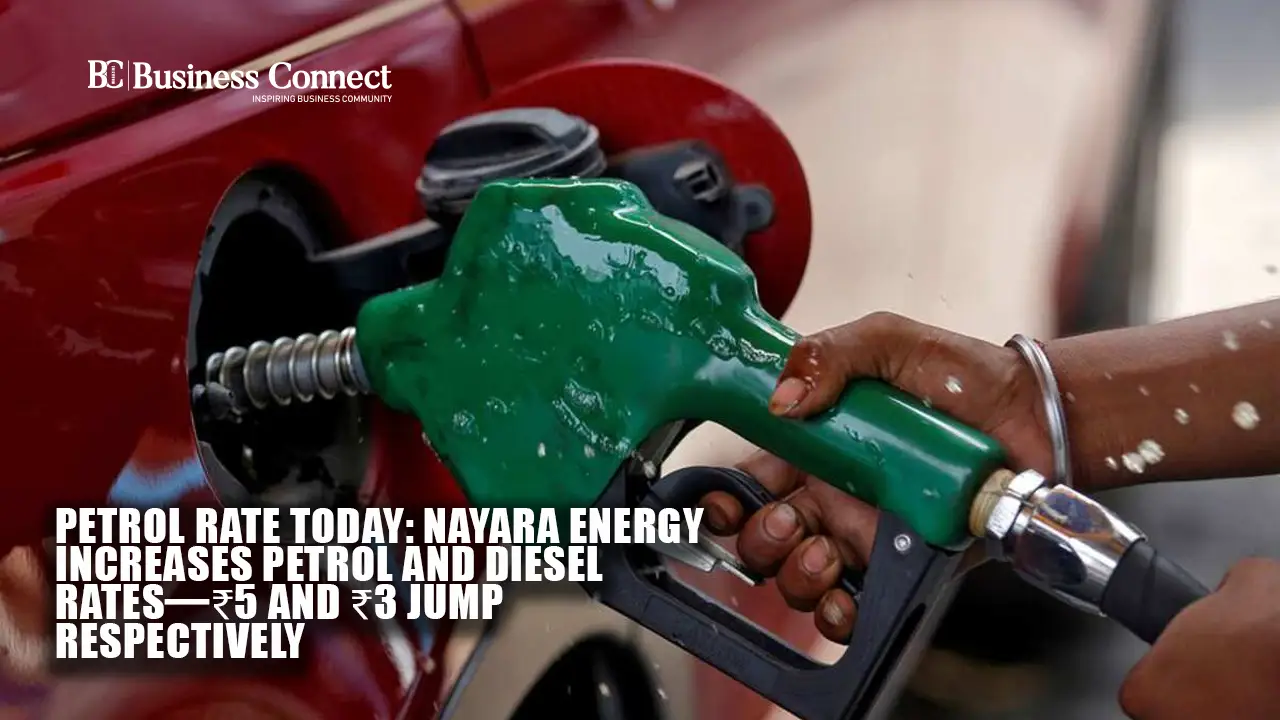
According to two people with firsthand knowledge of the situation, Nayara Energy, which runs 6,967 of India’s 102,075 gas stations, has chosen to pass on a portion of the rise in input prices to customers.
According to sources, Nayara Energy, the biggest private fuel supplier in India, increased the price of gasoline by ₹5 per litre and diesel by ₹3 per litre on Thursday, March 26, 2026, partly due to the recent spike in oil prices worldwide following the conflict in West Asia.
Since the United States and Israel initiated military attacks against Iran on February 28, which sparked widespread retaliation from Tehran, retail petrol and diesel prices have remained frozen despite a roughly 50% increase in global oil prices. This has put pressure on fuel marketing companies in India.
According to two people with firsthand knowledge of the situation, Nayara Energy, which runs 6,967 of India’s 102,075 gas stations, has chosen to pass on a portion of the rise in input prices to customers.
A representative for the corporation did not comment on the news right away.
Despite suffering significant losses on the sale of gasoline and diesel, Jio-bp, the fuel retailing joint venture of Reliance Industries and BP Plc with 2,185 locations, has not yet increased prices.
Rates are still frozen by state-owned fuel retailers, which hold over 90% of the market.
According to sources, Nayara, which is mostly controlled by Rosneft of Russia, increased the price of gasoline by ₹5 per litre and diesel by ₹3. However, the actual rate increase varies from state to state based on the incidence of local taxes like VAT. Petrol prices have increased by as much as ₹5.30 per litre in some areas.Unlike state-owned companies that are rewarded for being “good corporate citizens,” private fuel retailers in India do not receive government compensation to offset losses from delaying price increases, according to sources. As a result, they are forced to raise retail prices due to growing losses.
Since April 2022, retail prices for gasoline and diesel have been locked. State-owned Indian Oil Corporation (IOC), Bharat Petroleum Corporation Ltd (BPCL), and Hindustan Petroleum Corporation Ltd (HPCL) are profitable when rates are low and suffer losses when crude prices are high.
Last week, the three retailers increased the cost of bulk diesel sold to industrial users by roughly ₹22 per litre and the price of premium or higher-grade gasoline by ₹2 per litre.
The cost of regular gasoline and diesel, meanwhile, has not altered.
Delhi’s premium 95-Octane petrol now costs ₹101.89 per litre instead of ₹99.89. In addition, the price of industrial or bulk diesel in the nation’s capital increased from ₹87.67 to ₹109.59 per litre.
Due to the escalating conflict with Iran, international oil prices reached USD 119 per barrel earlier this month before declining to about USD 100 per barrel.
In Delhi, a litre of regular petrol still costs Rs 94.77, while a litre of diesel of the same grade costs Rs 87.67.
Standard engines can run on normal gasoline, which usually has an octane level of 91–92 and provides sufficient performance for daily driving. Conversely, premium fuel is perfect for high-performance or high-compression engines due to its higher octane rating of 95–98.
Gasoline and diesel are deregulated commodities whose prices are set unilaterally by oil marketing corporations, according to the government.
About half of India’s natural gas demands and 88% of its crude oil needs are met by imports. Most of them travel through the Strait of Hormuz. Iran cautioned shipping away from the strait after the US and Israel attacked Iranian government, military, and nuclear sites; insurers canceled coverage, so stopping tanker movements.
Following Russia’s invasion of Ukraine, prices have increased to USD 119 per barrel in June 2022. Oil companies made very little money that year, but in FY24 they reported a record profit of Rs 81,000 crore, which helped offset previous losses.In the December quarter alone, the three businesses reported profits of Rs 23,743 crore.
For the first time since the Middle East war intensified, Nayara Energy has increased the price of gasoline and diesel by up to 5 per litre. The action, which coincides with rising crude prices worldwide, lifts the long-standing price freeze on regular-grade fuels.
The firm, which has about 7,000 gas stations and is the biggest private fuel supplier in India, attributed the increase to the spike in global petroleum prices that followed military attacks on Iranian installations. According to sources who spoke to PTI, local taxes cause the effective increase to differ throughout states, with some regions seeing increases in gas prices of up to 5.30 per litre.
Additionally, the cost of diesel has gone up by as much as $3 per liter. Supported by Rosneft, Nayara Energy does not receive the same government pay as state-run oil companies, which hold 90% of the market. Due to this, the business has been forced to charge customers a portion of the growing import expenses.
Since March 20, public sector oil marketing firms (OMCs) like Indian Oil and Hindustan Petroleum have increased the price of premium gasoline by 2.09 to 2.35 a litre. Despite the recent 4% increase in Brent crude prices, they have maintained regular fuel and diesel pricing, offering some respite to the common population.
The price fluctuations are associated with disruptions in the world’s gasoline supply brought on by attacks on Middle Eastern energy infrastructure. India’s Petroleum Ministry emphasized that the nation has diversified its energy imports to lessen reliance on the Strait of Hormuz and that domestic refineries are operating at maximum capacity.
Frequently Asked Questions (FAQs)
1. Why did Nayara Energy increase petrol and diesel prices?
Nayara Energy raised fuel prices to partially pass on the increased input costs caused by a sharp rise in global crude oil prices, largely triggered by the ongoing conflict in West Asia.
2. How much have petrol and diesel prices increased?
The company has increased:
- Petrol by ₹5 per litre
- Diesel by ₹3 per litre
However, the final increase may vary slightly across states due to local taxes like VAT.
3. When did the price hike come into effect?
The revised prices were implemented on March 26, 2026.
4. What caused the recent spike in global oil prices?
The surge in oil prices is linked to geopolitical tensions, especially after military actions by the United States and Israel against Iran, followed by retaliation from Tehran, disrupting global oil supply chains.
5. Have fuel prices been rising continuously in India?
No, retail petrol and diesel prices in India had been largely frozen since April 2022, despite fluctuations in global crude oil prices.
6. Why are private fuel retailers increasing prices while state-owned companies are not?
Private players like Nayara Energy do not receive government support to offset losses. In contrast, state-owned companies are often expected to absorb losses temporarily, which delays price hikes.
7. Which state-owned companies dominate India’s fuel market?
The market is largely controlled by:
- Indian Oil Corporation
- Bharat Petroleum Corporation Limited
- Hindustan Petroleum Corporation Limited
Together, they account for over 90% of fuel retail outlets in India.
8. Has any other private company increased fuel prices?
No, as of now, Jio-bp has not increased fuel prices, despite reportedly facing losses.
9. What is the current price of petrol and diesel in Delhi?
- Regular petrol: ₹94.77 per litre
- Regular diesel: ₹87.67 per litre
Premium petrol (95-octane) has increased to around ₹101.89 per litre.
10. Why do fuel prices vary across states in India?
Fuel prices differ due to state-level taxes (VAT), transportation costs, and local levies, which impact the final retail price.
11. What is the difference between regular and premium petrol?
- Regular petrol (91–92 octane): Suitable for most everyday vehicles
- Premium petrol (95–98 octane): Designed for high-performance or high-compression engines
12. How dependent is India on imported oil?
India imports:
- Around 88% of its crude oil
- About 50% of its natural gas needs
This makes domestic fuel prices highly sensitive to global market fluctuations.
13. How does the Strait of Hormuz impact fuel prices?
A large portion of India’s oil imports pass through the Strait of Hormuz. Any disruption—like geopolitical tensions or shipping restrictions—can significantly impact supply and raise prices.
14. Have oil companies in India been profitable recently?
Yes, after facing losses in earlier years, major oil companies reported record profits of around ₹81,000 crore in FY24, helping them recover past losses.