
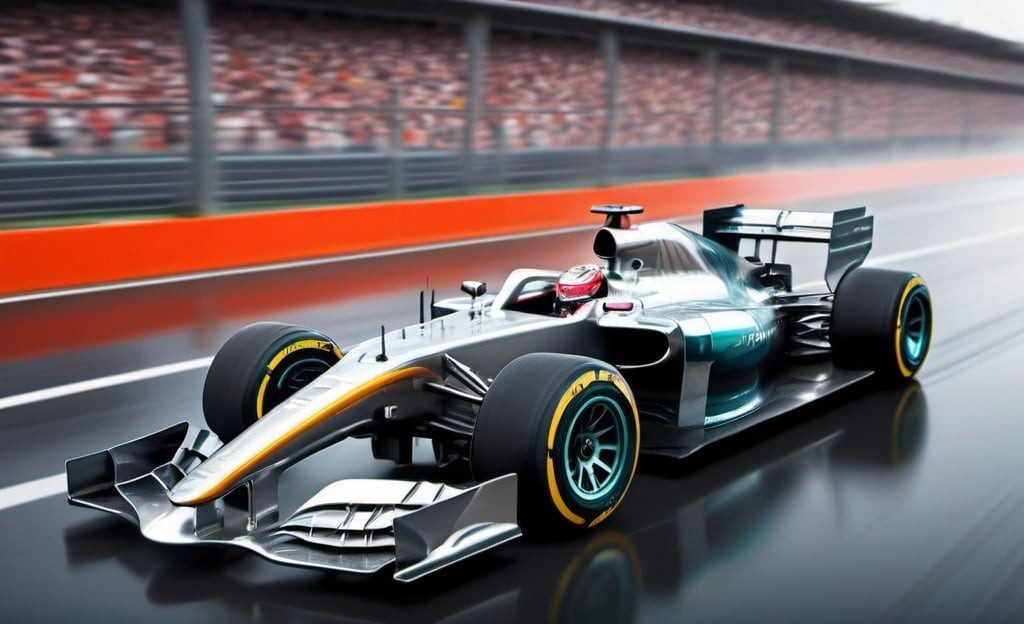
Formula 1 used to be explained through engines, bravery, and impossible corner speeds. Today, the sport is just as dependent on cloud computing, predictive software, telemetry systems, and AI-assisted simulations as it is on driver talent.
During a race weekend, teams process millions of data points while constantly adjusting strategy around tire wear, weather shifts, energy deployment, and traffic windows.
Even betting audiences now follow technical indicators almost like financial traders, which is why platforms such as RajBet increasingly build Formula 1 coverage around live race analytics instead of simple winner markets.
The strange thing is that despite all this complexity, modern F1 actually became easier to follow because technology now visualizes the sport in real time for regular fans.
The Car Is Basically a Rolling Supercomputer
A modern Formula 1 car contains hundreds of sensors tracking almost every mechanical movement happening during a race.
Teams monitor tire temperatures, brake balance, fuel flow, aerodynamic pressure, suspension travel, steering inputs, and hybrid battery deployment corner by corner. Drivers still look like gladiators, but engineers now treat the car like a constantly moving data center traveling at 330 km/h.
During the proposing problems after the 2022 regulation changes teams collected massive amounts of CFD, telemetry, and wind tunnel data trying to understand why cars violently bounced at high speed.
Some solved it quickly, others looked like they were driving over invisible speed bumps for months.
Technologies Hidden Inside Modern F1 Cars:
| Technology | Real Function |
| Infrared tire temperature sensors | Monitor tire surface and carcass heat in real time to predict degradation, overheating, and optimal pit-stop timing |
| Brake thermal mapping systems | Track carbon brake temperatures during races to prevent overheating, lockups, and cooling imbalance |
| Hybrid ERS monitoring | Controls battery harvesting and energy deployment to improve acceleration, fuel efficiency, and overtaking power |
| CFD aerodynamic simulations | Use supercomputers to digitally test airflow behavior around wings, floors, and diffusers before track testing |
| Steering telemetry analytics | Measures steering corrections and driver inputs to detect instability, understeer, and driving inefficiencies |
| Suspension travel laser sensors | Track suspension movement under load to maintain aerodynamic stability and reduce porpoising |
| Fuel flow and combustion analysis | Monitors fuel delivery, engine efficiency, and consumption while staying within FIA regulations |
| GPS sector performance mapping | Combines positional and speed data to optimize racing lines and identify weak sectors |
| Real-time aerodynamic pressure analysis | Measures live downforce behavior and airflow efficiency during changing track and traffic conditions |
The important part is that teams no longer chase raw speed alone. Stability matters more than chaos because predictable performance wins championships over long seasons.
Modern F1 engineering now focuses heavily on:
- Efficient tire preservation during long stints
- Stable airflow in dirty-air conditions
- Hybrid energy recovery optimization
- Real-time aerodynamic consistency
- Brake cooling under traffic pressure
- Faster telemetry communication systems
- Predictive reliability monitoring
- Fuel-saving strategies without pace loss
- Adaptive setup changes during weather shifts
Even the steering wheel became absurdly complex. Drivers constantly change settings mid-lap while speaking to engineers and trying not to miss braking points by half a meter.
One small mistake at Monaco still destroys a weekend faster than any software update can save it.
Strategy Departments Now Look Like Stock Market Control Rooms
Race strategy in Formula 1 used to depend heavily on instinct. Today, teams run thousands of simulations before the race even begins. Engineers constantly calculate tire life, safety-car probability, weather movement, undercut windows, and traffic risks while the race unfolds in real time.
The race broadcast itself changed because of this technology. Graphics now predict pit windows, overtaking probabilities, and tire performance curves live on television.
Formula 1 started explaining strategy visually instead of expecting casual viewers to magically understand why everyone suddenly panics after a safety car.
Technologies Driving Modern Race Strategy:
| Strategic Tool | What It Changes |
| AI tire modeling | Predicts pit-stop timing |
| Cloud computing | Runs race simulations instantly |
| Weather radar systems | Tracks rain movement |
| Traffic prediction software | Avoids pit-stop congestion |
| Live telemetry feeds | Updates race models continuously |
| Energy deployment mapping | Improves overtaking chances |
| Digital race twins | Simulates alternate scenarios |
| Sector timing analysis | Detects pace changes |
| Remote operations centers | Supports trackside engineers |
The strange part is how much Formula 1 now resembles financial trading. Teams react to information swings almost second by second, and races often turn because one group interprets uncertainty faster than another.
During the 2022 Hungarian Grand Prix, Mercedes gained strategic advantages partly because rival teams misunderstood tire behavior under cooler conditions.
One wrong compound choice changed the entire race rhythm. In modern F1, strategy mistakes spread through the field like panic during crypto volatility.
Technology also changed how fans gamble on races. Platforms such as RajBet increasingly attract bettors who study tire degradation trends, qualifying pace, and safety-car probabilities instead of simply choosing favorite drivers.
Modern F1 strategy heavily depends on:
- Tire warm-up efficiency after pit exits
- Safety-car timing probability
- Battery harvesting efficiency
- Crosswind sensitivity on straights
- Traffic-loss prediction before stops
- Brake temperature stabilization
- Rain arrival timing by sector
- Dirty-air impact behind rivals
- Energy deployment for overtaking zones
The funny reality is that some races are effectively decided before television viewers even realize momentum changed. By the time commentators start discussing strategy, engineers already simulated half the possible endings.
Drivers Now Need the Brain of a Pilot and the Reflexes of a Gamer
Modern Formula 1 drivers manage far more than steering and braking. They constantly adjust brake migration, differential settings, battery deployment, fuel usage, and tire preparation while racing at extreme speeds. The cockpit became closer to a fighter jet interface than a traditional sports car.
Drivers like Max Verstappen and Lewis Hamilton regularly communicate detailed technical feedback mid-race while still attacking corners at ridiculous speed. The modern elite driver combines athletic ability with fast information processing.
Technology Used in Driver Development
| Driver Technology | Purpose |
| Advanced simulators | Rehearses circuits virtually |
| VR track systems | Improves memorization |
| AI driving analysis | Detects inefficient inputs |
| Motion simulator rigs | Replicates G-forces |
| Eye-tracking systems | Measures concentration |
| Reaction testing software | Improves response speed |
| Sleep monitoring devices | Optimizes recovery |
| Biometric tracking | Measures physical stress |
| Digital telemetry replay | Compares driving styles |
The interesting shift is how much sim racing now influences Formula 1 development. Younger drivers often arrive with thousands of virtual racing hours already shaping racecraft, consistency, and technical understanding.
Modern driver preparation now includes:
- Simulator sessions before every race weekend
- Data comparison against teammates
- Cognitive reaction training programs
- Heat-adaptation conditioning
- Virtual setup experimentation
- Telemetry-based braking analysis
- AI-assisted corner optimization
- Sleep and recovery tracking
- Physical stress monitoring during races
McLaren, Red Bull, and Mercedes now rely heavily on simulator correlation before arriving at circuits. Teams often know baseline setups surprisingly accurately because virtual models became extremely realistic.
Technology is also shaping the future road-car industry through Formula 1 research:
- ERS hybrid systems (MGU-K, MGU-H) improving efficiency and acceleration in modern hybrid cars
- Carbon-fiber chassis technology making road cars lighter, stronger, and safer
- Advanced EV battery management systems improving charging speed and battery life
- Brake-by-wire systems increasing braking precision and energy recovery
- CFD aerodynamic software helping manufacturers design more efficient car shapes
- Synthetic fuel projects like Aramco e-fuels supporting cleaner combustion engines
- High-performance cooling systems preventing overheating in turbo and EV cars
- Real-time telemetry systems monitoring car performance and diagnostics remotely
- Digital twin simulation software testing vehicle behavior virtually before production begins
Formula 1 still sells drama, speed, and personality. Underneath that spectacle, however, it quietly became one of the world’s most advanced technology competitions disguised as a sport.
Conclusion
Technology transformed Formula 1 from a pure mechanical battle into a hybrid world of engineering, software, strategy, and human instinct.
Cars became rolling computers, strategy departments became analytics hubs, and drivers evolved into high-speed information processors.
Yet the sport still keeps its unpredictability, which is probably why fans remain obsessed with it. No matter how advanced the systems become, Formula 1 still finds ways to surprise everyone by Sunday evening.