
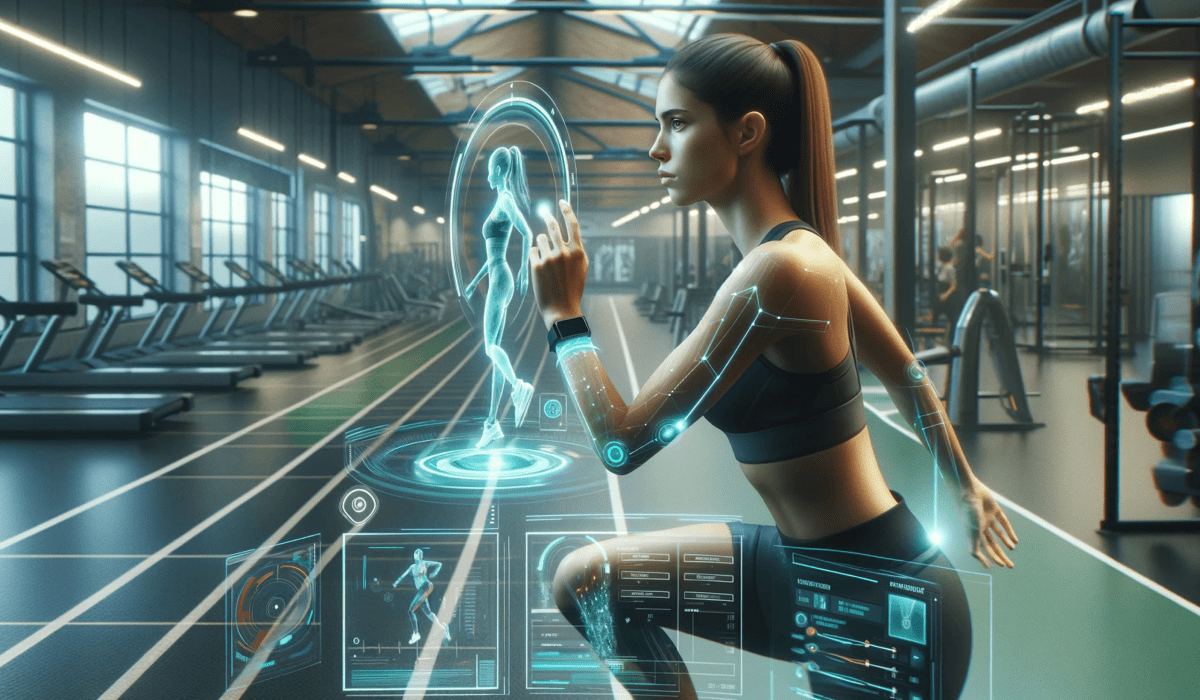
There is a particular kind of person who checks their HRV score before deciding whether they’re allowed to feel good about their morning.
They wake up, grab their phone, and let an algorithm tell them how recovered they are. If the number is green, it’s a good day but if it’s red — well, forget that Tuesday presentation, the body has spoken.
Welcome to the age of biometric self-governance, and honestly, it’s both fascinating and a little unhinged.
Raj Bet understands what it means to play smart: whether you’re placing a bet on a cricket match or trying to beat your personal record on a treadmill, strategy and data are your best friends.
The platform is built around the idea that informed decisions beat gut instinct, which is exactly what the fitness tech industry has been selling us for the last decade.
Train smarter, not harder, track everything, optimize daily and look, there’s something real to that philosophy. But as with any bet, the question isn’t just whether the odds are in your favor but it’s whether you’re even playing the right game.
Hardware Arms Race: From Pedometer to Personal Physician
Let’s be honest about something first: the first fitness trackers were basically very expensive pedometers with a social media account attached.
You counted steps, you felt mildly virtuous, you bought a Fitbit for your mom who never wore it. That era is over, and what replaced it is almost incomprehensibly more complex.
Industry reports estimate the wearables market will climb from roughly $52 billion in 2024 to nearly $190 billion by 2032, driven by demand for hyper-personalized health insights and by efforts to integrate trackers into healthcare and corporate wellness programs.
That’s not a niche gadget market anymore.
Leading brands like Oura, Ultrahuman, WHOOP, Apple, and Garmin spent 2025 transforming their rings, watches, and sensors into broader health platforms built around stress, sleep, biomarkers, and AI guidance — most of the real innovation happening in software, partnerships, and data application rather than hardware alone.
Below is a snapshot of what the current generation of consumer wearables actually tracks:
| Metric | Device Example | What It Actually Measures |
| Heart Rate Variability (HRV) | WHOOP 5.0, Oura Ring | Autonomic nervous system balance |
| Blood Oxygen (SpO2) | Apple Watch Ultra 2 | Peripheral oxygen saturation |
| Skin Temperature | Oura Ring Gen 3 | Circadian rhythm deviation |
| Electrodermal Activity | Fitbit Sense 2 | Sympathetic stress response |
| Respiratory Rate | Garmin Fenix 8 | Sleep stage estimation |
| ECG | Apple Watch Series 10, WHOOP 5.0 | Atrial fibrillation screening |
| Blood Pressure | Samsung Galaxy Watch 7 | Continuous arterial monitoring |
| Movement Quality | WHOOP 5.0, Ultrahuman Ring AIR | Biomechanical load modeling |
Now here’s what’s interesting from a purely practical standpoint.
Most people who buy these devices are not elite athletes optimizing their periodization blocks but a regular and for that demographic, the data volume these devices produce is, charitably speaking, a lot to process.
Below is a look at which metrics actually correlate with measurable performance improvement for recreational users:
- HRV trend (7-day rolling average): Strongly correlated with recovery status and training readiness
- Resting heart rate: Reliable long-term indicator of cardiovascular adaptation
- Sleep duration + consistency: Significant predictor of next-day cognitive and physical output
- VO2 max estimate: Useful for tracking aerobic fitness improvement over months
- Daily readiness score: Useful directionally, but algorithmically vague in methodology
- Stress score / Body Battery: Moderate correlation with perceived exertion; high user variability
- Calorie burn estimate: Notoriously inaccurate (up to 40% error margin across devices)
- Skin temperature deviation: Relevant mainly for illness detection and female cycle tracking
- Step count: Still weirdly motivating despite being the simplest metric of all
The gap between what wearables measure and what actually matters for your fitness goals is wider than the industry likes to admit. Choosing which numbers to actually act on is, paradoxically, one of the most important skills in modern fitness and no algorithm can make that judgment for you yet.
AI Coach: Promise, Performance, and Limits
AI-powered fitness coaching is not a gimmick. The research behind adaptive training algorithms is real, the results are measurable, and for motivated users the technology genuinely works. But works is doing heavy lifting in that sentence.
A 2024 study in Sports Medicine found that AI-guided training programs improved strength gains by 11–17% compared to static programs in recreational lifters over 12 weeks and that’s meaningful.
The mechanism makes sense: AI systems adjust load and intensity based on daily readiness signals in ways a fixed program cannot. The problem is that data and context are not the same thing.
A meta-analysis in The British Journal of Sports Medicine found that supervised, relationship-based training programs outperform tech-only programs by up to 40% in long-term adherence. Adherence is the real variable cause the best program you don’t follow loses to a mediocre one you do.
Here’s an honest comparison of where AI coaching currently performs well versus where it falls short for the average recreational athlete:
| Use Case | AI Effectiveness | Core Limitation |
| Load and volume progression | High | Can’t assess movement quality |
| Periodization adjustment | High | Doesn’t know if you’re stressed at work |
| Recovery recommendations | Moderate | HRV accuracy varies individually |
| Injury prevention | Moderate | Poor at asymmetry detection |
| Motivational support | Low | Zero emotional context |
| Long-term habit formation | Low | Behavior change ≠ data optimization |
AI optimizes patterns and humans live in context: a wearable flags low readiness, a coach asks why and those are different things.
The smarter platforms are catching on: RajBet reflects how modern betting platforms increasingly use AI to process live statistics, shifting odds, and player performance trends in real time.
Still, even advanced systems cannot fully predict the emotional and chaotic side of sports, where momentum swings, pressure, and unexpected decisions constantly disrupt purely statistical expectations.
For most recreational users, the honest recommendation looks like this:
- Beginner: Use step count, sleep duration, and consistency tracking only cause anything more is noise
- Intermediate: Add HRV trends and training load monitoring to modulate weekly intensity
- Serious amateur: Full readiness scoring, zone training, AI load adjustments become genuinely useful
- Masters athlete (35+): Prioritize recovery metrics over performance metrics
- High-performance amateur: Add biomechanical feedback and nutrition timing
The most common mistake is buying a stage-five device when you’re at stage one. That’s not a fitness problem but more a marketing problem.
Optimization Paradox: When Tracking Becomes the Problem
Nobody puts this part in the product announcement and this is what happens when a tool designed to reduce health anxiety becomes, with spectacular irony, a direct source of it.
Data anxiety hits when numbers deviate from ideal ranges and people panic, even with zero medical reason to worry. Dr. Jason Lee of Stanford says it plainly: “A lower sleep score can ruin their day, regardless of how rested they actually feel.”
Consumer sleep trackers are only about 60% accurate compared to lab equipment — real anxiety over a rough estimate. The device stops measuring wellbeing and starts replacing it.
Here’s a breakdown of the most common psychological traps in fitness tracking:
| Trap | Behavior Pattern | Real-World Impact |
| Metric fixation | Score over physical sensation | Ignores genuine recovery signals |
| Orthosomnia | Chasing sleep scores | Paradoxically worsens sleep |
| Gamification obsession | Closing rings regardless of readiness | Increases overtraining risk |
| Comparison drift | Social leaderboard benchmarking | Undermines intrinsic motivation |
| Proxy goal substitution | “Hit the score” replaces “feel better” | Disconnects from actual health goals |
These aren’t personality flaws but predictable responses to engagement mechanics borrowed from gaming. Dr. Rebecca Robbins of Harvard’s Brigham and Women’s Hospital notes that people prone to anxiety who also pursue excellence everywhere represent a perfect storm for this kind of obsession.
Discipline and vulnerability, it turns out, often come packaged together.
The fix isn’t abandoning data but a clear hierarchy for using it:
- Daily: Feel first, check data second
- Weekly: Trends only, never single points
- Monthly: Do metrics actually predict your performance?
- Quarterly: Is this changing behavior for better or worse?
- Always: Body over device, no exceptions
That hierarchy runs directly counter to how wearable apps are designed. Platforms want daily engagement, that’s commercially rational and just not always aligned with your health.
Conclusion
The technology is real, the benefits measurable, the risks real enough to take seriously. Used well, wearables sharpen training and improve recovery. Used poorly, they create anxiety and false confidence. The devices aren’t the problem but unconditional optimization culture is. Your body was doing something right long before it had a readiness score.