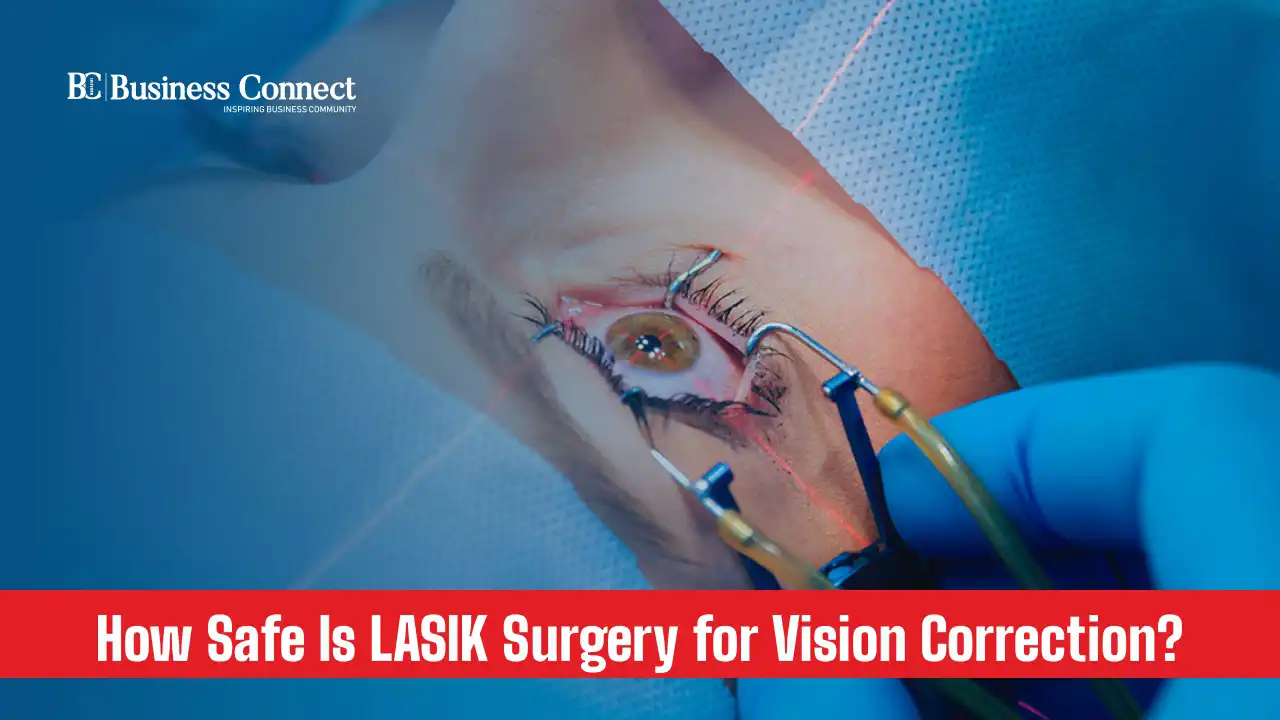
Imagine waking up to clear vision without the immediate need to reach for glasses or insert contact lenses. For millions, LASIK surgery has made this convenience a daily reality. However, because the procedure involves something as critical as your eyesight, experiencing a degree of apprehension is completely natural. The most pressing question for prospective patients is straightforward: Is it genuinely safe? Before scheduling a clinical consultation, it is helpful to understand the treatment process without relying on dense medical terminology. Achieving the best outcome requires a clear understanding of candidate eligibility and what the recovery phase truly entails.
The Real Safety Numbers Behind the Treatment
When you look at the facts, the procedure itself is usually described as minimally uncomfortable. Millions of adults have chosen this path, and studies report high satisfaction rates of up to 99 per cent among them. Modern eye clinics do not use a one-size-fits-all method. Instead, they use smart computers to map out your eye’s exact shape first. Using this map, the doctor can correct your vision with incredible precision and address those small flaws that make up only you. It is this unbelievable technology, along with patient selection and surgeon skill, that makes LASIK such a safe procedure when conducted on appropriate patients.
Who Can Get It Done and What Are the Side Effects?
Regardless of high technology, safety involves other important considerations. A conscientious surgeon will not rush into recommending surgery; on the contrary, they will conduct a thorough eye check to guarantee that the laser cannot damage your vision. In most cases, the following criteria must be satisfied:
Legal age and vision stability: at least 18 years old and vision stable for at least one year (some surgeons prefer not earlier than 21 years).
- Corneal tissue quantity: enough to reshape the cornea and prevent ectasia development.
- Overall health status: no cataracts; however, severe dry eyes will preclude the operation.
Upon meeting all these criteria, there can be some short-term complications, like temporary dryness of the eyes, light sensitivity, and night halos, which are completely natural and can pass in several months by using special drops. However, sometimes complications may remain permanently.
Looking at the Technology and the True LASIK Surgery Cost
Let’s talk numbers, because the financial side of vision correction is always a major factor. In India, Lasik Surgery Cost depends entirely on your surgeon’s experience and the specific technology they use. It’s easy to get reeled in by bargain prices online, but a suspiciously cheap quote usually means a compromise. Often, these clinics are still using older, mechanical blade methods instead of precise, all-laser technology or they hit you later with surprise charges for basic check-ups.
It is also worth remembering that standard Indian health insurance plans treat this as a cosmetic procedure. This means they won’t cover it unless your prescription is exceptionally high. Paying a transparent, all-inclusive price upfront ensures you aren’t cutting corners on your eyesight. A reputable clinic will bundle your digital mapping, bladeless treatment, and post-op care into one clear fee.
The Best Way Forward for Your Eyes
LASIK surgery has a well-established safety profile, backed by decades of clinical research and millions of procedures worldwide that have successfully reduced prescription dependency and achieved high patient satisfaction. But that is only true if you choose a great clinic.
You must also have a proper professional to guide you. At the end of the day, protecting your eyesight comes down to finding a specialist. You need someone you can genuinely trust, who prioritises your safety. With the help of the right procedures, you will have a clearer vision with minimised risks.